Temperature20 – 28 °C
Natural range
- Madagascar area
KillifishConservation status: Vulnerable VU
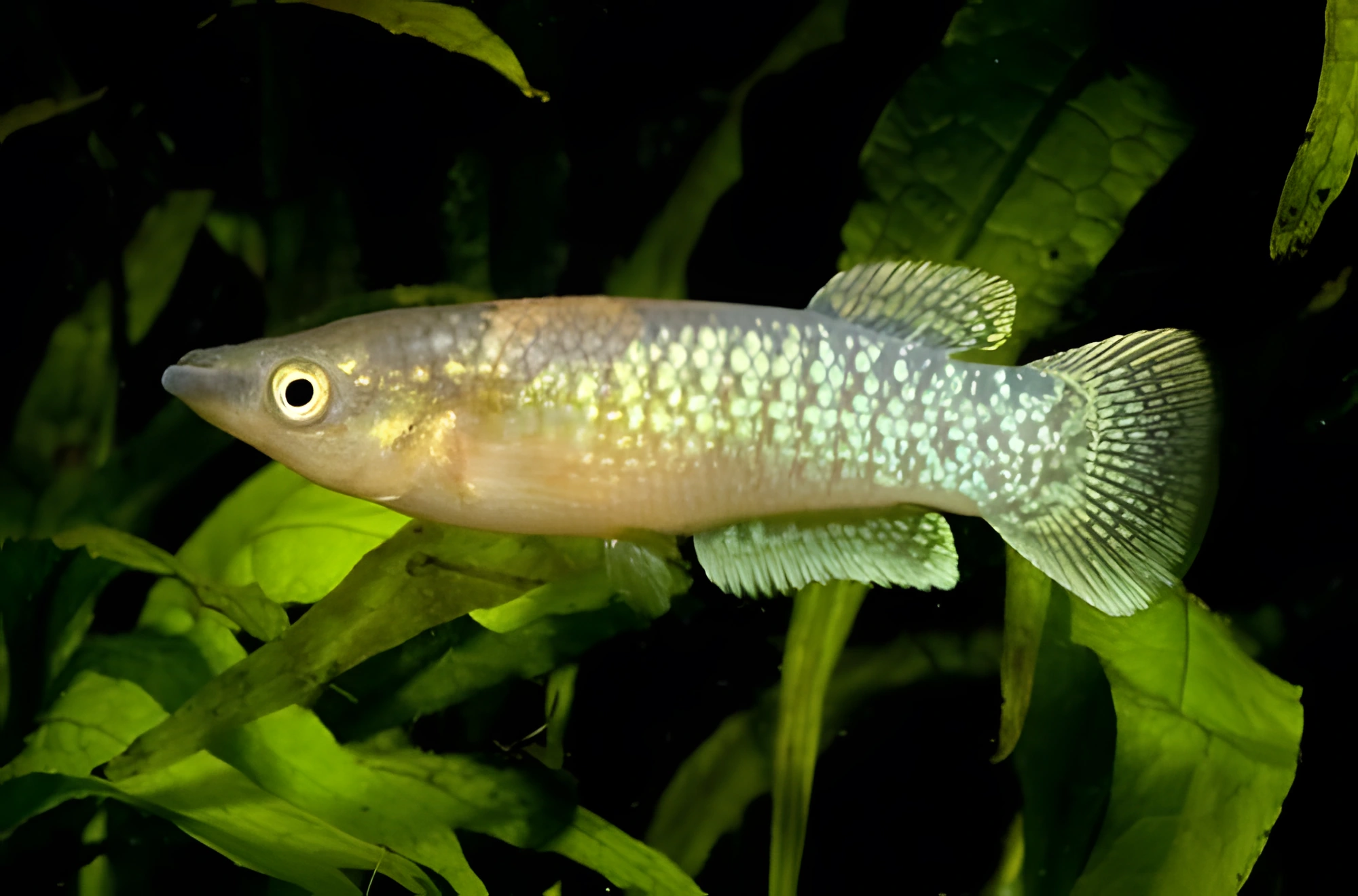
Pachypanchax arnoulti, or Arnoult's Panchax, is a member of the Aplocheilidae family. This fish readily adapts to aquarium conditions and does not require complex care, making it an excellent choice for beginner aquarists. The species received its scientific name in honor of researcher Jacques Arnoult, in recognition of his significant contribution to the study of Madagascar's ichthyofauna.
- Required aquarium volume
- 120 L
- Size in aquarium
- 8 cm
- Temperature
- 20 – 28 °C
- Temperament
- Peaceful, active/mobile
Parameters
Water pHSlightly acidic (6) – Neutral (7)
Water dHVery soft (2) – Medium hardness (10)
Water salinityno salt (freshwater)
Size in aquarium8 cm
Lifespan3 years
TemperamentPeaceful, active/mobile
Toward small fishnot a predator
Required aquarium volume120 L
Lightingdimmed or moderate
Substratesandy (regular, light)
Water flowmoderate or strong
FeedingAny (universal)
CareSchooling (usually from 5–6 individuals and more)
Description
Sexual dimorphism in these fish is pronounced. Males are significantly larger than females, reaching up to 8 cm in length, and are distinguished by a bright greenish or golden hue that varies depending on the angle of illumination. Females are smaller, their coloration is more subdued, gray or bluish, with a predominantly white belly.
Habitat
The natural habitat of this fish is the waters of Madagascar. Arnoult's Panchax is found both in swampy areas with abundant aquatic vegetation and high tannin content, and in small streams and rivers where there are almost no plants. Unfortunately, in the wild, the species is endangered. This is due to active deforestation, the draining of swamps for pastures, and competition from introduced species such as swordtails and mosquitofish.
Behavior and Compatibility
Arnoult's Panchax is considered a conditionally peaceful species, allowing it to be kept with other calm fish of similar or slightly larger size. Intraspecific relationships can be tense, adult males are prone to skirmishes, but serious injuries are rare. Nevertheless, for comfortable keeping, it is recommended to keep one male with several females. If you plan to keep several males, the aquarium should be large, with a sufficient number of shelters. The formula practiced is: 1 male per 100 L of volume.
Care and Maintenance
For keeping a small group of these fish, a sufficiently spacious aquarium of at least 120 L will be required. The decor uses thickets of aquatic plants and mosses, which are placed in groups along the side and back walls, as well as floating species. Sand or fine gravel is suitable as a substrate. Natural elements such as driftwood, intertwined roots and tree branches, and bark fragments not only decorate the aquarium but also release tannins, recreating the natural aquatic environment of Arnoult's Panchax. Over time, their quantity can be maintained by adding dried leaves, which should be replaced every 1–2 weeks. The mandatory equipment set includes filtration, aeration, heating, and lighting systems. It is important to consider that fish do not tolerate strong currents well, so the filter should create minimal water flow. Aquarium care involves weekly water changes of 15–20% and regular cleaning of the glass from organic deposits. Substrate cleaning is carried out as needed, avoiding excessive disturbance so as not to disrupt colonies of beneficial nitrifying bacteria.
Diet
In natural conditions, the diet of Arnoult's Panchax consists of small insects and crustaceans, which the fish catch near the water surface. In aquarium conditions, they adapt well to dry freeze-dried foods (flakes, granules) enriched with protein. For optimal nutrition, it is preferable to feed live or frozen foods: bloodworms, daphnia, mosquito larvae, small earthworms, and small insects such as fruit flies. Feeding is recommended 2–3 times a day, offering an amount of food that the fish can eat within 5 minutes. Any uneaten leftovers should be promptly removed.
Breeding and Reproduction
These fish do not require specific conditions for breeding and can successfully reproduce in a community tank. The female lays eggs in thickets of plants or moss, and the larvae hatch within a couple of days. Parents, unfortunately, do not show care for their offspring and are capable of eating fry. Therefore, immediately after spawning, it is advisable to transfer the eggs to a separate breeding tank.
Diseases
This species, especially its hybrid forms, has been successfully kept in aquariums for many generations and has perfectly adapted to an artificial environment. Provided a clean, balanced aquarium and regular, complete nutrition, health problems in fish are extremely rare. More detailed information on the symptoms of possible diseases and methods of their treatment is available in the section “Diseases of Aquarium Fish.”
How to choose
When selecting individuals, attention should be paid to their activity and overall health. A healthy fish should show interest in food, have clean fins without signs of erosion or film, and have no visible damage to the body. Avoid purchasing specimens with sunken bellies or signs of apathy, as this may indicate the presence of internal parasites or stress caused by poor keeping conditions in the store.
Given that historically this species was often confused with the closely related Pachypanchax omalonotus, it is highly recommended to purchase fish only from reputable breeders with confirmed origin. This will help avoid buying hybrids and ensure the purity of the line, which is important for the conservation of a species with conservation status. Before purchasing, clarify the keeping conditions in the store's aquarium and observe the behavior of the group for some time.
Frequently asked questions
The essentials: size, tank volume, water parameters and care
How big does Pachypanchax arnoulti get?
An adult reaches 8 cm in length. Plan the tank around the maximum size: the fish quickly outgrows a cramped setup.
What size aquarium does Pachypanchax arnoulti need?
The minimum recommended volume is 120 L. A smaller tank speeds up nitrate build-up and raises stress levels.
What water parameters does Pachypanchax arnoulti need?
Temperature 20–28 °C, pH 6–7, hardness 2–10 dGH. Stability matters more than exact values: sudden swings are harder on the fish than a small deviation from the ideal.
How long does Pachypanchax arnoulti live?
Around 3 years when kept properly. Lifespan depends directly on tank volume, water quality and a varied diet.
Is Pachypanchax arnoulti aggressive?
Temperament: peaceful, active/mobile. Keep this in mind when choosing tank mates.
How many Pachypanchax arnoulti should be kept together?
Recommended setup: schooling (usually from 5–6 individuals and more). Ignoring this is a common cause of stress and disease.
What does Pachypanchax arnoulti eat?
Diet type: any (universal). Feed small portions that are finished within a couple of minutes — overfeeding does more harm than underfeeding.
What is the scientific name of Pachypanchax arnoulti?
The scientific name of the species is Pachypanchax arnoulti, family Aplocheilidae.