Temperature22 – 27 °C
Natural range
- Caribbean Sea area
- Pacific Ocean area
Predators UnusualConservation status: Least concern LC
Other scientific names: Callichthys aeneus, Corydoras aeheus, Corydoras aenaeus, Corydoras macrosteus, Corydoras microps, Corydoras schultzei
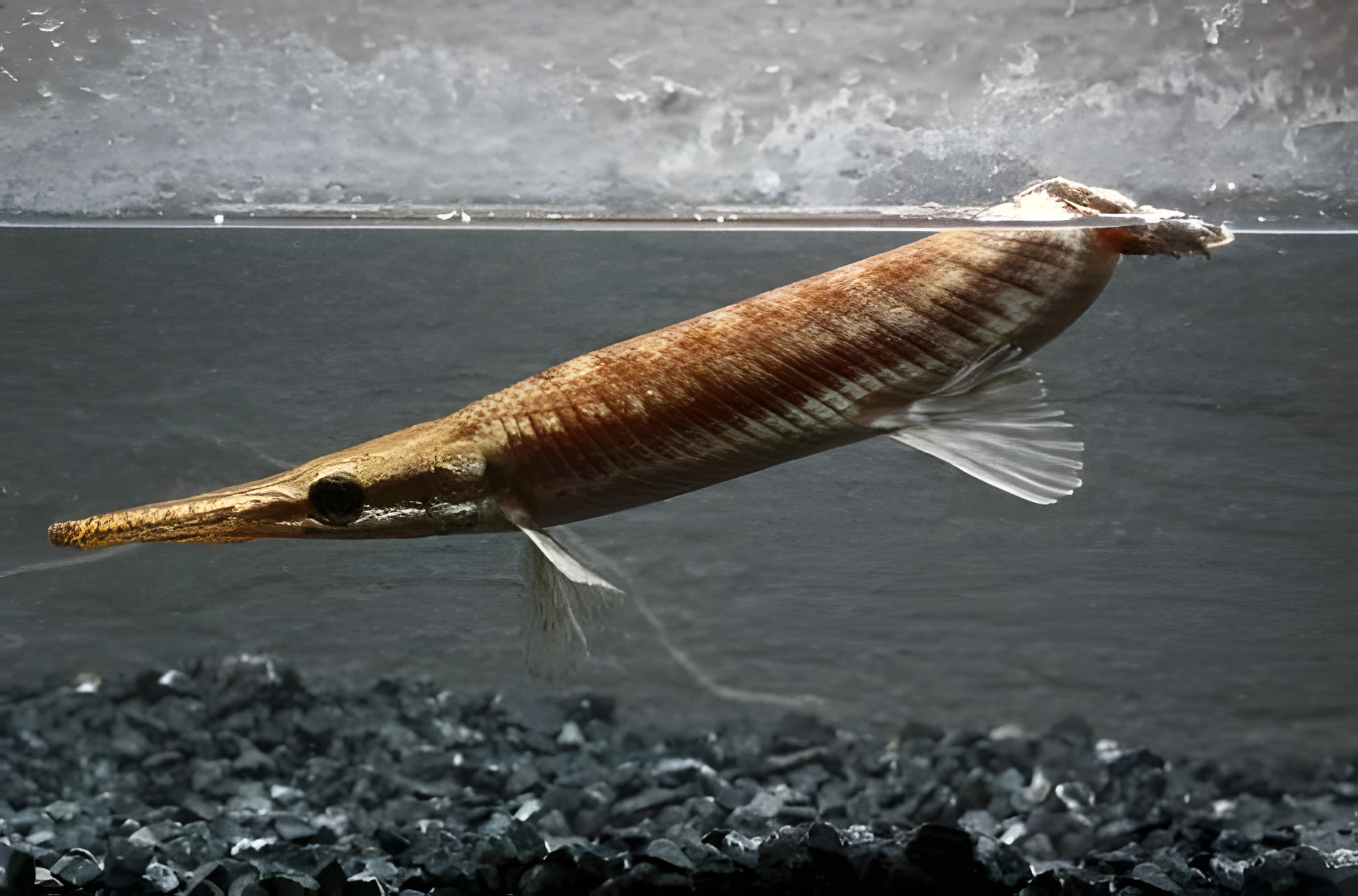
The family Lepisosteidae unites several closely related species, collectively known as Gars. These fish are rightly considered among the most ancient inhabitants of freshwaters, having survived practically in their pristine form since the age of dinosaurs. Their impressive size and distinctive appearance often attract the attention of creators of popular science programs on channels like BBC, National Geographic, and Discovery Channel, making Gars the stars of films. Although these giants are rarely kept in home aquariums, they can be found in large public aquariums or with particularly dedicated enthusiasts, which is why they are included in our review of unusual aquarium fish.
- Required aquarium volume
- 75 L
- Size in aquarium
- 6 – 7.5 cm
- Temperature
- 22 – 27 °C
- Temperament
- Peaceful (regular)
Parameters
Water pHSlightly acidic (6) – Slightly alkaline (8)
Water dHVery soft (2) – Very hard (20)
Water salinityno salt (freshwater)
Size in aquarium6 – 7.5 cm
Lifespan5 years
TemperamentPeaceful (regular)
Toward small fishpredator
Required aquarium volume75 L
Lightingweak or moderate
Substratefine sand
Water flowweak or moderate
FeedingMixed diet (meat + plant-based)
CareSchooling (usually from 5–6 individuals and more)
Description
The size of adult individuals varies significantly depending on the species, sometimes exceeding 3 meters in length and reaching a weight of over 150 kg. Although the body pattern also differs, the fish are usually colored in gray or brown tones. A characteristic feature of Gars is an elongated, stretched body, and their fins, like those of pike, are shifted towards the tail. However, unlike pike, they have a very long snout studded with sharp, conical teeth. The scales of these fish are large and exceptionally strong, equipped with sharp protrusions, creating true armor and giving the entire group its name.
Habitat
These fish are widely distributed in the tropical regions of Central and North America. They can be found in various bodies of water: lakes, rivers, swamps, as well as in the brackish waters of the Caribbean and along the Pacific coast. They prefer areas with moderate currents and an abundance of shelters. Excellent examples of such an environment can be found in the swampy areas of the Mississippi River basin in the United States.
Behavior and Compatibility
Gars are predators that hunt from ambush in nature, making sharp lunges at their prey. They are territorial and aggressive fish, showing hostility towards both their own kind and other species comparable in size. Due to their large size and pronounced predatory behavior, it is recommended to keep them in species-specific aquariums individually. The activity of the fish is moderate; they can hang motionless in the water column or near the surface for long periods.
Care and Maintenance
Keeping such large fish requires significant volumes of water, usually measured in thousands of liters. Aquariums for them are designed taking into account the natural habitat conditions of the specific species and must be equipped with specialized equipment. In general, Gars are unpretentious and can adapt well to various water parameters, including brackish conditions. If their size were less impressive, they could certainly become very popular aquarium pets. Breeding these fish in aquariums is not practiced. Fry for sale are usually caught from natural waters or raised on specialized fish farms. An interesting feature of Gars is a unique mechanism for protecting their offspring: their eggs are poisonous, making them inedible to most predators.
Diet
Being predators, in their natural environment, they prefer to ambush their prey and then attack swiftly. In aquarium conditions, these fish become accustomed not only to live prey but also readily consume frozen and fresh foods. Young individuals require daily feeding, but as they mature, the intervals between meals increase, reaching 2–3 times a week, which corresponds to their natural feeding habits.
Breeding and Reproduction
Breeding gars in aquarium conditions is practically not carried out. In the natural environment, spawning occurs in spring in shallow areas with dense vegetation, onto which females lay adhesive eggs. An important biological feature of the species is the toxicity of the eggs, which serves as a protective mechanism for the offspring against predation. After hatching, the fry remain attached to the substrate by means of special organs until the yolk sac is absorbed.
Diseases
Gars have a strong immune system but are susceptible to diseases typical for large freshwater fish when maintenance conditions are violated. These include bacterial infections, fungal skin lesions, and parasitic infestations. The main risk factors are poor water quality and high nitrate levels, which lead to weakening of the body, loss of appetite, lethargy, and the development of ulcers or fin rot. Prevention involves powerful filtration, regular water changes, and control of hydrochemical parameters.
How to choose
When purchasing, choose active individuals with clean scales without visible damage, ulcers, or white spots. It is important to ensure that the fish shows no signs of emaciation and that the fins do not have signs of rot or deformation. Gars are long-lived and fast-growing predators, so before acquiring one, it is necessary to assess your readiness to provide them with a large volume aquarium. It is recommended to ask the seller about the fish's current diet, as accustoming them to non-live foods may take time.
Frequently asked questions
The essentials: size, tank volume, water parameters and care
How big does Gar get?
An adult reaches 6–7.5 cm in length. Plan the tank around the maximum size: the fish quickly outgrows a cramped setup.
What size aquarium does Gar need?
The minimum recommended volume is 75 L. A smaller tank speeds up nitrate build-up and raises stress levels.
What water parameters does Gar need?
Temperature 22–27 °C, pH 6–8, hardness 2–20 dGH. Stability matters more than exact values: sudden swings are harder on the fish than a small deviation from the ideal.
How long does Gar live?
Around 5 years when kept properly. Lifespan depends directly on tank volume, water quality and a varied diet.
Is Gar aggressive?
Temperament: peaceful (regular). This is a predatory species — any fish small enough to fit in its mouth will eventually be eaten.
How many Gar should be kept together?
Recommended setup: schooling (usually from 5–6 individuals and more). Ignoring this is a common cause of stress and disease.
What does Gar eat?
Diet type: mixed diet (meat + plant-based). Feed small portions that are finished within a couple of minutes — overfeeding does more harm than underfeeding.
What is the scientific name of Gar?
The scientific name of the species is Corydoras aeneus, family Armored Catfish (Callichthyidae). It also appears in the literature as: Callichthys aeneus, Corydoras aeheus, Corydoras aenaeus.