Temperature18 – 24 °C
Natural range
- Paraguay area
CatfishConservation status: Least concern LC
Otothyropsis piribebuy, known as Otocinclus negros (formerly Otocinclus sp. "Negros"), belongs to the family Loricariidae, which includes armored catfishes. The native habitat of this small catfish is the waters of South America. It can be found in the small rivers Piribebuy and Aguará Guazú, which are part of the Paraguay River basin, located in the country of the same name. The fish prefer shallow areas where aquatic vegetation grows in abundance, and numerous snags and tree roots extend underwater.
- Required aquarium volume
- 40 L
- Size in aquarium
- 3 cm
- Temperature
- 18 – 24 °C
- Temperament
- Peaceful (regular)
Parameters
Water pHSlightly acidic (5.5) – Neutral (7.5)
Water dHVery soft (2) – Hard (15)
Water salinityno salt (freshwater)
Size in aquarium3 cm
Lifespan4 years
TemperamentPeaceful (regular)
Toward small fishnot a predator
Required aquarium volume40 L
Lightingdimmed
Substrateany (no restrictions)
Water flowweak
FeedingPlant-based (algae, vegetables)
CareSchooling (usually from 5–6 individuals and more)
Description
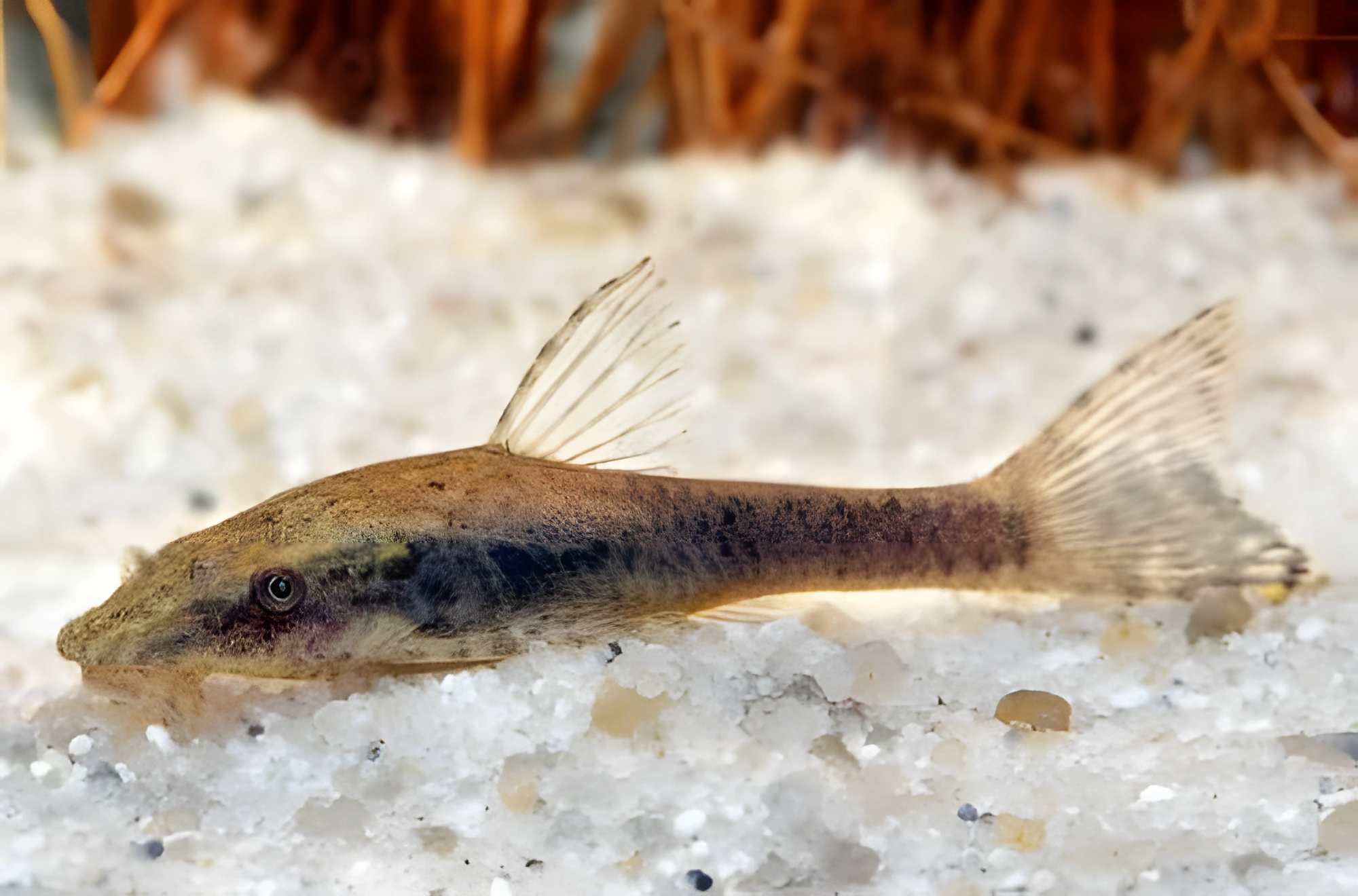
Adults of this species grow to approximately 3 cm in length. Their dark coloration, varying from gray to brownish, allows them to effectively camouflage themselves among plant thickets, hiding from potential predators. Hard coverings, covered with small spines, provide additional protection for the body. Through evolution, the fish's mouth has acquired a sucker shape and is now located on the underside of the head, which is an adaptation to its feeding habits.
Habitat
In nature, the species inhabits rivers of the Paraguay basin, specifically the Piribebuy and Aguará Guazú rivers. The fish prefer shallow areas with slow currents, dense aquatic vegetation, and an abundance of organic substrates such as submerged snags and tree roots, which serve as shelter and a food source.
Behavior and Compatibility
These catfishes prefer to live in groups of their own kind; when alone, they can become timid and more reclusive. Otocinclus negros get along well with many peaceful fish species of comparable size. Such tank mates can include Corydoras, Tetras, small Cyprinids (e.g., Danios and Rasboras), dwarf cichlids, and other representatives of the Otocinclus genus.
Care and Maintenance
For a group of 8–10 catfishes, an aquarium with a volume of 40 L or more will be most suitable. When setting up the tank, provide areas with dense plant thickets and accumulations of driftwood. Dim lighting is recommended, and floating vegetation will effectively create the necessary shading. Since Otocinclus negros are from subtropics, they require relatively cool water, with a temperature not exceeding 23–24°C. These catfishes are very sensitive to the accumulation of organic waste, so the aquarium requires regular maintenance, including weekly partial water changes with fresh water, and a properly functioning filtration system.
Diet
The diet of these fish in their natural environment consists mainly of algae and small organisms living on them. In a home aquarium, it is crucial to provide access to appropriate food sources. These can be specialized plant-based foods in the form of tablets, wafers, or flakes based on algae. Pieces of green vegetables and fruits, such as spinach, zucchini, or blanched peas, are also suitable. Small invertebrates, such as fresh or frozen brine shrimp, bloodworms, and daphnia, will be a valuable addition to the diet. Placing natural driftwood in the aquarium is welcomed, as it often serves as a natural environment for algae growth.
Breeding and Reproduction
Breeding occurs in pairs or groups. Spawning is stimulated by a partial water change with cooler water, which mimics the rainy season. The female lays eggs on plant leaves or hard surfaces, after which the male fertilizes the clutch. The parents do not show care for their offspring. Fry begin to feed on infusoria and specialized foods a few days after hatching.
Diseases
Fish are sensitive to water quality and the accumulation of nitrogenous compounds. Characteristic problems include bacterial infections of the skin and fins, which arise from poor keeping conditions. Prevention includes weekly water changes, maintaining stable parameters, and avoiding overfeeding, as excess organic matter promotes the development of pathogenic microflora.
How to choose
When purchasing, choose active individuals with a rounded, but not bloated, belly, which indicates good nutrition. It is important to avoid fish with sunken bellies, as this is a sign of emaciation. Inspect the body for damage, white film, or ulcers. In the store, fish should show interest in foraging for food on decorations or glass.
Frequently asked questions
The essentials: size, tank volume, water parameters and care
How big does Otocinclus negros get?
An adult reaches 3 cm in length. Plan the tank around the maximum size: the fish quickly outgrows a cramped setup.
What size aquarium does Otocinclus negros need?
The minimum recommended volume is 40 L. A smaller tank speeds up nitrate build-up and raises stress levels.
What water parameters does Otocinclus negros need?
Temperature 18–24 °C, pH 5.5–7.5, hardness 2–15 dGH. Stability matters more than exact values: sudden swings are harder on the fish than a small deviation from the ideal.
How long does Otocinclus negros live?
Around 4 years when kept properly. Lifespan depends directly on tank volume, water quality and a varied diet.
Is Otocinclus negros aggressive?
Temperament: peaceful (regular). Keep this in mind when choosing tank mates.
How many Otocinclus negros should be kept together?
Recommended setup: schooling (usually from 5–6 individuals and more). Ignoring this is a common cause of stress and disease.
What does Otocinclus negros eat?
Diet type: plant-based (algae, vegetables). Feed small portions that are finished within a couple of minutes — overfeeding does more harm than underfeeding.
What is the scientific name of Otocinclus negros?
The scientific name of the species is Otothyropsis piribebuy (ранее Otocinclus sp. «Negros»), family Armored Catfishes (Loricariidae).