Temperature20 – 25 °C
Natural range
- Rio Grande do Sul area
- Brazil area
CatfishConservation status: Least concern LC
Other scientific names: Macrotocinclus flexilis, Otocinclus fimbriatus
Otocinclus flexilis, known as the Spotted Otocinclus, belongs to the family Loricariidae, which includes armored catfish. In its natural habitat, this catfish lives in the drainage basin of the shallow Patos Lagoon, located on the coast of the Brazilian state of Rio Grande do Sul, characteristic of its South American origin.
- Required aquarium volume
- 50 L
- Size in aquarium
- 6 – 7 cm
- Temperature
- 20 – 25 °C
- Temperament
- Peaceful (regular)
Parameters
Water pHNeutral (6.5) – Slightly alkaline (7.8)
Water dHVery soft (2) – Soft (5)
Water salinityno salt (freshwater)
Size in aquarium6 – 7 cm
Lifespan5 years
TemperamentPeaceful (regular)
Toward small fishnot a predator
Required aquarium volume50 L
Lightingdimmed or moderate
Substrateany (no restrictions)
Water flowweak
FeedingPlant-based (algae, vegetables)
CareSchooling (usually from 5–6 individuals and more)
Description
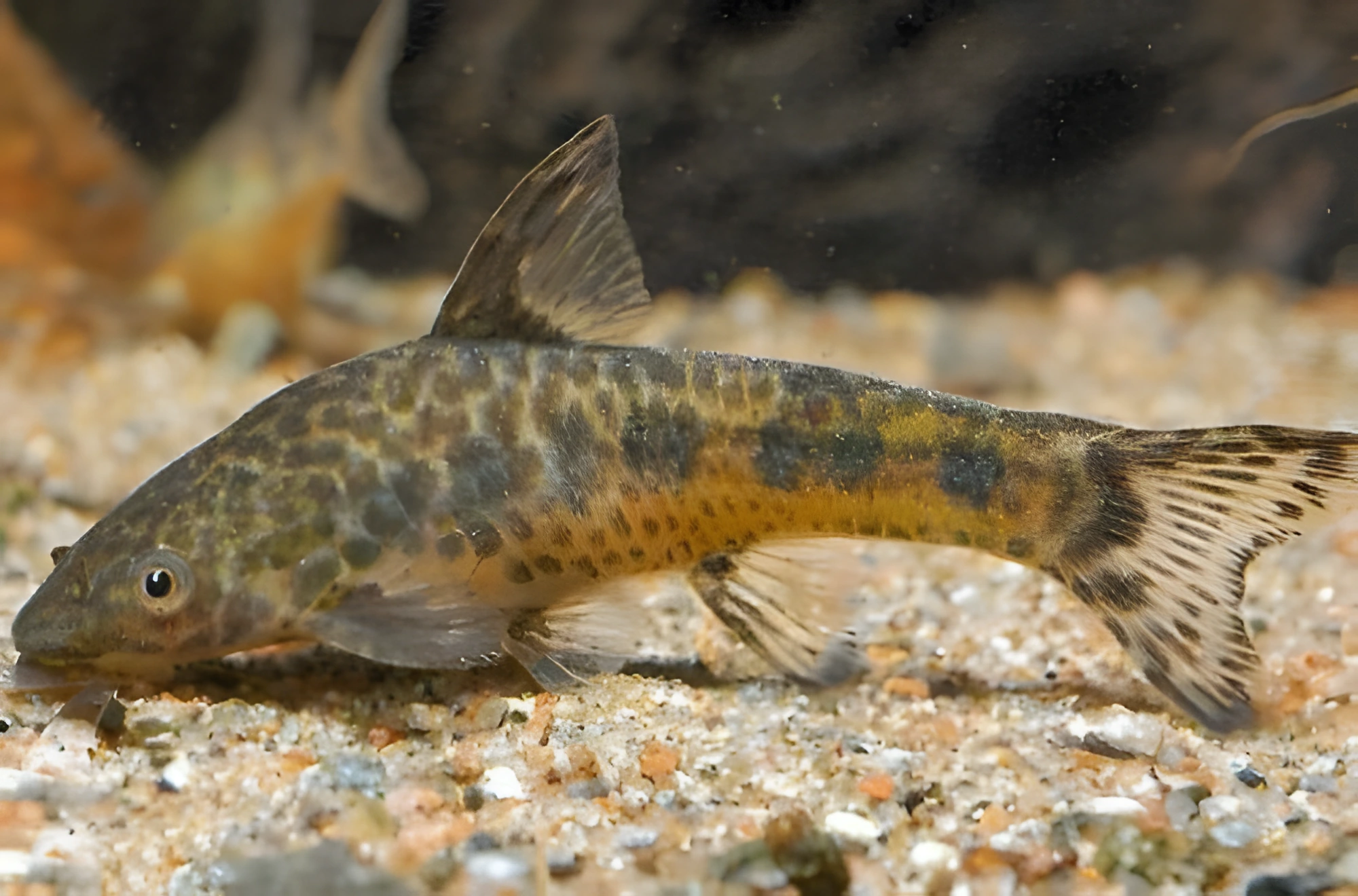
Adults grow to just under 7 cm in length. This species exhibits two distinct color forms. One is dark, with a pattern formed by numerous fused spots. The other form is light gray with brownish or yellowish hues. It also has a large number of speckles, but they are less intensely expressed. Additionally, 6–7 large rounded spots can be seen along the sides of the body.
Habitat
Otocinclus flexilis is endemic to South America. In nature, the species inhabits the Laguna dos Patos basin in Brazil. It is a demersal fish, preferring to stay in small rivers with clear water and sandy bottoms. In its natural habitat, water parameters range from pH 6.5–7.8 and general hardness 2–25 dGH at a temperature of 20–25°C.
Behavior and Compatibility
Otocinclus flexilis is considered a social and friendly species. It coexists well with large bottom-dwelling fish, as well as those that prefer middle water layers or the surface. However, in small aquariums, competition for dominance can occur between individuals of the same species. Rivalry with Corydoras has also been noted, with Corydoras being at a disadvantage in such cases. Therefore, it is recommended to avoid cohabiting these two catfish species.
Care and Maintenance
For a group of 4–5 Otocinclus flexilis, an optimal aquarium should have a volume of 50–60 liters. Unlike other members of the genus, this species does not require an abundance of vegetation. However, the presence of tall plants, such as Vallisneria, has a beneficial effect on their keeping. Otherwise, the decor is chosen individually, based on the aquarist's preferences or the needs of other inhabitants. Long-term keeping requires maintaining clean water with suitable hydrochemical composition. It is worth noting that the wide range of permissible pH and dGH values significantly simplifies weekly aquarium maintenance, including water changes. Despite its tropical origin, this fish prefers relatively cool water, so the keeping temperature should not exceed 25°C.
Diet
The classification of Otocinclus flexilis as an omnivorous species is due to its diet, which is primarily composed of plant components. These include naturally occurring algae, for example, on the surface of natural driftwood, as well as specialized dry flakes, often spirulina-based. Pieces of cucumber, zucchini, and lettuce leaves are well received. It is also recommended to include regular flakes and granules in the diet. A lack of plant supplements in the diet can lead to damage to aquarium plants with delicate leaves.
Breeding and Reproduction
Breeding in an aquarium is possible but requires creating specific conditions that mimic the rainy season. Spawning is stimulated by a slight decrease in water temperature. The female lays eggs on plant leaves or aquarium glass. Parents do not care for their offspring and may eat the eggs. Fry require the presence of natural biofilm and microorganisms in the aquarium for feeding during the early stages of development.
Diseases
The species is sensitive to sudden changes in water parameters and high levels of nitrogenous compounds. Under stress or unfavorable keeping conditions, fish become susceptible to parasitic and fungal infections. The main signs of ill health are rapid breathing, sluggishness, and a sunken belly, indicating insufficient nutrition.
How to choose
When purchasing, choose active fish with rounded bellies, which is an indicator of good health and absence of emaciation. It is important to avoid individuals with signs of fin or skin damage. It is recommended to acquire a group of 5–6 individuals, as this species is schooling and experiences significant stress when alone.
Frequently asked questions
The essentials: size, tank volume, water parameters and care
How big does Otocinclus flexilis get?
An adult reaches 6–7 cm in length. Plan the tank around the maximum size: the fish quickly outgrows a cramped setup.
What size aquarium does Otocinclus flexilis need?
The minimum recommended volume is 50 L. A smaller tank speeds up nitrate build-up and raises stress levels.
What water parameters does Otocinclus flexilis need?
Temperature 20–25 °C, pH 6.5–7.8, hardness 2–5 dGH. Stability matters more than exact values: sudden swings are harder on the fish than a small deviation from the ideal.
How long does Otocinclus flexilis live?
Around 5 years when kept properly. Lifespan depends directly on tank volume, water quality and a varied diet.
Is Otocinclus flexilis aggressive?
Temperament: peaceful (regular). Keep this in mind when choosing tank mates.
How many Otocinclus flexilis should be kept together?
Recommended setup: schooling (usually from 5–6 individuals and more). Ignoring this is a common cause of stress and disease.
What does Otocinclus flexilis eat?
Diet type: plant-based (algae, vegetables). Feed small portions that are finished within a couple of minutes — overfeeding does more harm than underfeeding.
What is the scientific name of Otocinclus flexilis?
The scientific name of the species is Otocinclus flexilis, family Armored Catfishes (Loricariidae). It also appears in the literature as: Macrotocinclus flexilis, Otocinclus fimbriatus.