Temperature20 – 26 °C
Natural range
- Rio de Janeiro State
- Brazil area
CatfishConservation status: Least concern LC
Other scientific names: Otocinclus affinis
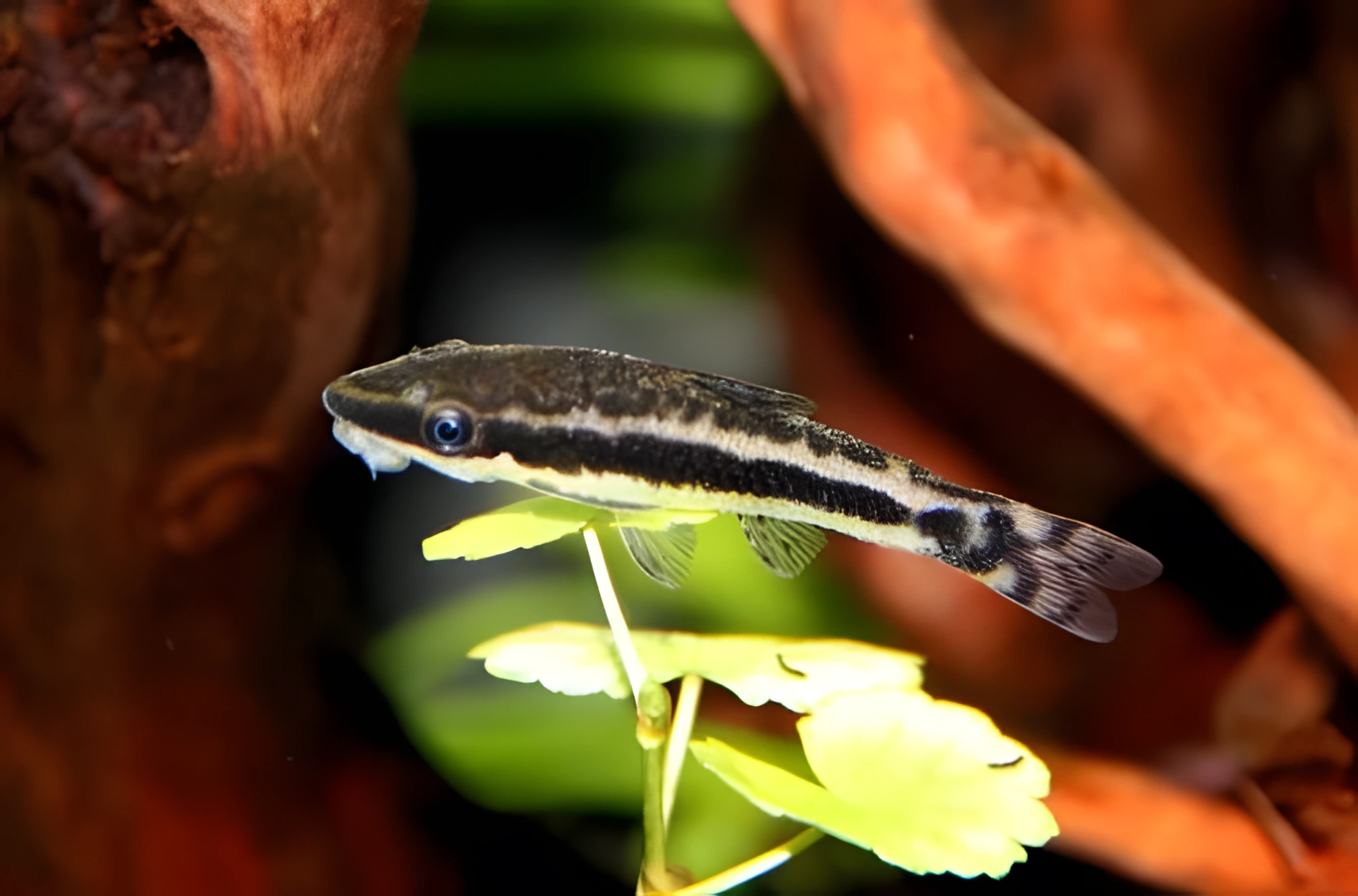
Otocinclus affinis, known scientifically as Macrotocinclus affinis, belongs to the Loricariidae family, which includes armored catfish. This fish is peaceful and calm, but its inconspicuous coloration prevents it from standing out among other, more active aquarium inhabitants. Despite this, Otocinclus affinis is widely popular in aquaristics due to a remarkable feature. It can effectively combat algae, as its diet consists exclusively of plant matter. This is why the catfish is often acquired to solve this problem.
- Required aquarium volume
- 40 L
- Size in aquarium
- 5 cm
- Temperature
- 20 – 26 °C
- Temperament
- Peaceful (regular)
Parameters
Water pHSlightly acidic (6) – Slightly alkaline (8)
Water dHSoft (5) – Very hard (19)
Water salinityno salt (freshwater)
Size in aquarium5 cm
Lifespan5 years
TemperamentPeaceful (regular)
Toward small fishnot a predator
Required aquarium volume40 L
Lightingmoderate (regular)
Substrateany (no restrictions)
Water flowweak
FeedingPlant-based (algae, vegetables)
CareBoth solitary and in group (flexible)
Description
Adults reach a length of approximately 5 cm. Sexual dimorphism in this species is weakly expressed; determining the sex is difficult, although females may be slightly larger than males. Outwardly, Otoincley affinis is very similar to its close relative — the Dwarf Otocinclus, and is often sold under the same name. The coloration is dark, with a contrasting white belly. A narrow golden horizontal stripe runs from the head to the caudal fin. A distinctive feature is the structure of its mouth, perfectly adapted for scraping algae. It resembles a sucker, allowing the catfish to firmly hold onto the surface of plant leaves.
Habitat
The natural habitat of this species is in South America, near Rio de Janeiro in Brazil. Here it inhabits shallow tributaries of large rivers, as well as floodplain lakes. The fish prefers areas with abundant aquatic vegetation or dense grassy thickets along the banks.
Behavior and Compatibility
Otocinclus affinis catfish exhibit friendly behavior: they can live both alone and in groups, and no intraspecific conflicts are observed among them. They are peaceful species and get along well with most other non-aggressive fish of comparable size. These catfish are also completely harmless to freshwater shrimp.
Care and Maintenance
Otocinclus affinis does not have special maintenance requirements, provided it has enough plant food. For a small group of these fish, the optimal aquarium volume starts from 40 liters. The setup should include an abundance of plants, including those with broad leaves, which will serve as resting places for the catfish. Natural snags are also highly recommended, as mentioned earlier, because they provide a base for algae growth. To recreate conditions close to their natural habitat, oak leaves or Indian almond leaves can be added to the aquarium. Gradually decomposing, they release tannins, which give the water a characteristic tea-like tint. These substances are believed to have a beneficial effect on fish health, suppressing the development of pathogenic bacteria and organisms. It should be noted that heavily planted aquariums require special lighting regimes. In such cases, it is advisable to consult with specialists. Care can be simplified by choosing undemanding mosses and ferns, which often look no less impressive but do not require such meticulous care. Maintaining stable water parameters is crucial for the balance of the aquarium's biological system. Filtration also plays an important role. In small tanks with few inhabitants, simple air-driven sponge filters will suffice. In other cases, external filters may be required. Internal filters that create strong currents are not recommended. Essential maintenance procedures include weekly partial water changes (15–20% of the total volume) with fresh water and regular removal of organic waste.
Diet
As already mentioned, the diet of these fish is based on algae. However, acclimatized individuals can successfully feed on dry vegetable foods, such as spirulina flakes. It is important to remember that the aquarium must provide conditions for algae growth, otherwise the catfish risks going hungry. Excellent places for their development are natural snags illuminated by bright light. As an additional food source, blanched peas, small pieces of zucchini, cucumbers, and other vegetables can be offered.
Breeding and Reproduction
At present, successful breeding of this species in home aquariums has not been recorded. The main supply of fish comes from commercial fish farms located in Eastern Europe. In the American continents, individuals caught directly in the wild are common.
Diseases
The main cause of most diseases in Leaf Fish is unsuitable keeping conditions and poor-quality nutrition. If initial symptoms are observed, it is first necessary to check water parameters and the concentration of dangerous substances such as ammonia, nitrites, and nitrates. If the indicators deviate from the norm, they should be brought back into order, and only then should treatment begin. More detailed information on symptoms and treatment methods can be found in the "Aquarium Fish Diseases" section.
How to choose
When choosing otocinclus, pay attention to their appearance and plumpness. A healthy fish should have a rounded belly, not a sunken one, which often indicates prolonged starvation and emaciation, from which these catfish recover with difficulty. Avoid specimens with signs of damage, ulcers, or frayed scales.
- Choose fish that actively scrape growths from decorations or aquarium glass, rather than those that lie sluggishly on the bottom or near the water surface.
- Keep in mind that other species of otocinclus are often sold under the name M. affinis in the trade, as the true species is rarely available.
- After purchase, ensure the fish has a gradual adaptation to water parameters, as this species is sensitive to sudden changes in chemical composition and levels of nitrogenous compounds.
Frequently asked questions
The essentials: size, tank volume, water parameters and care
How big does Otocinclus affinis get?
An adult reaches 5 cm in length. Plan the tank around the maximum size: the fish quickly outgrows a cramped setup.
What size aquarium does Otocinclus affinis need?
The minimum recommended volume is 40 L. A smaller tank speeds up nitrate build-up and raises stress levels.
What water parameters does Otocinclus affinis need?
Temperature 20–26 °C, pH 6–8, hardness 5–19 dGH. Stability matters more than exact values: sudden swings are harder on the fish than a small deviation from the ideal.
How long does Otocinclus affinis live?
Around 5 years when kept properly. Lifespan depends directly on tank volume, water quality and a varied diet.
Is Otocinclus affinis aggressive?
Temperament: peaceful (regular). Keep this in mind when choosing tank mates.
How many Otocinclus affinis should be kept together?
Recommended setup: both solitary and in group (flexible). Ignoring this is a common cause of stress and disease.
What does Otocinclus affinis eat?
Diet type: plant-based (algae, vegetables). Feed small portions that are finished within a couple of minutes — overfeeding does more harm than underfeeding.
What is the scientific name of Otocinclus affinis?
The scientific name of the species is Macrotocinclus affinis, family Loricariidae (Armored Catfish). It also appears in the literature as: Otocinclus affinis.