Temperature22 – 28 °C
Natural range
- Malaysia area
- Sumatra area
CyprinidsConservation status: Least concern LC
Other scientific names: Osteochilus brachynotopterus, Osteochilus tripore, Osteochilus triporos, Osteochilus triporus, Rohita brachynotopterus, Rohita microcephalus
The fish, known in the scientific world as Osteochilus microcephalus, belongs to the family Cyprinidae. Its homeland is Southeast Asia, with its natural habitat covering significant territories, stretching from Thailand to the Indonesian islands. This species is highly adaptable; it can be found in swift mountain streams as well as in calmer, even swampy, bodies of water. During the rainy season, these fish often migrate to flooded areas of tropical forests.
- Required aquarium volume
- 350 L
- Size in aquarium
- 24 – 25 cm
- Temperature
- 22 – 28 °C
- Temperament
- Peaceful, calm/shy/inactive
Parameters
Water pHSlightly acidic (6) – Neutral (7.5)
Water dHHard (12) – Very hard (20)
Water salinityno salt (freshwater)
Size in aquarium24 – 25 cm
Lifespan8 years
TemperamentPeaceful, calm/shy/inactive
Toward small fishnot a predator
Required aquarium volume350 L
Lightingdimmed
Substrateany (no restrictions)
Water flowweak or moderate
FeedingSinking (any)
CareSmall group (3–4 individuals)
Description
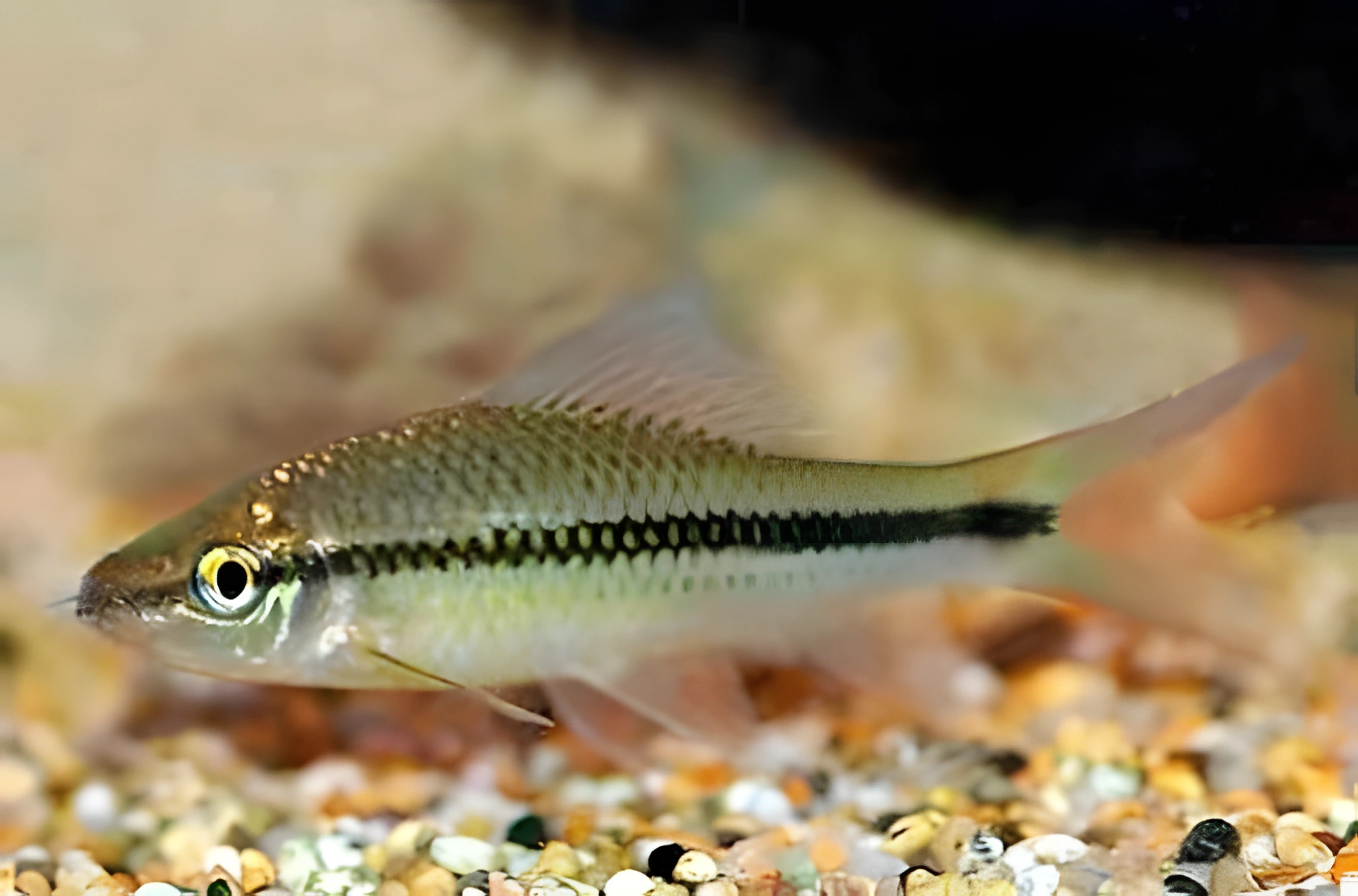
Adults of this fish can grow up to 25 cm in length. Their coloration displays a wide range of hues: from gray to yellow, often with a metallic sheen, with variations depending on lighting conditions. A distinctive feature of their appearance is a prominent black stripe that runs continuously from the head to the tail. The fins of these fish have a reddish tint.
Habitat
The species is widespread in Southeast Asia, including the Salween, Meklong, Chao Phraya, and Mekong river basins, and is also found in Malaysia, Sumatra, and Borneo. The fish inhabit various bodies of water: from mountain streams to lowland rivers, swamps, and marshy areas. They prefer areas with slow currents and murky water; during the rainy season, they often migrate to flooded forests and floodplains. Optimal water parameters: temperature 22–28°C, pH 6.5–7.5, hardness 12–20 dH.
Behavior and Compatibility
This is a peaceful and very active fish. It feels most comfortable in small groups of 4–5 individuals. Osteochilus microcephalus coexists well with many other fish species of similar size, provided they also have a calm temperament.
Care and Maintenance
Given the potential for Osteochilus microcephalus to reach significant sizes, an aquarium of at least 350–400 liters is recommended for keeping a small school. Within the aquarium, it is advisable to create hiding places using natural driftwood and dense thickets of aquatic plants, as well as to leave enough open space for swimming. Dim or moderate lighting is preferred; in bright light, fish often seek shelter. Floating plants can be used to create shade. A soft, slightly acidic water environment is considered ideal. A small concentration of dissolved tannins, which can be released from natural driftwood or falling leaves of certain tree species, is permissible. More detailed information on using leaves in an aquarium can be found in a separate article. Standard care includes a series of essential minimal actions: weekly partial water changes, regular removal of organic debris, cleaning of glass and decorative elements, and prophylactic equipment inspection.
Diet
Osteochilus microcephalus is an omnivorous species. It readily accepts most common foods designed for aquarium fish. It is recommended to prefer sinking foods, such as dry flakes or granules with a high content of vegetable components.
Breeding and Reproduction
Based on available sources, a separate block cannot be compiled: the data is insufficient or contradictory. The entry can be updated later when verified information becomes available.
Diseases
Based on available sources, a separate block cannot be compiled: the data is insufficient or contradictory. The entry can be updated later when verified information becomes available.
How to choose
When selecting individuals, pay attention to the integrity of the fins and the absence of visible damage or sores on the body. A healthy fish should be active and have the characteristic coloration for the species: a clear, wide black stripe along the entire body to the base of the tail. Avoid specimens with sluggish behavior, signs of emaciation, or an unnaturally bloated abdomen, as this may indicate the presence of internal parasites or infectious diseases.
Frequently asked questions
The essentials: size, tank volume, water parameters and care
How big does Osteochilus get?
An adult reaches 24–25 cm in length. Plan the tank around the maximum size: the fish quickly outgrows a cramped setup.
What size aquarium does Osteochilus need?
The minimum recommended volume is 350 L. A smaller tank speeds up nitrate build-up and raises stress levels.
What water parameters does Osteochilus need?
Temperature 22–28 °C, pH 6–7.5, hardness 12–20 dGH. Stability matters more than exact values: sudden swings are harder on the fish than a small deviation from the ideal.
How long does Osteochilus live?
Around 8 years when kept properly. Lifespan depends directly on tank volume, water quality and a varied diet.
Is Osteochilus aggressive?
Temperament: peaceful, calm/shy/inactive. Keep this in mind when choosing tank mates.
How many Osteochilus should be kept together?
Recommended setup: small group (3–4 individuals). Ignoring this is a common cause of stress and disease.
What does Osteochilus eat?
Diet type: sinking (any). Feed small portions that are finished within a couple of minutes — overfeeding does more harm than underfeeding.
What is the scientific name of Osteochilus?
The scientific name of the species is Osteochilus microcephalus, family Cyprinids (Cyprinidae). It also appears in the literature as: Osteochilus brachynotopterus, Osteochilus tripore, Osteochilus triporos.