Temperature16 – 26 °C
Natural range
- Kachin State
- Northern Myanmar area
CyprinidsConservation status: Near threatened NT
The Orange Danio, also known as the Orange-finned Danio (scientific name Danio kyathit), belongs to the Cyprinidae family. This active and beautiful fish can adorn any freshwater aquarium. Its appeal is enhanced by its unpretentiousness and good compatibility with many other species.
- Required aquarium volume
- 80 L
- Size in aquarium
- 4 cm
- Temperature
- 16 – 26 °C
- Temperament
- Peaceful (regular)
Parameters
Water pHSlightly acidic (6) – Neutral (7)
Water dHVery soft (1) – Soft (5)
Water salinityno salt (freshwater)
Size in aquarium4 cm
Lifespan4 years
TemperamentPeaceful (regular)
Toward small fishnot a predator
Required aquarium volume80 L
Lightingany
Substrateany, but dark
Water flowweak or moderate
FeedingAny (universal)
CareGroup (8–10 individuals)
Description
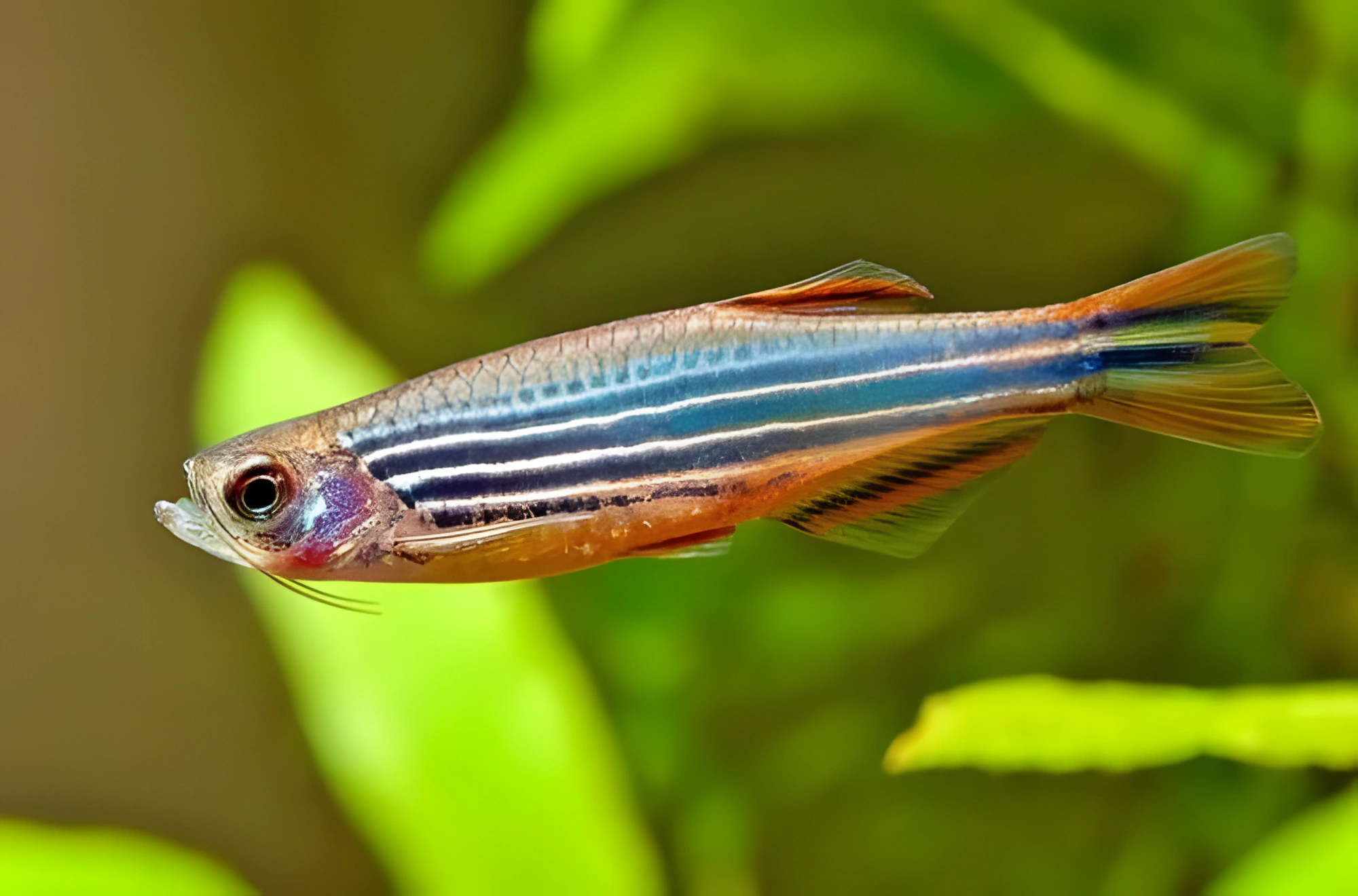
These fish reach approximately 4 cm in length. Their back, belly, and fins are a rich orange color. Large blue longitudinal stripes run along the body. Sexual dimorphism in this species is weak, making it difficult to distinguish males from females.
Habitat
The natural habitat of this species extends across Northern Myanmar (Burma), specifically in the Kachin region, located in Southeast Asia. This region, one of the most biodiverse on the planet, has recently suffered severe anthropogenic impact. The Orange-finned Danio is found in the upper reaches of the Irrawaddy River, inhabiting small streams and channels rich in aquatic vegetation. The bottom of these bodies of water usually consists of a mixture of stones and silt. The water often has a brownish tint, which is due to the high concentration of tannins released during the decomposition of organic matter.
Behavior and Compatibility
This is a peaceful schooling fish that feels comfortable in groups of 8 to 10 individuals or more. In smaller numbers, it may exhibit timidity, which will significantly shorten its lifespan. Danios are highly mobile, which can sometimes be excessive for slower tank mates. Nevertheless, overall, this species coexists well with other non-aggressive fish of comparable size.
Care and Maintenance
For comfortable keeping of a small school of Orange Danios, the minimum aquarium volume is 80 liters. When decorating, it is recommended to use dark substrate, abundant aquatic plants, driftwood, and other decorative elements that can serve as shelters. It is extremely important to maintain stable water parameters, with suitable hydrochemical indicators, avoiding sudden fluctuations in temperature, pH, and dGH. The quality of the aquatic environment directly depends on an efficiently operating filtration system and regular mandatory procedures. These include regular cleaning of the aquarium from pollutants such as food residues and excrement, as well as weekly partial water changes. An important point: the presence of a cover glass or lid on the aquarium will prevent accidental jumping out of the fish.
Diet
The fish are not particularly demanding about food. In home conditions, they readily eat dry foods such as flakes or granules of appropriate size. Including live or frozen food, such as bloodworms or brine shrimp, in their diet will be very beneficial.
Breeding and Reproduction
Under favorable conditions, these fish spawn quite frequently. They scatter their eggs among the substrate or in dense aquatic vegetation. They do not exhibit parental instinct. The incubation period lasts from 24 to 36 hours, and a few days after hatching, the fry begin to swim freely in search of food. In a community tank, the chances of fry growing to adulthood are minimal, mainly due to predation by other inhabitants. Even their own parents may feast on their offspring if given the opportunity. Those fry that manage to avoid being eaten often suffer from a lack of food. To preserve the young, it is recommended to transfer the eggs or newly hatched fry to a separate breeding tank with identical water parameters. Equipment for such a tank may include a heater and a simple sponge filter. A separate light source is not required; ambient room light will be sufficient. Care for the breeding tank is similar to caring for the main aquarium. Fry are fed specialized powdered foods or Artemia nauplii, if available.
Diseases
In a balanced aquarium ecosystem that meets the needs of this species, diseases are rare. Most often, ailments are provoked by deteriorating environmental conditions, contact with already sick fish, or mechanical damage. If the fish shows clear signs of illness, medicinal treatment should be applied. More detailed information on symptoms and therapy methods can be found in the “Aquarium Fish Diseases” section.
How to choose
When purchasing, choose active, mobile individuals with clean fins and scales without visible damage, spots, or film. Avoid fish with signs of emaciation, sunken bellies, or impaired coordination of movement. Given their schooling nature, it is recommended to purchase a group of 8–10 individuals at once, as solitary keeping causes them severe stress and can lead to rapid death. Before purchasing, ensure that the fish are kept in suitable conditions in the store and that the aquarium is not overcrowded.
Frequently asked questions
The essentials: size, tank volume, water parameters and care
How big does Orange Danio get?
An adult reaches 4 cm in length. Plan the tank around the maximum size: the fish quickly outgrows a cramped setup.
What size aquarium does Orange Danio need?
The minimum recommended volume is 80 L. A smaller tank speeds up nitrate build-up and raises stress levels.
What water parameters does Orange Danio need?
Temperature 16–26 °C, pH 6–7, hardness 1–5 dGH. Stability matters more than exact values: sudden swings are harder on the fish than a small deviation from the ideal.
How long does Orange Danio live?
Around 4 years when kept properly. Lifespan depends directly on tank volume, water quality and a varied diet.
Is Orange Danio aggressive?
Temperament: peaceful (regular). Keep this in mind when choosing tank mates.
How many Orange Danio should be kept together?
Recommended setup: group (8–10 individuals). Ignoring this is a common cause of stress and disease.
What does Orange Danio eat?
Diet type: any (universal). Feed small portions that are finished within a couple of minutes — overfeeding does more harm than underfeeding.
What is the scientific name of Orange Danio?
The scientific name of the species is Danio kyathit, family Cyprinids (Cyprinidae).