Temperature4 – 22 °C
Natural range
- New Jersey area
- Florida area
UnusualConservation status: Near threatened NT
Other scientific names: Apomotis chaetodon, Bryttus chaetodon, Mesogonistius chaetodon, Mesogonistus chaetodon, Pomotis chaetodon
Enneacanthus chaetodon, or the blackbanded sunfish, belongs to the family Centrarchidae, widely known as sunfishes. In English-speaking countries, it is called the Blackbanded sunfish.
- Required aquarium volume
- 90 L
- Size in aquarium
- 10 cm
- Temperature
- 4 – 22 °C
- Temperament
- Peaceful (regular)
Parameters
Water pHNeutral (6.5) – Neutral (7.5)
Water dHMedium hardness (10) – Very hard (20)
Water salinityno salt (freshwater)
Size in aquarium10 cm
Lifespan6 years
TemperamentPeaceful (regular)
Toward small fishnot a predator
Required aquarium volume90 L
Lightingdimmed
Substrateany (no restrictions)
Water flownone or stagnant (no flow)
FeedingMeat / protein (live, frozen, fresh)
CareSmall group (5–6 individuals)
Description
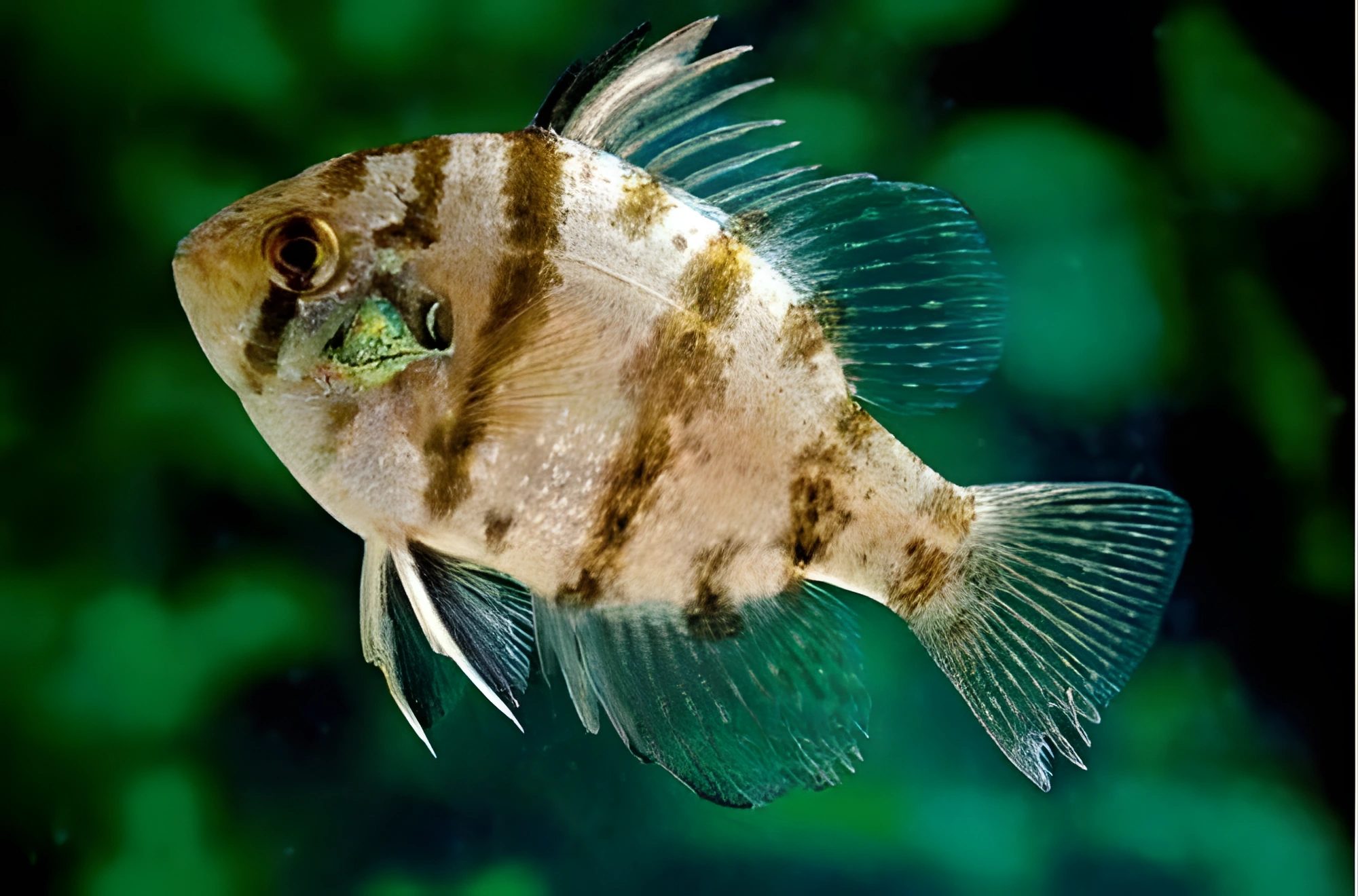
Adults of this species, reaching about 10 cm in length, are characterized by a high, laterally compressed, oval body. Their fins are quite large, especially in males, and have a translucent structure. A curious feature is the thickened first rays of the pelvic and dorsal fins, which form sharp spines. The fish's coloration consists of gray-silver tones, over which run rows of six brownish vertical stripes.
Habitat
The natural habitat of this fish extends across the USA, where it is native to North America. It can be found in river systems that flow into the Atlantic Ocean, from New Jersey to central Florida. The sunfish prefers lakes, ponds, as well as quiet sandy areas of streams, small and medium rivers, especially where there is dense aquatic vegetation.
Behavior and Compatibility
These fish are peaceful and calm, preferring to stay in groups. However, during the spawning period, males guarding the clutch may show aggression towards tank mates if they get too close. They get along well with other species of similar size and temperament that can live in relatively cold water. Information sources: Practical Fishkeeping, Fish Base.
Care and Maintenance
Although the blackbanded sunfish tolerates a wide range of pH and GH values, special attention should be paid to the water temperature regime. The fish needs a cool environment, not exceeding 22°C, which means there is no need for an aquarium heater; in hot summer months, additional cooling may even be required. For a group of 5–6 fish, the optimal aquarium volume starts from 90 liters. When decorating, it is important to provide areas with dense aquatic vegetation, preferably cold-water species. Plants suitable for cool water can be found in the relevant section by using the filter and checking "Coldwater plants", then clicking "Search". Aquarium maintenance and fish care are standard and include regular procedures: weekly partial water changes with fresh water, removal of organic waste, and equipment checks. The diet is based on live foods, such as mosquito larvae, bloodworms, and small crustaceans – Artemia and Daphnia. Dry foods are generally not accepted by this species.
Diet
The diet of these fish is based on live foods: mosquito larvae, bloodworms, and small crustaceans such as Artemia and Daphnia. Dry foods are generally rarely accepted. By nature, these fish are peaceful and calm, preferring to stay together in groups. During the spawning period, when males guard the clutch, they may show aggression towards other aquarium inhabitants if they get too close. They are well compatible with many fish of comparable size and temperament that can comfortably live in relatively cold water.
Breeding and Reproduction
Breeding requires preparing a pair in a separate breeding tank with sandy substrate and plants. Stimulation is provided by a spring increase in water temperature to 20–22°C after a cool winter period. The male builds a nest in the form of a pit in the substrate, where the female lays her eggs. After fertilization, the male takes over guarding the clutch, so it is recommended to remove the female. Fry hatch after 3–4 days, start swimming and feeding after a short period. Initial food includes Artemia nauplii or small rotifers.
Diseases
The species is highly sensitive to water quality and habitat quality. Fish are extremely susceptible to the accumulation of ammonia and organic waste, which quickly leads to weakened immunity and the development of secondary bacterial infections. Prevention involves maintaining cleanliness, regular water changes, and creating conditions as close as possible to natural ones, including a soft and slightly acidic environment. Unsatisfactory keeping conditions are the main factor provoking diseases.
How to choose
When choosing specimens, preference should be given to young individuals, as they adapt more easily to aquarium conditions. It is important to carefully inspect the fish for signs of emaciation, fin damage, or body ulcers. Healthy individuals should be active and show interest in their surroundings. Avoid purchasing fish that appear lethargic, hide in corners, or show signs of body deformation, as this species tolerates stress poorly during transportation and changes in environment.
Frequently asked questions
The essentials: size, tank volume, water parameters and care
How big does Blackbanded sunfish get?
An adult reaches 10 cm in length. Plan the tank around the maximum size: the fish quickly outgrows a cramped setup.
What size aquarium does Blackbanded sunfish need?
The minimum recommended volume is 90 L. A smaller tank speeds up nitrate build-up and raises stress levels.
What water parameters does Blackbanded sunfish need?
Temperature 4–22 °C, pH 6.5–7.5, hardness 10–20 dGH. Stability matters more than exact values: sudden swings are harder on the fish than a small deviation from the ideal.
How long does Blackbanded sunfish live?
Around 6 years when kept properly. Lifespan depends directly on tank volume, water quality and a varied diet.
Is Blackbanded sunfish aggressive?
Temperament: peaceful (regular). Keep this in mind when choosing tank mates.
How many Blackbanded sunfish should be kept together?
Recommended setup: small group (5–6 individuals). Ignoring this is a common cause of stress and disease.
What does Blackbanded sunfish eat?
Diet type: meat / protein (live, frozen, fresh). Feed small portions that are finished within a couple of minutes — overfeeding does more harm than underfeeding.
What is the scientific name of Blackbanded sunfish?
The scientific name of the species is Enneacanthus chaetodon, family Sunfishes (Centrarchidae). It also appears in the literature as: Apomotis chaetodon, Bryttus chaetodon, Mesogonistius chaetodon.