Temperature20 – 28 °C
Natural range
- Ethiopia area
- Somalia area
- Kenya area
- East African Rift area
KillifishConservation status: Least concern LC
Other scientific names: Fundulus patrizii, Notobranchius patrizii
Nothobranchius patrizii is a representative of the family Nothobranchiidae, also known as African Rivulines. These fish are characterized by their bright, lively nature, especially the males. Although their keeping is relatively simple, the breeding process presents significant difficulties, so the species is not recommended for beginner aquarists.
- Required aquarium volume
- 40 L
- Size in aquarium
- 5 cm
- Temperature
- 20 – 28 °C
- Temperament
- Peaceful (regular)
Parameters
Water pHSlightly acidic (6) – Neutral (7.5)
Water dHSoft (4) – Hard (15)
Water salinityno salt (freshwater)
Size in aquarium5 cm
Lifespan1 years
TemperamentPeaceful (regular)
Toward small fishnot a predator
Required aquarium volume40 L
Lightingdimmed
Substratesoft sandy (including silted)
Water flownone or stagnant (no flow)
FeedingPlant-based (algae, vegetables)
CareHarem (1 male and several females)
Description
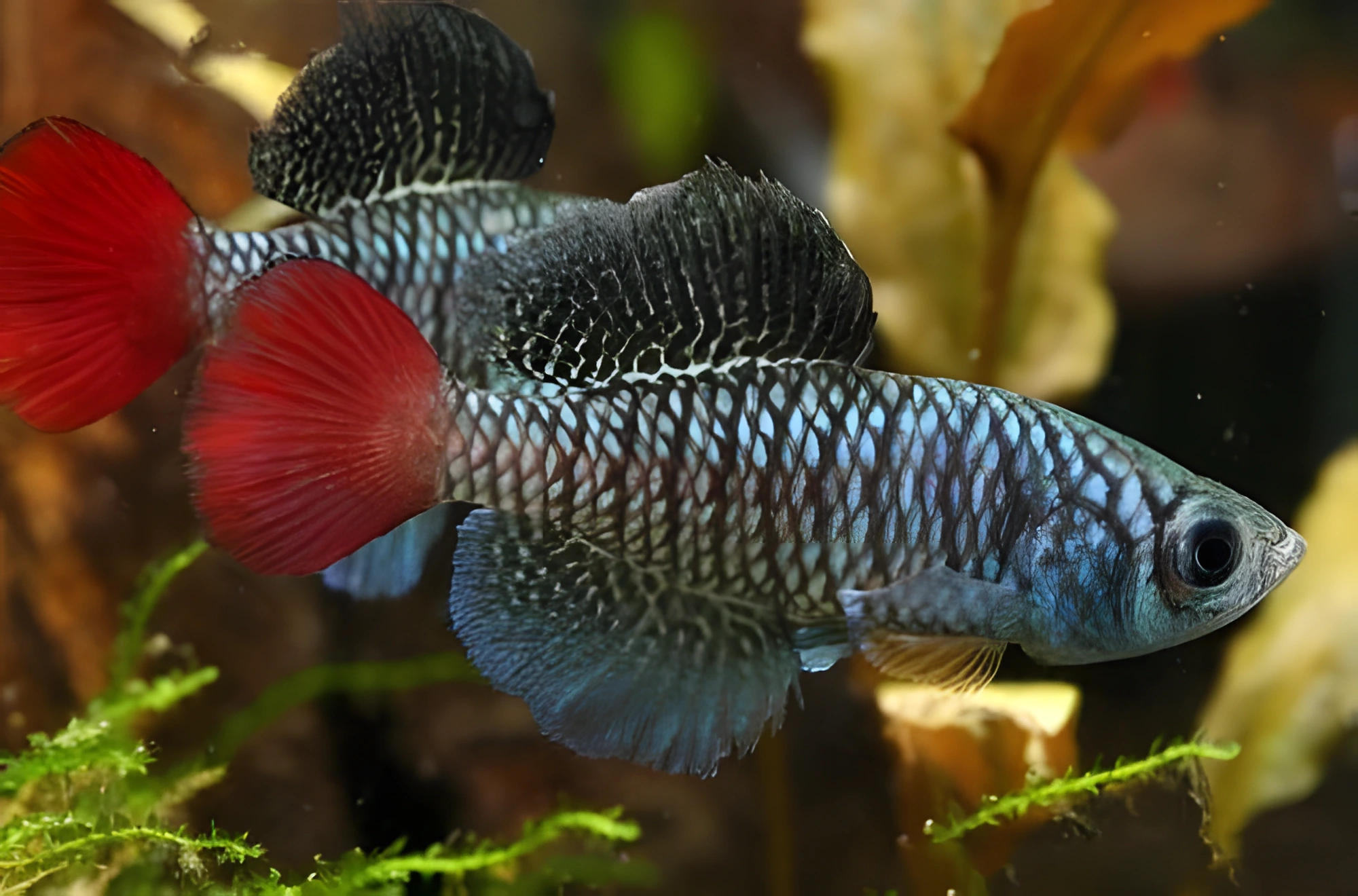
Adult Nothobranchius reach a length of about 5 cm. Males display a coloration similar to a related species, Nothobranchius palmqvisti, but they have predominant blue hues on their bodies and fins. Their caudal fin is red, and each scale has a black outline, creating a characteristic reticulated pattern. Females, on the other hand, have a more subdued, less vibrant palette.
Habitat
The origin of these fish is linked to the African continent, where their natural range includes Ethiopia, Somalia, and Kenya. They inhabit shallow streams, rivers, swamps, and temporary bodies of water that form during the rainy season. Their typical habitat consists of small backwaters densely overgrown with aquatic vegetation, with depths often only a few centimeters.
Behavior and Compatibility
Males exhibit pronounced territorial behavior and do not tolerate the presence of rivals in their territory; in small aquariums, this can lead to frequent skirmishes. In confined spaces, the optimal solution is to keep a group consisting of one male and several females, who, in turn, are peaceful and non-confrontational. These fish are compatible with other species of comparable size, with the exception of their relatives from the genus Nothobranchius.
Care and Maintenance
An aquarium of 30–40 liters is quite suitable for a group of 3–5 individuals. When decorating the tank, it is important to provide shelters, for example, in the form of natural driftwood or dense thickets of live plants. The use of floating plants will not only create additional shade but also help prevent the fish from jumping out. Lighting should be subdued, as bright light can dull the fish's coloration. A soft, dark substrate is recommended. If you plan to breed them, it will be useful to acquire specialized spawning substrates for Killifish that can be easily removed from the aquarium. Nothobranchius patrizii are highly adaptable to various temperature regimes and hydrochemical parameters, showing greater resilience than many freshwater fish accustomed to more stable natural conditions. Nevertheless, to maintain the health of the fish, it is necessary to regularly service the aquarium and prevent the accumulation of organic waste.
Diet
The basis of these fish's diet should be live or frozen foods, such as Daphnia, Artemia, and bloodworms. Dry foods can be used as a supplement to the main diet.
Breeding and Reproduction
In natural conditions, the reproduction of these fish is activated with the onset of the dry season. The eggs are laid in the substrate layer. As the body of water dries up, the fertilized eggs remain in the semi-dry substrate for several months until the first rains. In a home aquarium, it is necessary to reproduce similar conditions. In an artificial environment, there is no clear seasonality of reproduction; spawning can occur at any time. As soon as the eggs appear on the substrate, the layer is carefully removed from the aquarium and transferred to a dark place, maintaining a temperature of 26–28°C. After 2.5 months, the eggs are flooded with cool water (about 18°C), after which the fry hatch within a few hours.
Diseases
The fish are hardy and undemanding. Diseases usually manifest only with a significant deterioration in keeping conditions. In a balanced aquarium ecosystem, health problems are generally absent. More detailed information on symptoms and treatment methods can be found in the "Diseases of Aquarium Fish" section.
How to choose
Acquiring this species requires caution, as it is a specialized fish, difficult to keep. Choose active individuals with clean fins, without visible damage, sores, or film on the scales. Avoid fish with signs of emaciation, sunken bellies, or apathetic behavior, as Nothobranchius are sensitive to stress during transport and changes in water parameters. It is recommended to purchase individuals from breeders specializing in Killifish to ensure proper origin and adaptation to aquarium conditions.
Frequently asked questions
The essentials: size, tank volume, water parameters and care
How big does Nothobranchius patrizii get?
An adult reaches 5 cm in length. Plan the tank around the maximum size: the fish quickly outgrows a cramped setup.
What size aquarium does Nothobranchius patrizii need?
The minimum recommended volume is 40 L. A smaller tank speeds up nitrate build-up and raises stress levels.
What water parameters does Nothobranchius patrizii need?
Temperature 20–28 °C, pH 6–7.5, hardness 4–15 dGH. Stability matters more than exact values: sudden swings are harder on the fish than a small deviation from the ideal.
How long does Nothobranchius patrizii live?
Around 1 years when kept properly. Lifespan depends directly on tank volume, water quality and a varied diet.
Is Nothobranchius patrizii aggressive?
Temperament: peaceful (regular). Keep this in mind when choosing tank mates.
How many Nothobranchius patrizii should be kept together?
Recommended setup: harem (1 male and several females). Ignoring this is a common cause of stress and disease.
What does Nothobranchius patrizii eat?
Diet type: plant-based (algae, vegetables). Feed small portions that are finished within a couple of minutes — overfeeding does more harm than underfeeding.
What is the scientific name of Nothobranchius patrizii?
The scientific name of the species is Nothobranchius patrizii, family Nothobranchiidae. It also appears in the literature as: Fundulus patrizii, Notobranchius patrizii.