Temperature18 – 22 °C
Natural range
- Kenya area
- Tanzania area
- East African coastal forests area
KillifishConservation status: Vulnerable VU
Other scientific names: Fundulopanchax palmquisti, Fundulus palmquisti, Fundulus palmqvisti, Nothobranchius palmquesti, Nothobranchius palmquisti, Notobranchius palmquisti
The fish Nothobranchius palmqvisti, known scientifically as Nothobranchius palmqvisti, is a member of the family Nothobranchiidae, which includes African rivulines, or Nothobranchius. It is named in honor of G. Palmqvist, who sponsored an African expedition to study the area around Lake Mweru and Mount Kilimanjaro. This species is one of the most vibrant among Killifish. However, its keeping and breeding require certain experience, so this fish is not entirely suitable for beginner aquarists.
- Required aquarium volume
- 40 L
- Size in aquarium
- 5 – 6 cm
- Temperature
- 18 – 22 °C
- Temperament
- Semi-peaceful (including aggression during spawning / intraspecific conflicts)
Parameters
Water pHSlightly acidic (6) – Neutral (7)
Water dHSoft (4) – Medium hardness (10)
Water salinityno salt (freshwater)
Size in aquarium5 – 6 cm
Lifespan1 years
TemperamentSemi-peaceful (including aggression during spawning / intraspecific conflicts)
Toward small fishnot a predator
Required aquarium volume40 L
Lightingdimmed
Substratesoft sandy (including silted)
Water flownone or stagnant (no flow)
FeedingPlant-based (algae, vegetables)
CarePair (male/female)
Description
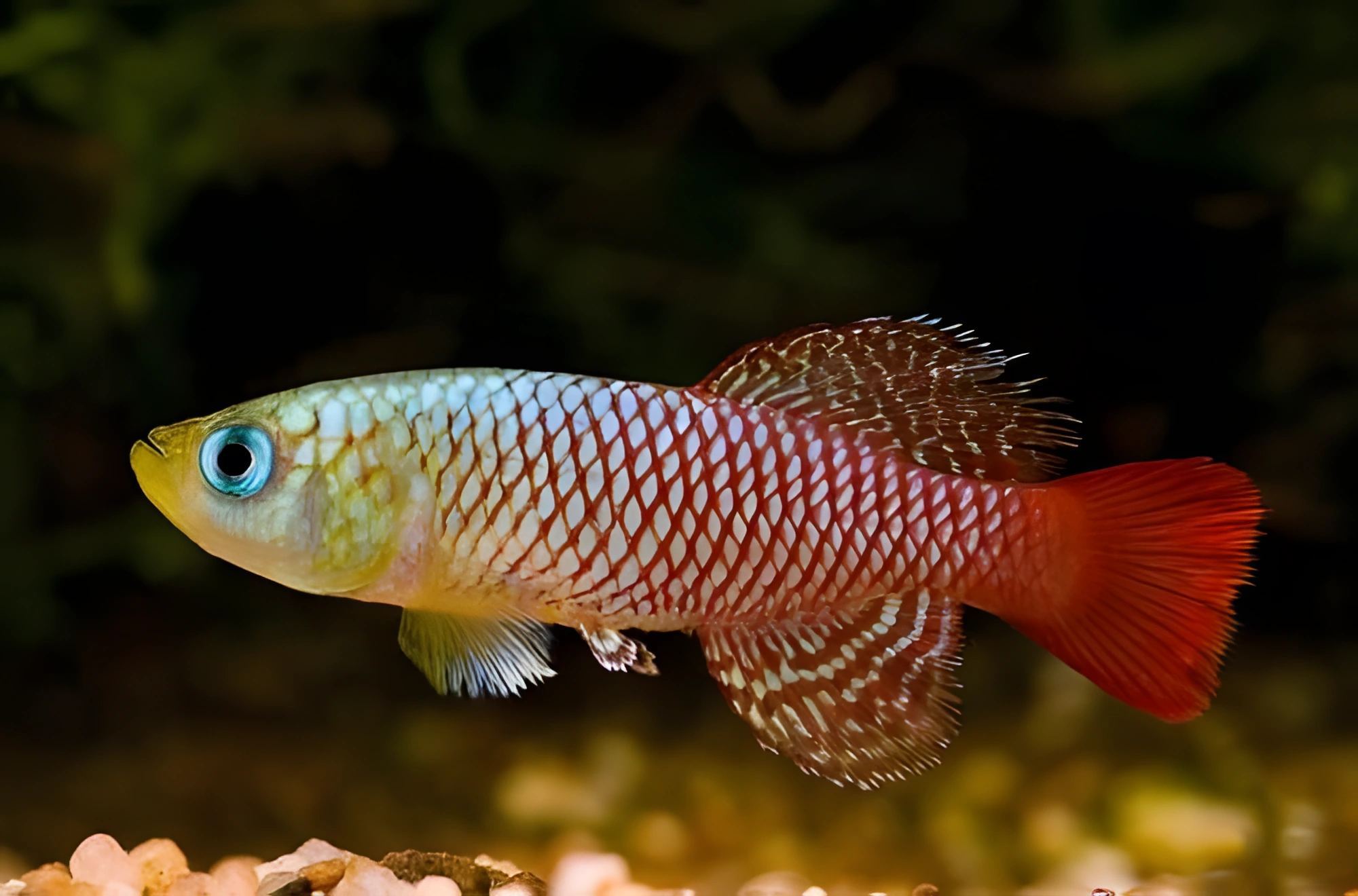
Adults typically reach 5–6 cm in length. Males are larger and have a striking green-blue body coloration that smoothly transitions to red hues towards the tail. Yellow speckles may be present in their coloration, depending on the fish's region of origin. Females are smaller and less flashy; their primary color is gray-pink, without bright patterns.
Habitat
This species originates from tropical regions of Africa. It is widespread in Kenya and Tanzania. Nothobranchius palmqvisti inhabits coastal lowlands, swampy areas, river floodplains, and shallow temporary bodies of water. During droughts, the fish migrate from drying areas to more stable water bodies.
Behavior and Compatibility
Males often compete with each other for territory and the attention of females. In small aquariums, constant skirmishes are almost inevitable, so it is preferable to keep a group consisting of one male and several females. These fish are compatible with other species if they can also thrive in similar cool conditions.
Care and Maintenance
For a group of 3–4 fish, the optimal aquarium volume starts from 20–40 liters. It is recommended to create many aquatic plants inside the aquarium and use a soft, dark substrate. Lighting should be subdued, and floating plants on the surface will help create additional shade. This species prefers rather cool water, with a temperature that should not exceed 22°C, meaning that instead of heating the aquarium, cooling it will likely be necessary. Care for Nothobranchius palmqvisti includes standard procedures for maintaining a stable aquatic environment: regular weekly partial water changes, removal of organic waste, cleaning of glass and decorative elements as they become dirty, and preventive equipment maintenance.
Diet
The basis of their daily diet should consist of live or frozen foods of appropriate size. Dry foods, although they may be used by some breeders, should serve exclusively as a supplement to the main diet.
Breeding and Reproduction
In their natural environment, reproduction occurs with the onset of the dry season. Eggs are laid in a layer of silt at the bottom. The body of water can completely dry out for several months, and all this time the eggs await the first rains, deep within the substrate. This cycle must be recreated in home conditions. Nothobranchius palmqvisti reaches sexual maturity at approximately 1.5–2 months. It is advisable to breed them in a separate spawning aquarium. Boiled and well-rinsed peat or special spawning materials for Killifish can be used as a substrate. One pair can lay up to one hundred eggs. The substrate with the eggs is removed from the aquarium and kept moist for approximately 2.5 months at a temperature of 26–28°C. During this period, the eggs gradually mature. If you look at them through a magnifying glass, you will be able to see the clearly formed eye of the fry. After flooding the substrate with fresh water at a temperature of about 18°C, the first fry appear within two hours.
Diseases
The fish are hardy and undemanding. Diseases usually manifest only with a significant deterioration in keeping conditions. In a balanced aquarium ecosystem, health problems are generally absent. More detailed information on symptoms and treatment methods can be found in the "Diseases of Aquarium Fish" section.
How to choose
When selecting individuals, attention should be paid to their activity and the absence of visible damage, such as ulcers, film, or fin rot. Healthy fish should have clear eyes and tightly pressed scales. It is important to consider that this species has a very short life cycle, so it is preferable to acquire young individuals to be able to observe their development and reproduction for longer. Avoid fish with signs of emaciation or lethargic behavior, as they may be weakened by improper keeping conditions in the store.
Frequently asked questions
The essentials: size, tank volume, water parameters and care
How big does Nothobranchius palmqvisti get?
An adult reaches 5–6 cm in length. Plan the tank around the maximum size: the fish quickly outgrows a cramped setup.
What size aquarium does Nothobranchius palmqvisti need?
The minimum recommended volume is 40 L. A smaller tank speeds up nitrate build-up and raises stress levels.
What water parameters does Nothobranchius palmqvisti need?
Temperature 18–22 °C, pH 6–7, hardness 4–10 dGH. Stability matters more than exact values: sudden swings are harder on the fish than a small deviation from the ideal.
How long does Nothobranchius palmqvisti live?
Around 1 years when kept properly. Lifespan depends directly on tank volume, water quality and a varied diet.
Is Nothobranchius palmqvisti aggressive?
Temperament: semi-peaceful (including aggression during spawning / intraspecific conflicts). Keep this in mind when choosing tank mates.
How many Nothobranchius palmqvisti should be kept together?
Recommended setup: pair (male/female). Ignoring this is a common cause of stress and disease.
What does Nothobranchius palmqvisti eat?
Diet type: plant-based (algae, vegetables). Feed small portions that are finished within a couple of minutes — overfeeding does more harm than underfeeding.
What is the scientific name of Nothobranchius palmqvisti?
The scientific name of the species is Nothobranchius palmqvisti, family Nothobranchiidae. It also appears in the literature as: Fundulopanchax palmquisti, Fundulus palmquisti, Fundulus palmqvisti.