Temperature22 – 28 °C
Natural range
- Eastern Tanzania area
- Zanzibar Archipelago area
KillifishConservation status: Least concern LC
Other scientific names: Fundulus melanospilus, Nothobranchius eiminki, Nothobranchius emini, Nothobranchius seychellensis, Notobranchius melanospilus
The fish, known scientifically as Nothobranchius melanospilus, or the Black-spotted Nothobranchius, belongs to the family Nothobranchiidae, which unites all Nothobranchius species.
- Required aquarium volume
- 40 L
- Size in aquarium
- 5 cm
- Temperature
- 22 – 28 °C
- Temperament
- Semi-peaceful (including aggression during spawning / intraspecific conflicts)
Parameters
Water pHNeutral (6.5) – Slightly alkaline (8.5)
Water dHVery hard (18) – Very hard (25)
Water salinityno salt (freshwater)
Size in aquarium5 cm
Lifespan1 years
TemperamentSemi-peaceful (including aggression during spawning / intraspecific conflicts)
Toward small fishnot a predator
Required aquarium volume40 L
Lightingmoderate (regular)
Substrategravel (dark)
Water flownone or stagnant (no flow)
FeedingHigh protein (predominantly meat)
CareHarem (1 male and several females)
Description
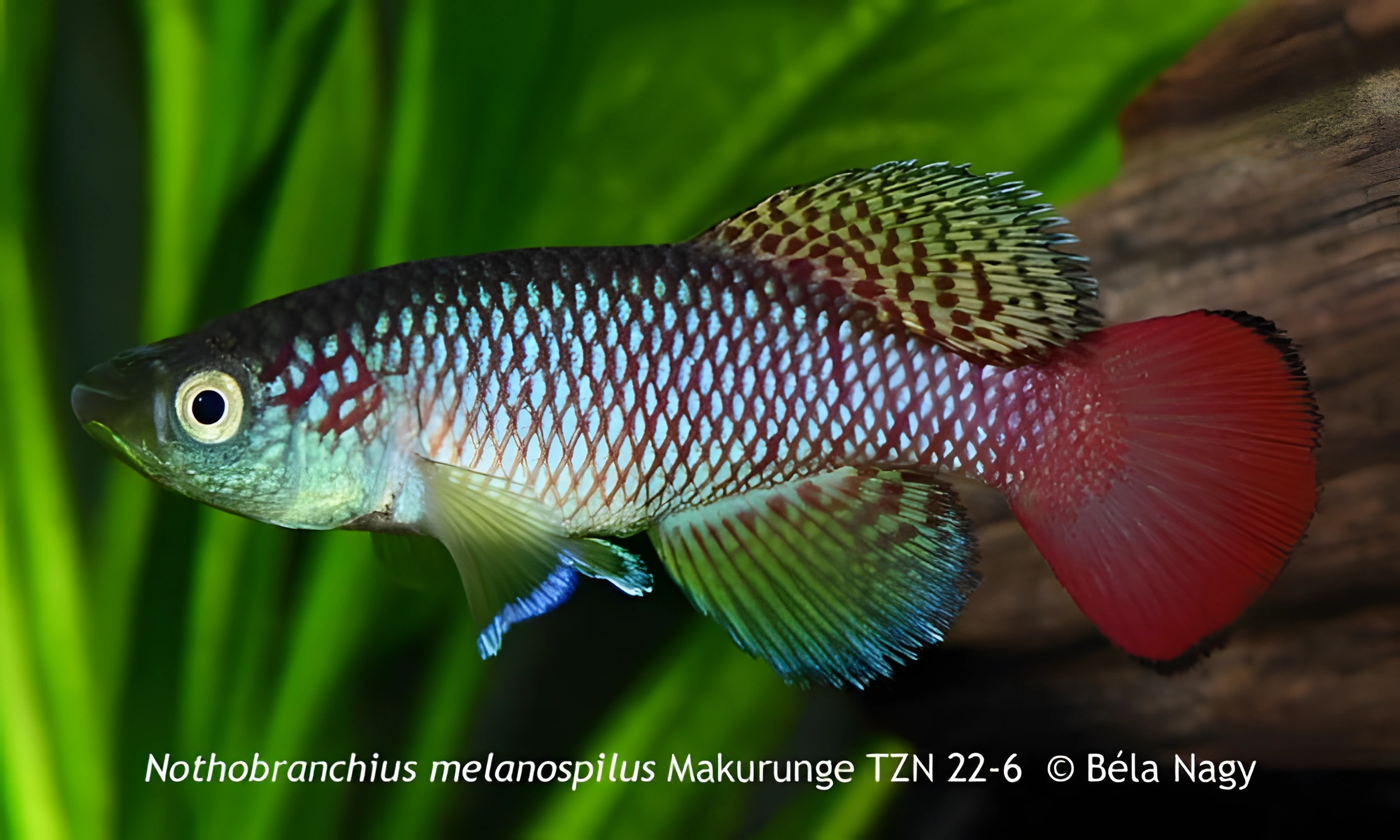
These fish are typical representatives of Killifish, inhabiting temporary bodies of water. Their lifespan is closely linked to the seasonal existence of such water bodies during the rainy period. In their natural habitat, they rarely live longer than one year, and in some areas, this period is reduced to six months. The emergence of fry coincides with the onset of rains. They exhibit very rapid growth, reaching full sexual maturity in just 6 weeks. Eggs are laid in the substrate, and after the water body dries out, the fertilized eggs are preserved in this layer. Adult individuals reach a length of approximately 5 cm. Nothobranchius melanospilus differs from other members of its genus by several characteristic features: in males, the caudal fin is red with narrow black edges on the upper and lower parts; a thin white edge is present on the dorsal and anal fins; the iris of the eye has a silvery hue. Females, on the other hand, are easily recognizable by irregularly distributed black spots on their sides and at the base of their unpaired fins.
Habitat
The natural habitat of this fish extends across the eastern African continent. It is endemic to the coastal river systems of eastern Tanzania and the neighboring Zanzibar archipelago, which are subject to temporary drying. Nothobranchius prefers shallow sections of rivers, as well as swamps and ditches, which fill with water during the rainy season and remain dry during the arid period of the year. A characteristic feature of such water bodies is a silty bottom and abundant aquatic vegetation.
Behavior and Compatibility
Nothobranchius melanospilus is a territorial species, exhibiting pronounced intraspecific aggression, especially between males. In an aquarium, it is recommended to keep them in small groups with a predominance of females to disperse the attention of dominant males. The fish are active, preferring the middle and lower water layers. Compatibility with other species is limited due to their specific requirements for keeping conditions and short life cycle; they feel most comfortable in a species-specific tank.
Care and Maintenance
For keeping a pair or a small group, an aquarium of 40 liters or more is suitable. Effective filtration is necessary, but with a weak water flow, as in nature, the fish inhabit stagnant waters. It is recommended to use dark substrate and a large number of live plants to create shelters. Lighting should be moderate. Water parameters: temperature 22–28°C, pH 6.5–8.5, hardness 18–25 dGH. Weekly partial water changes are important.
Diet
In nature, they feed on small invertebrates and insect larvae. In the aquarium, the diet should consist mainly of high-quality live or frozen foods, such as daphnia, artemia, bloodworms, or chironomid larvae. They will accept dry foods, but these should not be the sole source of nutrition. Feeding should be done in moderate portions 1–2 times a day, avoiding overfeeding, which negatively affects the health of the fish.
Breeding and Reproduction
These fish are not frequently encountered in amateur aquariums. Most often, they are sold as eggs, which, due to their ability to survive without water for extended periods, are easily transported. Maintaining Nothobranchius melanospilus is not particularly difficult if suitable conditions are provided. They are undemanding, preferring a temperature range of 22–28°C, a pH level of 6.50 to 8.5, and high water hardness. Water movement in the aquarium should be minimized; a simple air-lift filter or a canister filter with a flow diffuser on the outlet tube will suffice. When the substrate with eggs is placed in water, the fry emerge within a few days. They should be fed microfoods or Artemia nauplii. The aquarium setup can be anything, but it is preferable to use a dark, soft substrate and abundant aquatic plants. In aquarium conditions, the lifespan of these fish can exceed 1 year. Information obtained from the FishBase database.
Diseases
The species is highly sensitive to water quality and the accumulation of organic compounds, which often provoke bacterial infections and fin rot. Due to their short life cycle, which is about one year, the fish are prone to age-related metabolic changes. Prevention involves maintaining stable environmental parameters, regular aeration, and avoiding overfeeding. If signs of illness appear, the use of specialized aquarium fish remedies is recommended.
How to choose
When purchasing, choose active fish with bright coloration and clean fins without signs of damage or film. It is important to assess the behavior of individuals in the general aquarium: healthy fish should show curiosity and move actively. Avoid buying fish with sunken bellies or signs of emaciation. Given the short life cycle of the species, it is preferable to acquire young individuals to be able to observe their development for as long as possible.
Frequently asked questions
The essentials: size, tank volume, water parameters and care
How big does Nothobranchius melanospilus get?
An adult reaches 5 cm in length. Plan the tank around the maximum size: the fish quickly outgrows a cramped setup.
What size aquarium does Nothobranchius melanospilus need?
The minimum recommended volume is 40 L. A smaller tank speeds up nitrate build-up and raises stress levels.
What water parameters does Nothobranchius melanospilus need?
Temperature 22–28 °C, pH 6.5–8.5, hardness 18–25 dGH. Stability matters more than exact values: sudden swings are harder on the fish than a small deviation from the ideal.
How long does Nothobranchius melanospilus live?
Around 1 years when kept properly. Lifespan depends directly on tank volume, water quality and a varied diet.
Is Nothobranchius melanospilus aggressive?
Temperament: semi-peaceful (including aggression during spawning / intraspecific conflicts). Keep this in mind when choosing tank mates.
How many Nothobranchius melanospilus should be kept together?
Recommended setup: harem (1 male and several females). Ignoring this is a common cause of stress and disease.
What does Nothobranchius melanospilus eat?
Diet type: high protein (predominantly meat). Feed small portions that are finished within a couple of minutes — overfeeding does more harm than underfeeding.
What is the scientific name of Nothobranchius melanospilus?
The scientific name of the species is Nothobranchius melanospilus, family Nothobranchiidae. It also appears in the literature as: Fundulus melanospilus, Nothobranchius eiminki, Nothobranchius emini.