Temperature20 – 24 °C
Natural range
- Tanzania area
- Bagamoyo area
KillifishConservation status: Vulnerable VU
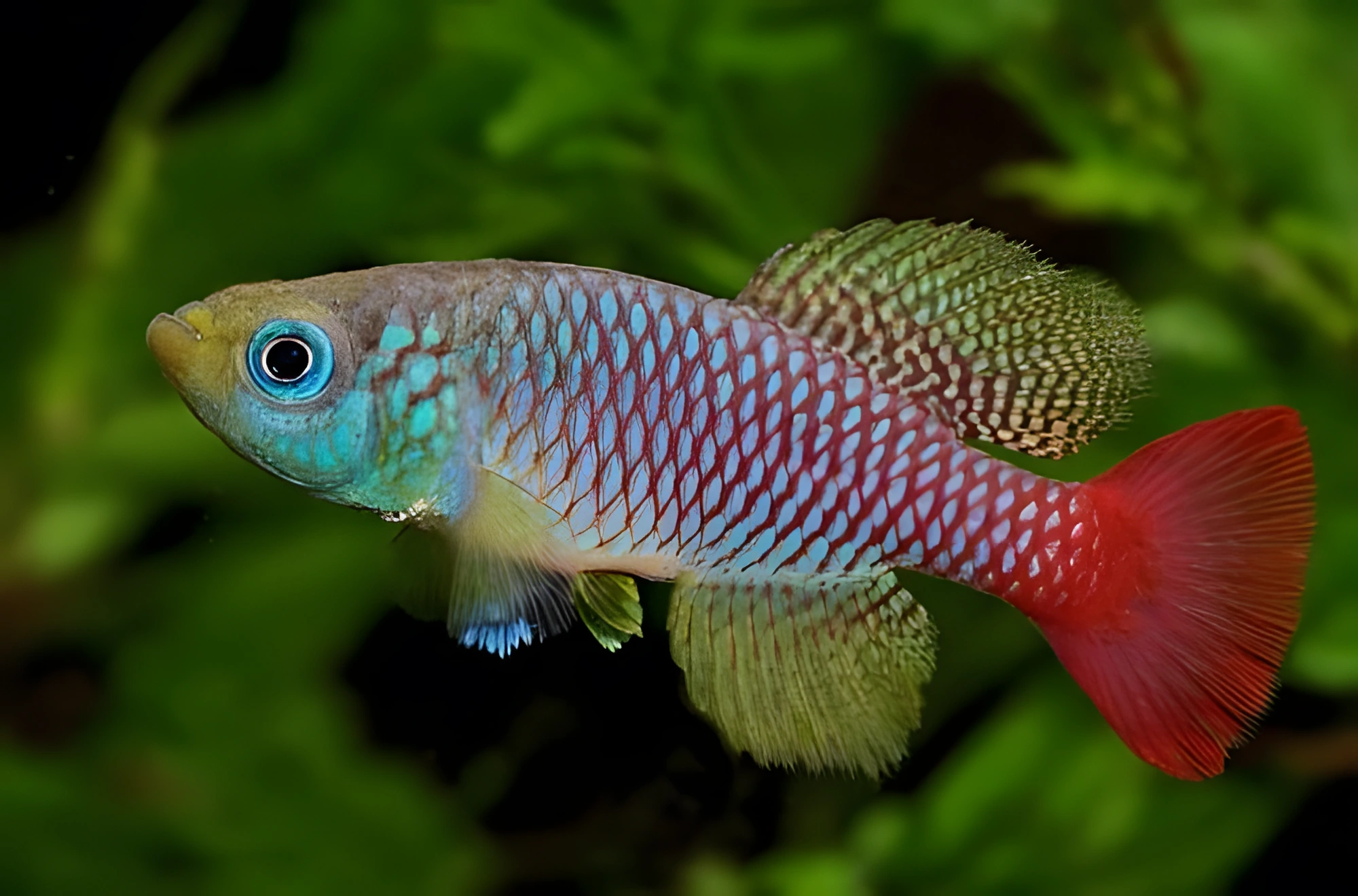
Nothobranchius foerschi, or Foersch's Nothobranch, belongs to the family Nothobranchiidae. This small African fish attracts attention with its beauty, but one of its characteristics is an extremely limited lifespan. In natural conditions, its existence rarely exceeds a year, but during this time it manages to mature and leave offspring. Although Nothobranchius foerschi may live a little longer in aquariums, it will be important to breed them to maintain their population, which is not particularly difficult.
- Required aquarium volume
- 50 L
- Size in aquarium
- 5 cm
- Temperature
- 20 – 24 °C
- Temperament
- Territorial (often aggressive)
Parameters
Water pHNeutral (6.5) – Neutral (7.5)
Water dHMedium hardness (10) – Very hard (25)
Water salinityno salt (freshwater)
Size in aquarium5 cm
Lifespan2 years
TemperamentTerritorial (often aggressive)
Toward small fishnot a predator
Required aquarium volume50 L
Lightingmoderate (regular)
Substrateany (no restrictions)
Water flowweak or moderate
FeedingSinking (meat / protein)
CarePair (male/female)
Description
Nothobranchius foerschi exhibits pronounced sexual dimorphism. Males reach a length of up to 5.5 cm, significantly exceeding females in size. Their coloration is distinguished by brightness and iridescent hues, including rich blue, red, and yellow shades, and the color palette may vary depending on the specific region. Females, on the other hand, rarely grow more than 4 cm and have a much more modest coloration.
Habitat
The native range of this species is modern Tanzania, located on the African continent. The first wild specimens used for scientific classification were found in the Ruvu River, which flows near the coastal city of Bagamoyo. Their typical habitat is swampy areas and river floodplains with dense vegetation in lowland areas. The water level in these places is subject to seasonal changes, and in certain periods, complete drying out of water bodies is possible.
Behavior and Compatibility
Nothobranchius foerschi exhibits pronounced intraspecific antagonism, especially between males, who actively defend their territories. In this regard, it is recommended to keep a group of several females per male or to keep the fish in a species-specific tank. The species is highly active but tolerates strong water currents poorly. Compatibility with other species is limited due to specific keeping conditions and a short life cycle, so species-specific keeping is preferable.
Care and Maintenance
A group of 3–4 individuals will be comfortable in an aquarium of 50 liters or more. For decorating such a tank, it is advisable to use an abundance of plants, creating conditions that mimic their natural swampy habitats. The substrate should be soft. Equipment required includes a heater, an aerator, as well as lighting and filtration systems. When choosing and installing a filter, it is important to consider that Nothobranchius foerschi tolerate strong currents poorly. Therefore, the filter must be selected to be productive but create minimal water movement. For example, outgoing flows can be directed towards the aquarium wall or another obstruction. Optimal water parameters include a neutral pH level and high hardness. If the water is too soft, its hardness will have to be adjusted using special reagents. The water temperature is recommended to be kept below 24°C to avoid induced spawning.
Diet
In their natural habitat, they feed on small aquatic insects, their larvae, and various crustaceans. For keeping in a home aquarium, it is recommended to provide a protein-rich diet, such as live or frozen daphnia, bloodworms, or brine shrimp. It is important to avoid exclusively dry foods, as this can lead to a deficiency of essential nutrients and negatively affect the fish's ability to reproduce.
Breeding and Reproduction
For spawning, a separate tank of 10 liters or more will be required. Its setup involves using a substrate consisting of artificial or coconut fibers. Typically, such a substrate is placed in special containers, which facilitates its removal from the water. The presence of plants is not mandatory. Necessary equipment includes a simple sponge filter, a heater, and a light lamp. During the summer, the selected pair of Nothobranchius foerschi is moved to the spawning tank. It is important that the water parameters and temperature here are completely identical to the conditions of the main aquarium. After this, over several days, the water level is gradually lowered, while simultaneously raising the temperature to 25°C. This procedure simulates the onset of the dry season. During this period, do not forget to provide the fish with abundant food! For Nothobranchius foerschi, this stage stimulates the breeding period. The female lays her eggs directly into the substrate, where the male immediately fertilizes them. After this, the parental instincts of the fish fade. The fish are returned to the main aquarium, but before this, to avoid temperature shock, they are placed in a bag filled with water from the spawning tank. The bag is tied and left to float on the surface of the main aquarium. After several hours, when the water temperature in the bag equalizes with the temperature of the main aquarium, the fish can be safely released. Meanwhile, the water is completely drained from the spawning tank, and the substrate with the eggs is removed. It is placed in a dark, dry, and warm place (at a temperature of 22–25°C) for a period of 3 months. After this time, the dried substrate is again immersed in water, and soon the fry appear. They show rapid growth and reach sexual maturity by the end of the first month of life.
Diseases
Fish of this species are susceptible to oodiniosis (velvet disease), which often manifests when keeping conditions are violated or due to stress. They are also sensitive to sharp fluctuations in temperature and water quality. An important aspect of prevention is maintaining stable environmental parameters and avoiding hypothermia, as at water temperatures below 20°C, the fish's immunity significantly decreases, making them vulnerable to infectious and parasitic diseases.
How to choose
When selecting individuals, attention should be paid to their activity and the condition of their scales. A healthy fish should have bright, clean coloration without visible spots, coatings, or fin damage. Avoid purchasing fish that appear apathetic, stay near the surface, or show signs of emaciation. Given the short lifespan of the species, it is preferable to acquire young individuals, as this will provide the maximum time for their keeping and breeding in home conditions.
Frequently asked questions
The essentials: size, tank volume, water parameters and care
How big does Nothobranchius foerschi get?
An adult reaches 5 cm in length. Plan the tank around the maximum size: the fish quickly outgrows a cramped setup.
What size aquarium does Nothobranchius foerschi need?
The minimum recommended volume is 50 L. A smaller tank speeds up nitrate build-up and raises stress levels.
What water parameters does Nothobranchius foerschi need?
Temperature 20–24 °C, pH 6.5–7.5, hardness 10–25 dGH. Stability matters more than exact values: sudden swings are harder on the fish than a small deviation from the ideal.
How long does Nothobranchius foerschi live?
Around 2 years when kept properly. Lifespan depends directly on tank volume, water quality and a varied diet.
Is Nothobranchius foerschi aggressive?
Temperament: territorial (often aggressive). Keep this in mind when choosing tank mates.
How many Nothobranchius foerschi should be kept together?
Recommended setup: pair (male/female). Ignoring this is a common cause of stress and disease.
What does Nothobranchius foerschi eat?
Diet type: sinking (meat / protein). Feed small portions that are finished within a couple of minutes — overfeeding does more harm than underfeeding.
What is the scientific name of Nothobranchius foerschi?
The scientific name of the species is Nothobranchius foerschi, family Nothobranchiidae.