Temperature23 – 26 °C
Natural range
- Mafia Island area
- Tanzania area
Killifish
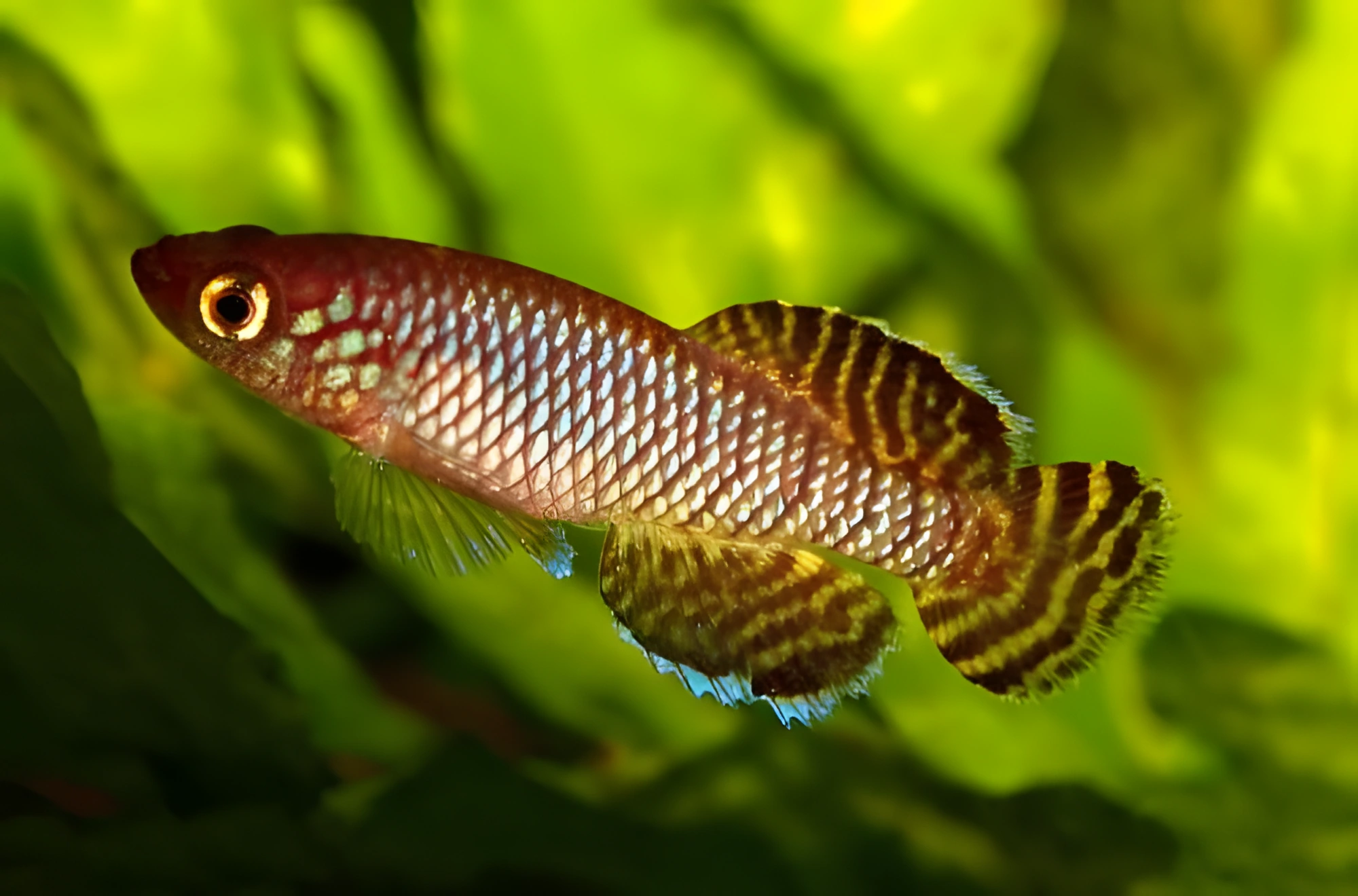
Nothobranchius korthausae, or Korthaus' Nothobranch, is a species belonging to the family Cyprinodontiformes, and although its coloration is not particularly original, the overall appearance of the fish is quite attractive. Despite the complex system of intraspecific relationships among males, this species is undemanding in terms of keeping and breeding. Given certain characteristics, it can be recommended to aquarists taking their first steps in this hobby.
- Required aquarium volume
- 40 L
- Size in aquarium
- 5 cm
- Temperature
- 23 – 26 °C
- Temperament
- Territorial (often aggressive)
Parameters
Water pHSlightly acidic (5.8) – Slightly acidic (6.4)
Water dHSoft (4) – Soft (6)
Water salinityno salt (freshwater)
Size in aquarium5 cm
Lifespan1 years
TemperamentTerritorial (often aggressive)
Toward small fishnot a predator
Required aquarium volume40 L
Lightingany
Substratesoft silted
Water flownone or stagnant (no flow)
FeedingMeat / protein (live, frozen, fresh)
CarePair (male/female)
Description
The fish has an elongated body, with a pointed small head and widely set, rounded fins. The main coloration consists of reddish-brown tones with rows of turquoise dots. Within the species, various color variations occur, where a yellow hue may predominate over red. Females usually appear significantly more modest in coloration, displaying paler tones.
Habitat
This fish originates from the African continent, specifically from one of the island regions off the coast of Tanzania — the Mafia Islands. In its natural habitat, Nothobranchius korthausae prefers numerous small lakes and bodies of water characterized by stagnant water.
Behavior and Compatibility
This fish exhibits a relatively calm and peaceful disposition towards other species. However, within its own species, the situation can be significantly more complex. Males are prone to conflicts and fierce fights, especially if there are not enough females and limited free space. To maintain balance, it is important that there are at least two females per male, and the habitat area corresponds to an aquarium of about 40 L.
Care and Maintenance
For a pair of fish to live comfortably, a tank of 40 L or more is sufficient; for a larger number of individuals, a correspondingly larger aquarium will be required. When creating the aquarium's decor composition, the focus should be on two main elements: floating plants and a soft substrate. Floating plants can occupy a significant portion of the water's surface, while leaving some free space. Sand mixed with peat is preferred as substrate. Other details of the underwater landscape are chosen based on personal preferences. Nothobranchius korthausae inhabits soft, acidic water, and although parameters can fluctuate within this range (i.e., the water can be more or less acidic, more or less soft), it is not advisable to go beyond these limits. Detailed information on water parameters (pH and dGH values), as well as methods for regulating them, can be found in the "Hydrochemical composition of water" section. The minimum equipment set includes a heater, aerator, light, and filter, with peat-based materials recommended for filtration to help maintain the necessary water acidity. Weekly aquarium maintenance includes replacing 10–20% of the water with fresh. Also, as needed, the substrate should be cleaned of organic waste (such as excrement and uneaten food residues) and the aquarium walls wiped.
Diet
It is recommended to include live food in the diet, such as small crustaceans (Daphnia), bloodworms, or small worms. If live food is unavailable, frozen food should be combined with dry mixes (flakes, granules) from reputable manufacturers. It is important that dry foods contain a sufficient percentage of protein components. Avoid feeding exclusively dry food, as this can lead to digestive problems. Fish should be fed 2–3 times a day, offering portions they can eat within a few minutes. Uneaten food residues must be removed to prevent contamination of the aquarium water.
Breeding and Reproduction
Successful breeding of Nothobranchius korthausae does not require special preparations. They can successfully spawn even in an empty aquarium, laying eggs directly on the glass. Nevertheless, it is recommended to create optimal conditions for them. Typically, the female lays eggs in a peat substrate, where they develop for 4–6 weeks at a temperature of 25–26°C. A peculiarity is that the incubation period can successfully occur both underwater and in moist peat, without the eggs suffering. This is an evolutionary adaptation due to the frequent drying up of water bodies in their natural habitat.
Diseases
Like other members of the family, this species has low immunity to infectious diseases when keeping conditions are violated. The main problems are skin and fin lesions caused by bacterial infections or fungi, which develop in water contaminated with organic waste. Fish are extremely sensitive to sharp fluctuations in hydrochemical parameters and the accumulation of nitrates. Prevention includes weekly water changes, control over feeding quality, and the use of peat filtering materials to maintain a naturally acidic environment, which helps reduce the risk of pathogenic outbreaks.
How to choose
When purchasing, choose active fish with bright coloration appropriate for their sex, and clean, spread fins without signs of plaque or erosion. Avoid individuals with sunken bellies, signs of lethargy, or unnatural behavior, such as constantly hovering near the surface. It is recommended to acquire a group of one male and several females to reduce intraspecific aggression, and to clarify in advance the conditions in which the fish were kept in the store, as an abrupt change in water parameters can lead to stress and premature death.
Frequently asked questions
The essentials: size, tank volume, water parameters and care
How big does Nothobranchius korthausae get?
An adult reaches 5 cm in length. Plan the tank around the maximum size: the fish quickly outgrows a cramped setup.
What size aquarium does Nothobranchius korthausae need?
The minimum recommended volume is 40 L. A smaller tank speeds up nitrate build-up and raises stress levels.
What water parameters does Nothobranchius korthausae need?
Temperature 23–26 °C, pH 5.8–6.4, hardness 4–6 dGH. Stability matters more than exact values: sudden swings are harder on the fish than a small deviation from the ideal.
How long does Nothobranchius korthausae live?
Around 1 years when kept properly. Lifespan depends directly on tank volume, water quality and a varied diet.
Is Nothobranchius korthausae aggressive?
Temperament: territorial (often aggressive). Keep this in mind when choosing tank mates.
How many Nothobranchius korthausae should be kept together?
Recommended setup: pair (male/female). Ignoring this is a common cause of stress and disease.
What does Nothobranchius korthausae eat?
Diet type: meat / protein (live, frozen, fresh). Feed small portions that are finished within a couple of minutes — overfeeding does more harm than underfeeding.
What is the scientific name of Nothobranchius korthausae?
The scientific name of the species is Nothobranchius korthausae, family Cyprinodontiformes.