Temperature23 – 30 °C
Natural range
- Mozambique area
- Zimbabwe area
- Southeastern Africa area
KillifishConservation status: Least concern LC
Nothobranchius furzeri, scientifically known as Nothobranchius furzeri, belongs to the family Nothobranchiidae, known as Nothobranchs. This species was named after Richard E. Furzer, who first discovered it. In their natural habitat, these fish can be found in the regularly drying water bodies of the African savanna, located in the southeastern part of the continent.
- Required aquarium volume
- 40 L
- Size in aquarium
- 3 – 6 cm
- Temperature
- 23 – 30 °C
- Temperament
- Territorial (often aggressive)
Parameters
Water pHNeutral (6.5) – Neutral (7.5)
Water dHSoft (4) – Hard (15)
Water salinityno salt (freshwater)
Size in aquarium3 – 6 cm
Lifespan1 years
TemperamentTerritorial (often aggressive)
Toward small fishnot a predator
Required aquarium volume40 L
Lightingany
Substratesoft peat-based
Water flownone or stagnant (no flow)
FeedingPlant-based (algae, vegetables)
CarePair (male/female)
Description
Among all known vertebrates, these fish stand out for their astonishingly short lifespan. In natural conditions, their life lasts only from 1 to 5 months, while in an aquarium environment, they can live from 3 to 16 months. This feature is due to their unique nature: in the process of evolution, to survive in shallow water bodies of a hot climate that periodically dry up, the fish have developed an extraordinary adaptation, which consists of accelerated development from fry to adult. This allows them to lay eggs before the water body completely dries up. Subsequently, these eggs remain in the silt, which turns into a layer of dried mud during the dry season. In this semi-dried state, the eggs can remain for several months, awaiting the onset of a new rainy season. Due to these characteristic features, Nothobranchius furzeri is not often found as a pet in aquariums, but it is an excellent object for laboratory research.
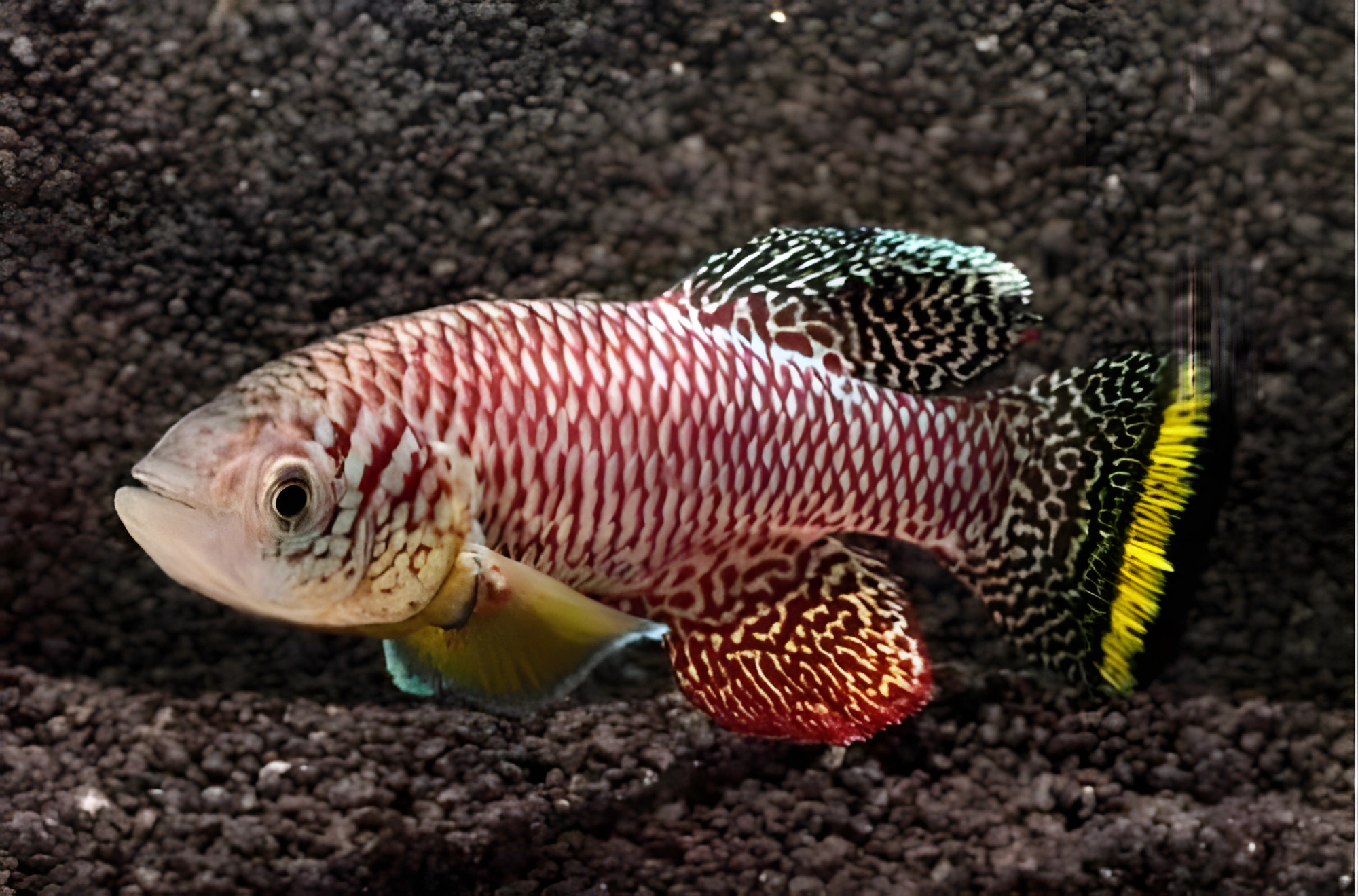
The size of adult individuals usually reaches about 3 centimeters in length, although specimens growing up to almost 6 centimeters have been recorded. Lifespan directly affects their size. This species is characterized by bright sexual dimorphism. Males are noticeably larger than females and have more contrasting coloration, dominated by red hues. Their fins and tail often contain yellow pigment. Females are smaller and colored in more subdued silvery or gray tones.
Habitat
The species is endemic to the southeastern part of Africa, found in Mozambique and Zimbabwe. The fish inhabit temporary water bodies, such as drying puddles and small ponds in semi-arid regions. In nature, they have adapted to extreme conditions where water bodies completely disappear in the dry season, and the population is maintained solely by eggs in a state of diapause in the bottom substrate.
Behavior and Compatibility
This fish is peaceful and quite active. Although there is competition between males for the attention of females, it is generally demonstrative and does not lead to serious conflicts. For natural reasons, they are usually kept in the company of conspecifics, but they are quite compatible with many other non-aggressive species of comparable size, for example, with some Killifish.
Care and Maintenance
Most often, these fish are acquired at the egg stage. The hatching process begins in warm, soft, and slightly acidic water. For a group of 4–5 fish, the optimal aquarium volume starts from 40 liters. The aquarium setup should be designed with future breeding in mind. The bottom is recommended to be covered with specialized fibrous materials, both artificial and natural, for example, a thick layer of coconut fibers. When eggs are laid in such a substrate, it can be easily removed from the aquarium, placed in a lidded container, and left for a couple of months in a dark and warm place. The rest of the decor does not play a significant role. Thickets of floating plants are suitable for landscaping. The mandatory equipment set includes a lighting system, a heater, and a simple air-lift filter to avoid strong water movement. Aquarium maintenance is standard: weekly partial water changes with fresh water and regular removal of accumulated organic waste. The diet includes both dry granulated foods (or flakes) and live or frozen foods. Bloodworms are considered an excellent choice.
Diet
The fish readily accept both dry granulated foods (or flakes) and live or frozen foods. Bloodworms, for example, are considered an excellent choice for their diet.
Breeding and Reproduction
Reproduction occurs in the substrate, where the fish lay their eggs before the water body dries up. In aquarium conditions, spawning tanks with peat or coconut substrate are used. After spawning, the substrate is removed, lightly dried, and stored for several months at a stable temperature. The incubation period averages from 2 to 6 months, after which the substrate is flooded with fresh water to stimulate the hatching of fry.
Diseases
The species has an extremely short life cycle, which makes it biologically predisposed to rapid aging and age-related changes. Fish are sensitive to water quality, the accumulation of organic compounds, and sharp fluctuations in parameters. Disease prevention involves maintaining cleanliness, regular water changes, and providing a balanced diet, as stress and poor keeping conditions quickly lead to weakened immunity and death.
How to choose
When purchasing, choose active individuals with clean fins and no visible skin damage. It is important to consider that this is a seasonal fish, so acquiring adult specimens is justified only for immediate breeding. It is recommended to clarify the fish's age and keeping conditions with the seller, as even small errors in care during the early stages of life can significantly shorten the already brief lifespan of the species.
Frequently asked questions
The essentials: size, tank volume, water parameters and care
How big does Nothobranchius furzeri get?
An adult reaches 3–6 cm in length. Plan the tank around the maximum size: the fish quickly outgrows a cramped setup.
What size aquarium does Nothobranchius furzeri need?
The minimum recommended volume is 40 L. A smaller tank speeds up nitrate build-up and raises stress levels.
What water parameters does Nothobranchius furzeri need?
Temperature 23–30 °C, pH 6.5–7.5, hardness 4–15 dGH. Stability matters more than exact values: sudden swings are harder on the fish than a small deviation from the ideal.
How long does Nothobranchius furzeri live?
Around 1 years when kept properly. Lifespan depends directly on tank volume, water quality and a varied diet.
Is Nothobranchius furzeri aggressive?
Temperament: territorial (often aggressive). Keep this in mind when choosing tank mates.
How many Nothobranchius furzeri should be kept together?
Recommended setup: pair (male/female). Ignoring this is a common cause of stress and disease.
What does Nothobranchius furzeri eat?
Diet type: plant-based (algae, vegetables). Feed small portions that are finished within a couple of minutes — overfeeding does more harm than underfeeding.
What is the scientific name of Nothobranchius furzeri?
The scientific name of the species is Nothobranchius furzeri, family Nothobranchiidae.