Temperature22 – 24 °C
Natural range
- Congo River Basin
- Cameroon area
- Democratic Republic of the Congo area
- Angola area
UnusualConservation status: Least concern LC
Other scientific names: Campylomormyrus lualabaensis, Gnathonemus lualabaensis, Gnathonemus rhynchophorus
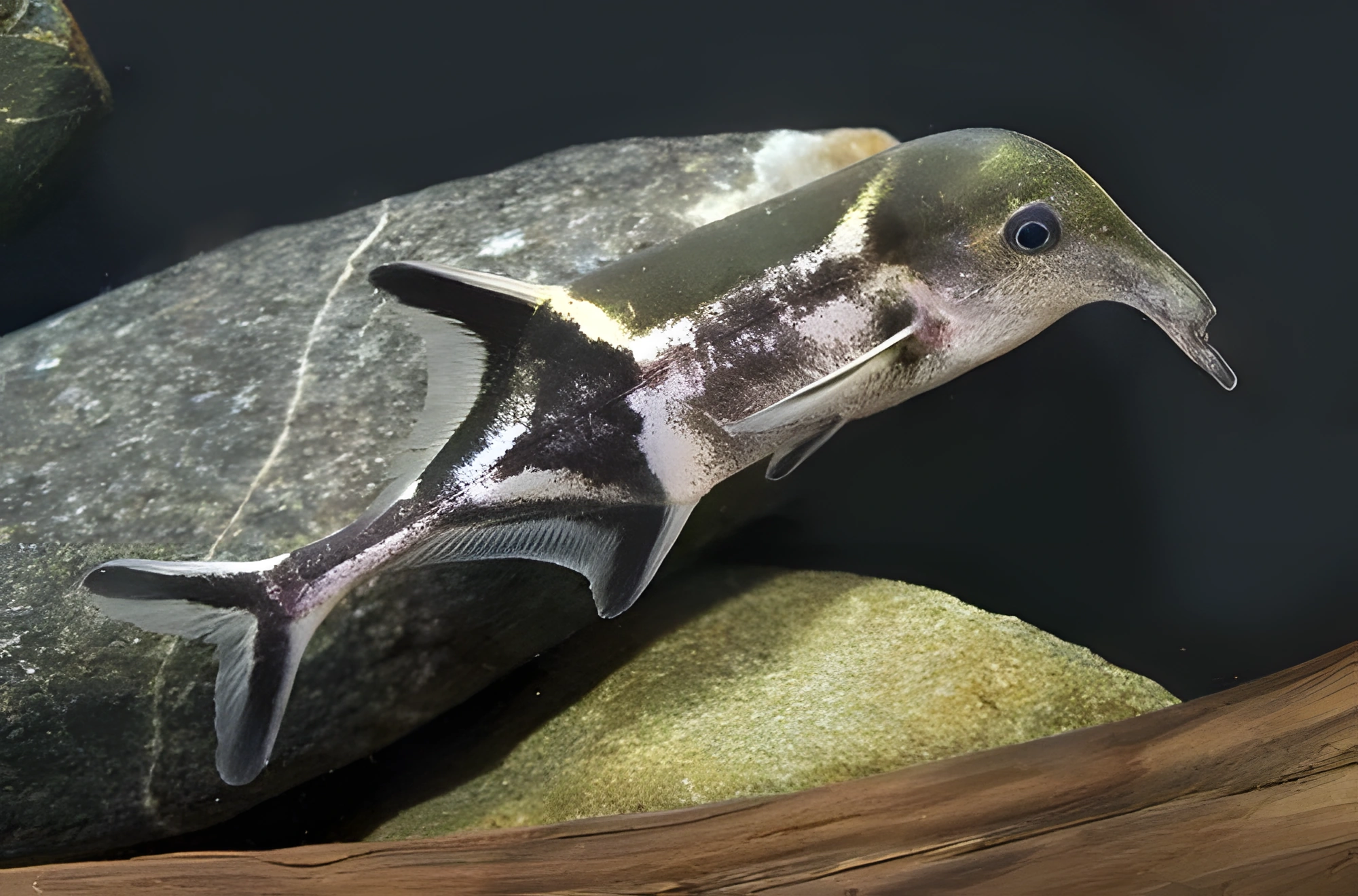
The fish known as the Trunk-nosed Elephantfish (Campylomormyrus rhynchophorus) belongs to the family Mormyridae, just like its close relative, the Elephantnose Fish. It also possesses a very unusual appearance. Acquiring such a fish can be challenging, as its breeding presents certain difficulties, and its keeping conditions require specific knowledge, which can be a challenge for inexperienced aquarists.
- Required aquarium volume
- 250 L
- Size in aquarium
- 22 cm
- Temperature
- 22 – 24 °C
- Temperament
- Peaceful (regular)
Parameters
Water pHSlightly acidic (5) – Neutral (7)
Water dHSoft (5) – Medium hardness (10)
Water salinityno salt (freshwater)
Size in aquarium22 cm
Lifespan8 years
TemperamentPeaceful (regular)
Toward small fishnot a predator
Required aquarium volume250 L
Lightingdimmed (dull)
Substratesoft silted
Water flowweak or moderate
FeedingSinking (any)
CareSolitary + other species (large / compatible)
Description
Adults can reach up to 22 cm in length, with a body compressed laterally. The fish's coloration is typically grayish-white. The dorsal and anal fins are symmetrically positioned, shifted closer to the caudal peduncle. One of the most remarkable features of this species is the presence of a “trunk”—a specialized mouth that the fish uses to search for food in the mud, which earned it the colloquial name “Trunk-nosed Elephantfish.” Being nocturnal and living in conditions of limited visibility, it uses a special organ on its tail that generates short electrical impulses to orient itself in space. In turn, electroreceptors on its head allow it to detect the slightest changes in the electric field, thus creating a “picture” of its surroundings.
Habitat
Its natural habitat is in the central part of the African continent, in the vast water bodies of the Congo River basin, covering the territories of modern-day Cameroon, the Democratic Republic of Congo, and Angola. In nature, it prefers the bottom areas of rivers, abundant in silt and dense aquatic vegetation.
Behavior and Compatibility
This species is territorial and jealously defends its bottom territory from other fish of the same species. Therefore, it is advisable to keep only one specimen in a single aquarium. The Trunk-nosed Elephantfish coexists well with non-aggressive, peaceful fish of similar or smaller size, and it is desirable that tank mates primarily inhabit the middle or upper water layers.
Care and Maintenance
For keeping the Trunk-nosed Elephantfish, an aquarium with a volume of at least 250 liters will be required. It is important to provide subdued lighting, and for the substrate, choose a soft sandy material with the addition of treated peat or a similar material. The aquarium should have dense plant thickets. Given the dim lighting, preference should be given to shade-tolerant species such as Anubias, Vallisneria, as well as some mosses and ferns. Maintaining stable water parameters is also critically important. The installation of a powerful filtration system is recommended, but it should be remembered that these fish do not tolerate strong currents well, so when choosing a filter, it is worth opting for models that do not create excessive water movement. Standard aquarium maintenance procedures include weekly partial water changes with fresh water and regular cleaning of organic debris.
Diet
In natural conditions, it feeds on various benthic organisms such as crustaceans, worms, insects and their larvae, and also consumes plant detritus. In a home aquarium, it is important to maintain an appropriate diet, especially if the fish is not yet accustomed to dry or frozen foods.
Breeding and Reproduction
Currently, there have been no documented successful cases of breeding the Trunk-nosed Elephantfish in home aquariums. These fish enter the market either from commercial fish farms or are caught in the wild.
Diseases
The main cause of diseases is often improper keeping conditions. Poor water quality, an unbalanced diet, and injuries can lead to the development of various infections. The “trunk” is particularly vulnerable to injuries, especially if a hard substrate is used. In a well-balanced aquarium ecosystem, fish usually do not encounter health problems. More detailed information on symptoms and treatment methods can be found in the “Diseases of Aquarium Fish” section.
How to choose
When choosing a Trunk-nosed Elephantfish, carefully inspect its skin: in a healthy specimen, it should be clean, without white film, ulcers, or damage, as this species has no scales and is extremely susceptible to infections and water quality. Pay attention to the fish's activity: in the store, it may appear timid, but when offered food, it should show interest. Avoid specimens with an unnaturally sunken belly, which may indicate prolonged emaciation or refusal to eat.
- Check for any signs of rapid breathing or lethargy, which often indicate stress or poor conditions in the retail aquarium.
- Ask the seller what the fish is being fed, as adaptation to new types of food can be difficult.
- Ensure that the fish has no damage to its trunk, as this organ is key for orientation and food searching, and injuries to it can lead to the death of the specimen.
Frequently asked questions
The essentials: size, tank volume, water parameters and care
How big does Trunk-nosed Elephantfish get?
An adult reaches 22 cm in length. Plan the tank around the maximum size: the fish quickly outgrows a cramped setup.
What size aquarium does Trunk-nosed Elephantfish need?
The minimum recommended volume is 250 L. A smaller tank speeds up nitrate build-up and raises stress levels.
What water parameters does Trunk-nosed Elephantfish need?
Temperature 22–24 °C, pH 5–7, hardness 5–10 dGH. Stability matters more than exact values: sudden swings are harder on the fish than a small deviation from the ideal.
How long does Trunk-nosed Elephantfish live?
Around 8 years when kept properly. Lifespan depends directly on tank volume, water quality and a varied diet.
Is Trunk-nosed Elephantfish aggressive?
Temperament: peaceful (regular). Keep this in mind when choosing tank mates.
How many Trunk-nosed Elephantfish should be kept together?
Recommended setup: solitary + other species (large / compatible). Ignoring this is a common cause of stress and disease.
What does Trunk-nosed Elephantfish eat?
Diet type: sinking (any). Feed small portions that are finished within a couple of minutes — overfeeding does more harm than underfeeding.
What is the scientific name of Trunk-nosed Elephantfish?
The scientific name of the species is Campylomormyrus rhynchophorus, family Mormyridae. It also appears in the literature as: Campylomormyrus lualabaensis, Gnathonemus lualabaensis, Gnathonemus rhynchophorus.