Temperature22 – 28 °C
Natural range
- Sulawesi area
- Southeast Sulawesi area
LivebearersConservation status: Near threatened NT
Nomorhamphus liemi, scientifically known as Nomorhamphus liemi (subspecies liemi), belongs to the family Zenarchopteridae. It is noted that the common Russian name is often applied to the entire species, not just this particular variety. However, given that two subspecies are most commonly encountered in aquariums, one of which is “liemi,” and there is no separate name for it, the use of the name Nomorhamphus liemi in everyday practice is quite appropriate.
- Required aquarium volume
- 130 L
- Size in aquarium
- 7 – 12 cm
- Temperature
- 22 – 28 °C
- Temperament
- Semi-peaceful (including aggression during spawning / intraspecific conflicts)
Parameters
Water pHNeutral (6.5) – Neutral (7)
Water dHSoft (4) – Very hard (18)
Water salinityno salt (freshwater)
Size in aquarium7 – 12 cm
Lifespan4 years
TemperamentSemi-peaceful (including aggression during spawning / intraspecific conflicts)
Toward small fishnot a predator
Required aquarium volume130 L
Lightingmoderate (regular)
Substrateany (no restrictions)
Water flowmoderate or strong
FeedingMeat / protein (live, frozen, fresh)
CareHarem (1 male and several females)
Description
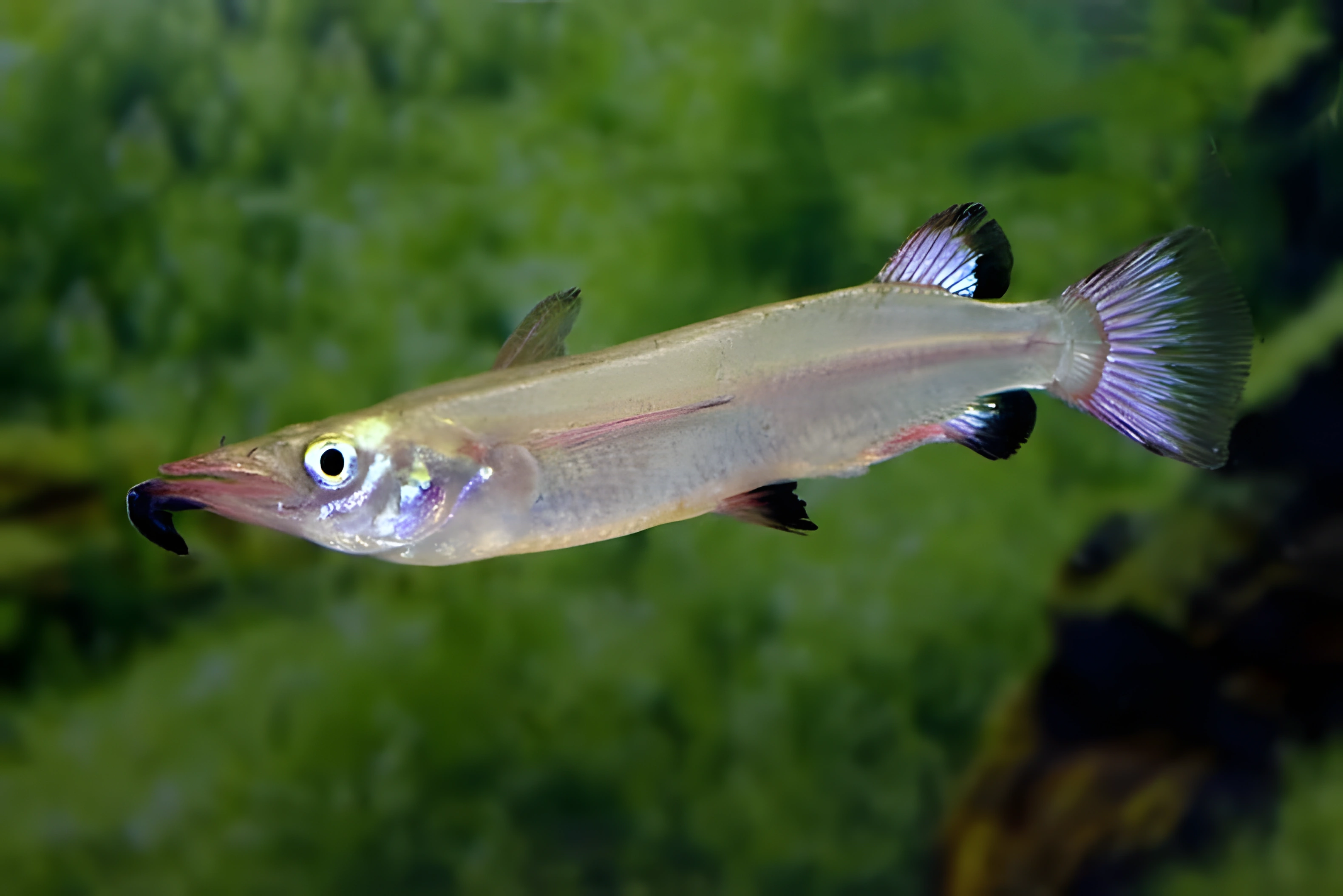
Although there are many natural subspecies of Nomorhamphus liemi, usually only two are found in aquarium keeping: “liemi” and “snijdersi.” The main distinguishing feature of “liemi” is its predominantly dark fins and tail, while “snijdersi” has bright red accents in its coloration. These fish are characterized by an elongated body, reminiscent of miniature river pikes, including their long jaws. Their upper jaw is always shorter than the lower jaw, which is a common feature for the entire family. Males sometimes have a distinctive hook-shaped appendage on their lower jaw. Males reach a length of up to 7 cm, while females are significantly larger, growing up to 12 cm, appear more massive, and have less vibrant coloration.
Habitat
Its origin is linked to the Indonesian island of Sulawesi, located in Southeast Asia. These fish inhabit numerous mountain streams, being particularly common in the southeastern part of the island.
Behavior and Compatibility
Males exhibit aggressive behavior towards each other. It is preferable to keep them in a harem setup, with several females per male. Hostility can also be directed at males of other closely related species.
Care and Maintenance
For a group of 3–4 individuals, an aquarium of at least 130–150 liters is recommended. The decor can be simple, but it is important to provide ample swimming space and several shelters near the water surface, for example, using floating plants. Since Nomorhamphus liemi inhabits mountain streams, a moderate current in the aquarium will be beneficial. These fish do not have high demands regarding water hydrochemical parameters but are very sensitive to its purity. It is crucial to prevent the accumulation of organic waste by regularly siphoning it out. Weekly water changes of 20–30% of the volume with fresh water, as well as prophylactic maintenance of equipment, especially the filtration system, are mandatory. Overall, keeping these fish is not overly difficult, although it may pose some challenges for novice aquarists.
Diet
Although these fish are considered omnivores, their diet should be enriched with high-protein foods. These can include specialized dry foods, as well as fresh, frozen, or live brine shrimp, bloodworms, mosquito larvae, and worms. They readily consume small fish, including fry. Feeding occurs exclusively in the upper water layers; any food that sinks to the bottom will remain untouched. Aqvium flake food for aquarium fish Check out our new product, a bestseller on Ozon with a 4.9 rating. Flake food is suitable for most aquarium fish. The raw material is manufactured according to new European Union standards (EU 2018/848). Contains vitamins A, C, D3, E, and Omega 3-6 Buy on Ozon
Breeding and Reproduction
The development of fry occurs inside the female, and they are born fully formed, usually no more than 15–20 individuals. The incubation period lasts approximately one and a half months. It is recommended to transfer the pregnant female to a separate tank where the water level should not exceed 10–12 cm. In their natural environment, these fish spawn in shallow streams, and the water column height directly affects the proper formation of fry in the first moments of their lives. It has been noted that excessive pressure can lead to swim bladder deformation, which does not occur in shallower water. Parental instincts are absent in these fish; adults will eat their own offspring, so the female should be returned to the main aquarium in a timely manner.
Diseases
Diseases in these fish are extremely rare when favorable conditions are provided. The risk of their occurrence increases in aquariums with unsatisfactory care, poor water quality, insufficient or unsuitable nutrition, and contact with infected fish. More detailed information on symptoms and treatment methods is available in the “Aquarium Fish Diseases” section.
How to choose
When selecting individuals, attention should be paid to the integrity of the fins and the absence of white spots, ulcers, or film on the body, which may indicate bacterial infections. A healthy fish should be active and stay in the upper water layers, avoiding sluggish behavior or resting on the bottom. It is important to assess the condition of the lower jaw: it should be straight, without signs of curvature or damage, as this is a key organ for feeding. It is recommended to purchase fish from sellers who can confirm the keeping conditions, as this species is sensitive to sudden changes in water hydrochemical parameters.
Frequently asked questions
The essentials: size, tank volume, water parameters and care
How big does Nomorhamphus liemi get?
An adult reaches 7–12 cm in length. Plan the tank around the maximum size: the fish quickly outgrows a cramped setup.
What size aquarium does Nomorhamphus liemi need?
The minimum recommended volume is 130 L. A smaller tank speeds up nitrate build-up and raises stress levels.
What water parameters does Nomorhamphus liemi need?
Temperature 22–28 °C, pH 6.5–7, hardness 4–18 dGH. Stability matters more than exact values: sudden swings are harder on the fish than a small deviation from the ideal.
How long does Nomorhamphus liemi live?
Around 4 years when kept properly. Lifespan depends directly on tank volume, water quality and a varied diet.
Is Nomorhamphus liemi aggressive?
Temperament: semi-peaceful (including aggression during spawning / intraspecific conflicts). Keep this in mind when choosing tank mates.
How many Nomorhamphus liemi should be kept together?
Recommended setup: harem (1 male and several females). Ignoring this is a common cause of stress and disease.
What does Nomorhamphus liemi eat?
Diet type: meat / protein (live, frozen, fresh). Feed small portions that are finished within a couple of minutes — overfeeding does more harm than underfeeding.
What is the scientific name of Nomorhamphus liemi?
The scientific name of the species is Nomorhamphus liemi (подвид / разновидность liemi), family Halfbeaks (Zenarchopteridae).