Temperature22 – 28 °C
Natural range
- Sulawesi area
- Indonesia area
LivebearersConservation status: Data deficient DD
Other scientific names: Nomorhamphus australis, Nomorhamphus ravnaki
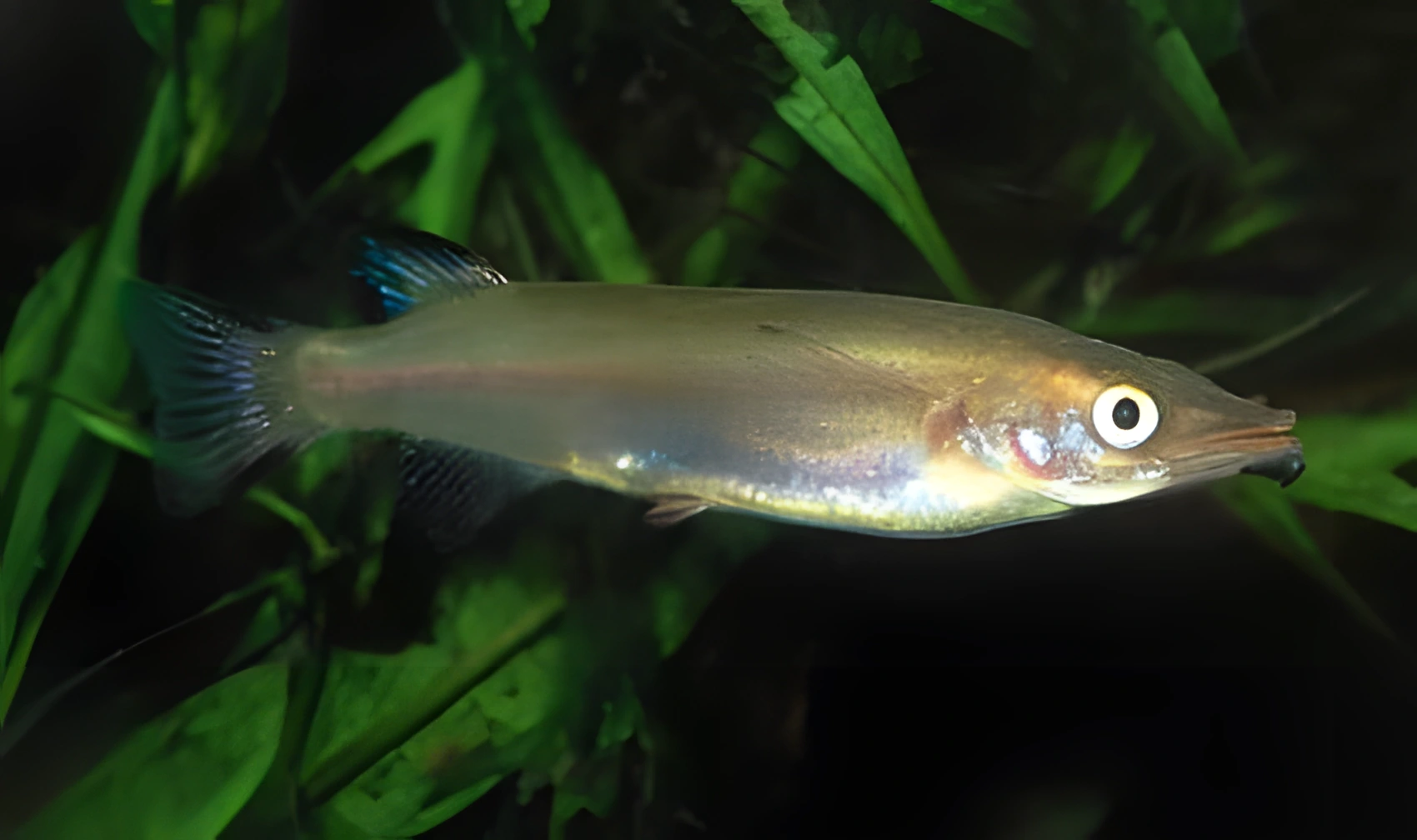
Nomorhamphus brembachi, or Brembach's Halfbeak, belongs to the family Zenarchopteridae. This fish is not often found in hobbyists' aquariums, which is due to its modest coloration. Sometimes it appears for sale along with other halfbeak species.
- Required aquarium volume
- 100 L
- Size in aquarium
- 6 – 8 cm
- Temperature
- 22 – 28 °C
- Temperament
- Semi-peaceful (including aggression during spawning / intraspecific conflicts)
Parameters
Water pHSlightly acidic (6) – Neutral (7.2)
Water dHVery soft (2) – Hard (12)
Water salinityno salt (freshwater)
Size in aquarium6 – 8 cm
Lifespan5 years
TemperamentSemi-peaceful (including aggression during spawning / intraspecific conflicts)
Toward small fishnot a predator
Required aquarium volume100 L
Lightingmoderate (regular)
Substrateany (no restrictions)
Water flowmoderate or strong
FeedingMeat / protein (live, frozen, fresh)
CareHarem (1 male and several females)
Description
The fish's body is elongated and slender. The dorsal and anal fins are located closer to the caudal peduncle, which allows it to make sudden lunges at prey. The mouth is notable for its long jaws, with the lower jaw being significantly longer than the upper. Males reach a length of up to 6 cm, and females up to 8 cm. The predominant body color is gray, but the fins of males may have reddish hues.
Habitat
This fish originates from Southeast Asia. Like many of its relatives from the family Zenarchopteridae, it is endemic to the Indonesian island of Sulawesi, where it inhabits the southwestern tip. Its natural habitat is the clear flowing waters of mountain streams and rivers.
Behavior and Compatibility
Males of this species do not always get along with each other, and in a small aquarium, conflicts between them are almost inevitable. The optimal option is to keep a group consisting of one male and several females. They are peaceful towards other fish species, provided that the tank mates are large enough not to become prey.
Care and Maintenance
For a group of 3–4 individuals, an aquarium of at least 100 liters is recommended. The aquascape should ideally provide both open areas for free swimming and zones for hiding or ambushing. It is important that all these elements are located in the upper water layers. Floating plants or those that reach the surface will be an excellent solution. Other aquascaping details are not critical. Nomorhamphus brembachi is sensitive to water purity, requires good aeration, and moderate current, replicating the conditions of mountain streams. To maintain proper water quality, an effective filtration system and regular aquarium maintenance are necessary. Specifically, a portion of the water should be replaced with fresh water weekly, combined with the removal of organic waste.
Diet
It is essential that the fish's diet includes high-protein foods. Specialized dry foods in the form of flakes or granules are suitable, as are live or frozen artemia, bloodworms, mosquito larvae, and similar products. Feeding should occur at the water surface, as food remnants that sink to the bottom will remain uneaten. It is worth noting that, given the opportunity, they may prey on small fish or fry.
Breeding and Reproduction
The development of fry in this species is intrauterine, and they are born fully formed. Before spawning, it is recommended to transfer the pregnant female to a separate tank with a water level of about 10–12 cm. It has been observed that spawning should occur in shallow water, as high water pressure in a fully filled aquarium often causes swim bladder deformation in newborn fry. Parental instincts are absent in this species, so immediately after spawning, the female should be returned to the main aquarium to prevent her from eating the offspring.
Diseases
Under favorable conditions, these fish rarely get sick. The risk of disease increases in an unkempt aquarium with poor water quality, insufficient or unsuitable nutrition, and contact with infected individuals. More detailed information on symptoms and treatment methods can be found in the "Aquarium Fish Diseases" section.
How to choose
When selecting individuals, pay attention to the integrity of the fins and the absence of visible damage on the body, especially in the area of the elongated lower jaw. A healthy fish should be active in the upper water layers and react quickly to external stimuli. Avoid specimens with signs of emaciation, sunken bellies, or unnatural film on their scales.
Since the species is rarely available for mass sale, it is important to clarify the keeping conditions with the seller and ensure that the fish show no signs of stress from recent transportation. It is recommended to purchase a group of several individuals, as they can become timid when kept alone. Inspect the store's aquarium for dead fish, as this may indicate an unhealthy condition of the entire batch.
Frequently asked questions
The essentials: size, tank volume, water parameters and care
How big does Brembach's Halfbeak get?
An adult reaches 6–8 cm in length. Plan the tank around the maximum size: the fish quickly outgrows a cramped setup.
What size aquarium does Brembach's Halfbeak need?
The minimum recommended volume is 100 L. A smaller tank speeds up nitrate build-up and raises stress levels.
What water parameters does Brembach's Halfbeak need?
Temperature 22–28 °C, pH 6–7.2, hardness 2–12 dGH. Stability matters more than exact values: sudden swings are harder on the fish than a small deviation from the ideal.
How long does Brembach's Halfbeak live?
Around 5 years when kept properly. Lifespan depends directly on tank volume, water quality and a varied diet.
Is Brembach's Halfbeak aggressive?
Temperament: semi-peaceful (including aggression during spawning / intraspecific conflicts). Keep this in mind when choosing tank mates.
How many Brembach's Halfbeak should be kept together?
Recommended setup: harem (1 male and several females). Ignoring this is a common cause of stress and disease.
What does Brembach's Halfbeak eat?
Diet type: meat / protein (live, frozen, fresh). Feed small portions that are finished within a couple of minutes — overfeeding does more harm than underfeeding.
What is the scientific name of Brembach's Halfbeak?
The scientific name of the species is Nomorhamphus brembachi, family Halfbeaks (Zenarchopteridae). It also appears in the literature as: Nomorhamphus australis, Nomorhamphus ravnaki.