Temperature22 – 30 °C
Natural range
- Upper Amazon Basin
- Peru area
- Ecuador area
- Bolivia area
CatfishConservation status: Least concern LC
Other scientific names: Harttia filamentissima, Harttia filamentosa
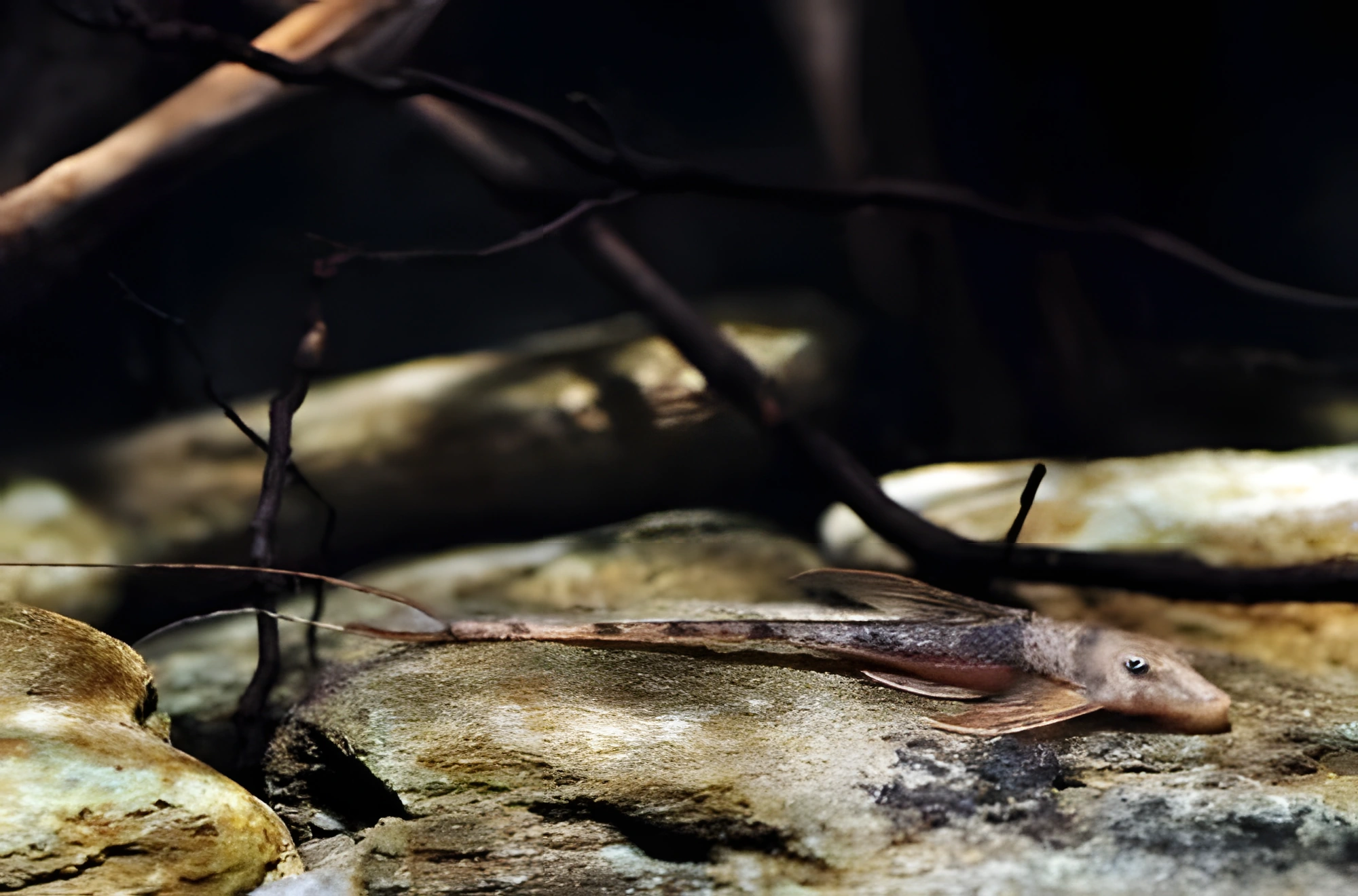
The Threadfin Catfish, known scientifically as Lamontichthys filamentosus and also called Lamont's Fish, is a member of the Loricariidae family, or Armored Catfish. It was named in honor of Francesca Lamont, a distinguished American scientist from the Museum of Natural History. Despite being a species often found for sale, successful keeping of this fish requires a certain level of preparation, so beginner aquarists are better off refraining from acquiring it.
- Required aquarium volume
- 200 L
- Size in aquarium
- 17 cm
- Temperature
- 22 – 30 °C
- Temperament
- Peaceful (regular)
Parameters
Water pHSlightly acidic (5.5) – Neutral (7.5)
Water dHVery soft (2) – Hard (15)
Water salinityno salt (freshwater)
Size in aquarium17 cm
Lifespan8 years
TemperamentPeaceful (regular)
Toward small fishnot a predator
Required aquarium volume200 L
Lightingbright
Substraterocky (rock formations, boulders, etc.)
Water flowmoderate or strong
FeedingSinking (plant-based)
CareBoth solitary and in group (flexible)
Description
Adults can reach a length of up to 17 cm. A distinctive feature of the somic body is its elongated shape, strongly tapering towards the tail. Their fins are characterized by extended, thread-like first rays. The coloration and pattern of the body can vary, depending on the specific region of origin; it may be light or brownish with darker markings. The length of the filamentous fins also depends on the locality.
Habitat
Its natural habitat is in South America, in the upper reaches of the Amazon River, covering the territories of Peru, Ecuador, and Bolivia. Here, rivers originate in the Andean mountain system. Typical for this species is living in shallow streams and rivers that flow over rocky substrate on the slopes of highlands among tropical forests. The water in such biotopes is characterized by a high content of dissolved oxygen and is saturated with minerals leached from rocks.
Behavior and Compatibility
These fish are considered quite calm and tolerant, successfully coexisting with other non-aggressive species of similar size. However, with insufficient space, territorial competition may arise between Threadfin Catfish and other bottom dwellers.
Care and Maintenance
For comfortable keeping of one or two Threadfin Catfish, an aquarium of at least 200 liters will be required. Successful and long-term keeping of this species is possible if a number of important conditions are met. It is necessary to ensure perfectly clean water, enriched with dissolved oxygen, and to maintain stable temperature and water chemistry parameters (pH/dGH) within acceptable limits. The presence of a moderate internal current in the aquarium will be very desirable; it can be created, for example, using a productive filtration system. In addition, it is recommended to use additional water aeration. The stability of the aquatic environment is maintained not only by the uninterrupted operation of equipment but also by regular and timely aquarium care. In particular, 40–50% of the water volume should be replaced with fresh water weekly, and organic waste, such as food residues and excrement, should be systematically removed. In aquarium design, rocky or sandy substrate, or their combinations, are usually used. Large stones, snags, and other decorative elements can be placed on the bottom at your discretion. If live plants are planned, preference should be given to undemanding species, which include Anubias, Java Fern, Crinum, and similar ones.
Diet
In natural conditions, the diet of the Threadfin Catfish consists of algae, soft parts of aquatic plants, and small invertebrates living on them. The latter serve more as an additional food source than a main component of the diet. When kept in an aquarium, sinking foods intended for herbivorous fish should be offered, as well as chopped vegetables and fruits. The most optimal food source is algae; if possible, it is advisable to stimulate their growth in the aquarium.
Breeding and Reproduction
Breeding in aquariums is extremely rare; most individuals for sale are wild-caught. These fish are substrate spawners. The female lays 40 to 50 eggs, attaching them to hard surfaces such as stones, snags, or aquarium walls. The incubation period lasts about 8 days, after which fry approximately 12 mm in size emerge. Sexual maturity is reached at about 1.25 years of age when the body length is approximately 10 cm.
Diseases
Most health problems in fish often arise from unsuitable keeping conditions. Maintaining a stable and comfortable habitat is a key factor for successful keeping. If symptoms of illness appear, the first step is to check the water quality. If deviations are found, it is important to take immediate measures to eliminate them. If the symptoms do not disappear or worsen, medicinal treatment may be required. More detailed information on symptoms and treatment methods can be found in the "Diseases of Aquarium Fish" section.
How to choose
When selecting individuals, attention should be paid to the following health indicators:
- absence of damage to the skin and fins, as the fish is sensitive to water quality and prone to infections if injured.
- active behavior during twilight hours; during the day, the fish may exhibit timidity and reclusiveness.
- absence of signs of emaciation, as the species has specific dietary needs and can be difficult to adapt to aquarium foods.
- integrity of the characteristic filamentous growths on the fins, which are often damaged during improper transportation or keeping.
Frequently asked questions
The essentials: size, tank volume, water parameters and care
How big does Threadfin Catfish get?
An adult reaches 17 cm in length. Plan the tank around the maximum size: the fish quickly outgrows a cramped setup.
What size aquarium does Threadfin Catfish need?
The minimum recommended volume is 200 L. A smaller tank speeds up nitrate build-up and raises stress levels.
What water parameters does Threadfin Catfish need?
Temperature 22–30 °C, pH 5.5–7.5, hardness 2–15 dGH. Stability matters more than exact values: sudden swings are harder on the fish than a small deviation from the ideal.
How long does Threadfin Catfish live?
Around 8 years when kept properly. Lifespan depends directly on tank volume, water quality and a varied diet.
Is Threadfin Catfish aggressive?
Temperament: peaceful (regular). Keep this in mind when choosing tank mates.
How many Threadfin Catfish should be kept together?
Recommended setup: both solitary and in group (flexible). Ignoring this is a common cause of stress and disease.
What does Threadfin Catfish eat?
Diet type: sinking (plant-based). Feed small portions that are finished within a couple of minutes — overfeeding does more harm than underfeeding.
What is the scientific name of Threadfin Catfish?
The scientific name of the species is Lamontichthys filamentosus, family Armored Catfishes (Loricariidae). It also appears in the literature as: Harttia filamentissima, Harttia filamentosa.