Temperature18 – 22 °C
Natural range
- East Asia area
- China area
- Japan area
GoldfishConservation status: Least concern LC
Other scientific names: Carasius auratus, Carassius buergeri, Carassius burgeri, Carassius carassius, Carassius chinensis, Carassius coeruleus
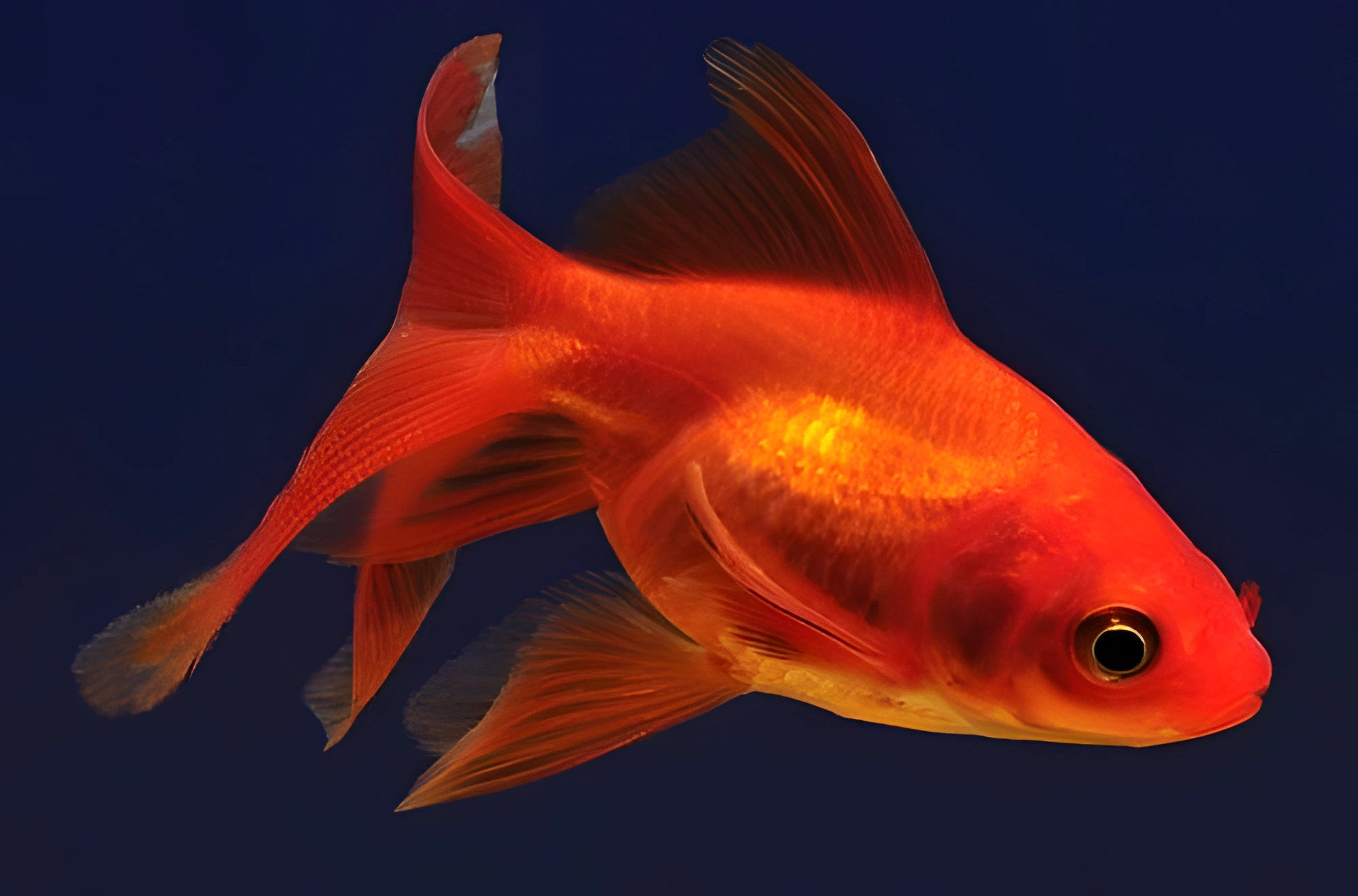
Among the decorative species of aquarium fish, Fantail Goldfish and their Japanese counterparts, Ryukin, hold a special place. These fish are specifically bred for various exhibitions, showcasing their unique beauty. Their most recognizable feature is a rather large caudal fin. When viewed from above, ideal specimens of Fantails and Ryukins impress with a fully bifurcated tail, resembling a triangle in shape. A similar division is also found on the anal fin. Unfortunately, fish whose fins have not achieved full division or have asymmetrical parts will not qualify for exhibition awards and remain only as pets. Although most fish of this breed are colored in reddish-orange tones, specimens with a spotted pattern, pearlescent sheen, or even pure white color are also found.
- Required aquarium volume
- 40 L
- Size in aquarium
- 15 cm
- Temperature
- 18 – 22 °C
- Temperament
- Peaceful, active/mobile
Parameters
Water pHSlightly acidic (6) – Slightly alkaline (8)
Water dHSoft (5) – Very hard (19)
Water salinityno salt (freshwater)
Size in aquarium15 cm
Lifespan15 years
TemperamentPeaceful, active/mobile
Toward small fishnot a predator
Required aquarium volume40 L
Lightingmoderate (regular)
Substrateany (no restrictions)
Water flownone or stagnant (no flow)
FeedingAny (universal)
CarePair (male/female)
Description
The Fantail Goldfish is a selectively bred variety of goldfish, characterized by a shortened, rounded, or egg-shaped body and a large caudal fin. Unlike many other decorative breeds, the most typical representatives have a single caudal fin, although in common aquarium practice, various forms with a simplified tail structure are often grouped under this name. Coloration varies from classic red-orange to white, spotted, or pearlescent. Adult individuals reach a size of about 15 cm.
Habitat
In the wild, goldfish inhabit freshwater bodies of East Asia, including China and Japan. They populate rivers, lakes, ponds, and canals with still or slow-moving water, often choosing areas with dense vegetation. In natural conditions, the species exhibits high ecological plasticity, tolerating significant water temperature fluctuations from 0 to 41°C and a wide range of hardness.
Behavior and Compatibility
These fish have a calm, peaceful disposition, but can be slow swimmers. Due to the peculiarities of their body and fin structure, they are slower than more active species, so it is not recommended to keep them with aggressive or very nimble tank mates. Fantails tend to search for food in the substrate, often digging through it, which requires the use of a soft substrate.
Care and Maintenance
For keeping a single specimen, an aquarium of at least 40 liters is required; however, for a comfortable existence of a group of fish, more spacious tanks are preferable. Important conditions include powerful filtration and regular water changes, as these fish produce a lot of organic waste. The optimal water temperature is 18–22°C. Fine sand is best used as substrate, as large gravel can injure the fish or get stuck in its mouth. The decor should be free of sharp objects that could damage the fins.
Diet
The species is omnivorous and has a pronounced appetite. The diet should include specialized dry foods for goldfish in the form of flakes or pellets, supplemented with plant-based foods and frozen foods such as Artemia or bloodworms. Feeding is recommended 1–2 times a day in small portions to avoid overeating and excessive water pollution from food remnants.
Breeding and Reproduction
Breeding is achieved through spawning, which is usually stimulated by an increase in water temperature. Sexual dimorphism is weakly expressed; males and females can mainly be distinguished during the period of preparation for reproduction. Eggs are laid on fine-leaved plants or special substrates. Fry require sorting and high-quality feeding, and offspring often include individuals with deviations from the breed standard.
Diseases
These fish are sensitive to water quality and the accumulation of organic compounds, which can provoke bacterial infections and fin diseases. Common problems include obesity due to improper feeding and injuries sustained from sharp objects in the aquarium. Prevention involves maintaining water cleanliness, adhering to the feeding regimen, and ensuring the absence of dangerous decor in the aquarium.
How to choose
When purchasing, choose active fish with clean fins showing no signs of damage, growths, or ulcers. The body should be symmetrical, without visible deformities, and the eyes clear. It is recommended to observe the individual's behavior in the store: a healthy fish shows interest in its surroundings and does not constantly stay at the surface or bottom in a depressed state.
Frequently asked questions
The essentials: size, tank volume, water parameters and care
How big does Fantail Goldfish get?
An adult reaches 15 cm in length. Plan the tank around the maximum size: the fish quickly outgrows a cramped setup.
What size aquarium does Fantail Goldfish need?
The minimum recommended volume is 40 L. A smaller tank speeds up nitrate build-up and raises stress levels.
What water parameters does Fantail Goldfish need?
Temperature 18–22 °C, pH 6–8, hardness 5–19 dGH. Stability matters more than exact values: sudden swings are harder on the fish than a small deviation from the ideal.
How long does Fantail Goldfish live?
Around 15 years when kept properly. Lifespan depends directly on tank volume, water quality and a varied diet.
Is Fantail Goldfish aggressive?
Temperament: peaceful, active/mobile. Keep this in mind when choosing tank mates.
How many Fantail Goldfish should be kept together?
Recommended setup: pair (male/female). Ignoring this is a common cause of stress and disease.
What does Fantail Goldfish eat?
Diet type: any (universal). Feed small portions that are finished within a couple of minutes — overfeeding does more harm than underfeeding.
What is the scientific name of Fantail Goldfish?
The scientific name of the species is Carassius auratus, family Cyprinids (Cyprinidae). It also appears in the literature as: Carasius auratus, Carassius buergeri, Carassius burgeri.