Temperature23 – 27 °C
Natural range
- Lake Tanganyika area
- East Africa area
CichlidsConservation status: Least concern LC
Other scientific names: Lamprologus brichardi, Lamprologus savoryi, Neolamprologus elongatus
The Princess Cichlid, scientifically known as Neolamprologus brichardi, belongs to the Cichlidae family. This species is endemic to Lake Tanganyika, located in East Africa. Its natural habitat consists of rocky substrates along the southwestern coast of the lake. Due to its modest size and generally peaceful nature, this fish is well-suited for community tanks alongside other species of similar size and temperament.
- Required aquarium volume
- 70 L
- Size in aquarium
- 5 – 6 cm
- Temperature
- 23 – 27 °C
- Temperament
- Territorial (often aggressive)
Parameters
Water pHNeutral (7.5) – Alkaline (9)
Water dHMedium hardness (10) – Very hard (25)
Water salinityno salt (freshwater)
Size in aquarium5 – 6 cm
Lifespan8 years
TemperamentTerritorial (often aggressive)
Toward small fishnot a predator
Required aquarium volume70 L
Lightingweak or moderate
Substratesandy (regular, light)
Water flowweak
FeedingMixed diet (meat + plant-based)
CareMixed (solitary / pair / group)
Description
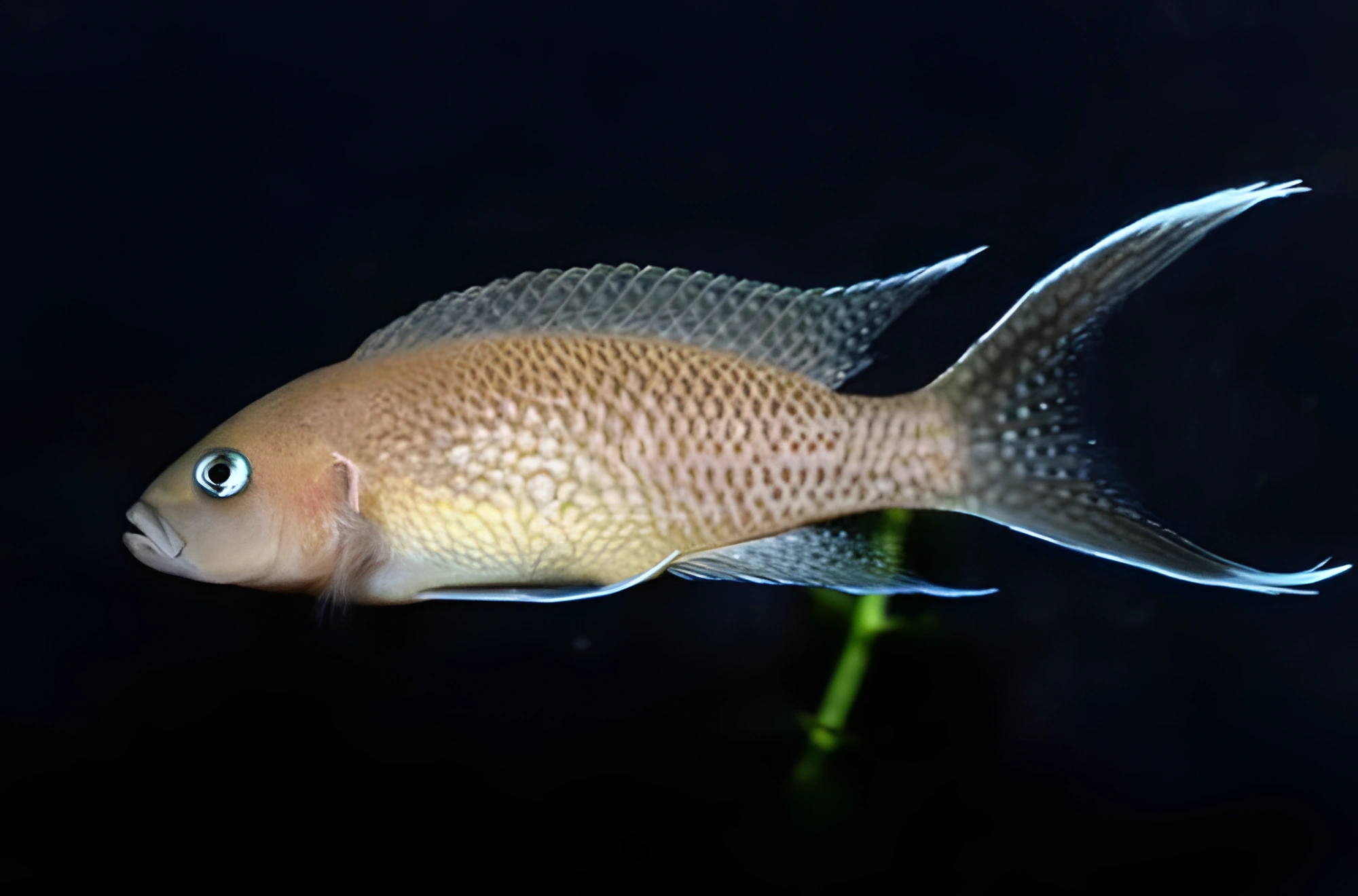
Adults of this cichlid reach a length of 5–6 cm. Their bodies are light-colored with a delicate, barely noticeable dark pigment. A characteristic feature is their elongated, lyre-shaped tail. The weak expression of sexual dimorphism makes it difficult to distinguish males from females.
Habitat
The species is endemic to Lake Tanganyika in East Africa. In nature, the fish inhabit shallow, rocky coastal areas, where they stay among rock formations and crevices. Typical biotopes are characterized by hard, alkaline water with high dissolved oxygen content and stable parameters, corresponding to the lake's conditions.
Behavior and Compatibility
This species is conditionally peaceful and can live in large groups. Nevertheless, during spawning, males will inevitably compete with each other for territory and may also show aggression towards other inhabitants. In a spacious aquarium, such behavior will be minimized. At other times, this species successfully coexists with other fish of similar size that can adapt to similar keeping conditions.
Care and Maintenance
For keeping a single pair of fish, a tank of 70 liters or more is suitable. As decorative elements, it is recommended to use a sand substrate, as well as rock formations or rocky outcrops to form caves, crevices, and other suitable shelters. Live plants are not an essential decorative element. Successful keeping of the Princess Cichlid is possible provided that the water is maintained in a very clean state and with high values of hydrochemical parameters pH and GH. To ensure the necessary water quality, in addition to weekly water changes (20–25% of the total volume) with fresh water, an effective filtration system will be required. Furthermore, it is important to regularly clean the substrate of accumulated organic waste.
Diet
The diet of these fish should primarily consist of meaty foods, such as live or frozen bloodworms and brine shrimp. In addition, vegetable flakes can be offered. To ensure a balanced diet, it is recommended to use specialized high-protein foods from reputable manufacturers.
Breeding and Reproduction
This species is monogamous: the fish form a pair that remains together for a long time. It is important to note that not every male and female pair is compatible – they are quite selective in their choice. Consequently, the larger the group size, the higher the probability of successful pair formation. At the beginning of the breeding season, the pair retreats to their chosen refuge, be it a cave or grotto, which is then actively defended from both conspecifics and other fish. Inside this shelter, the female lays a small number of eggs, and after their fertilization, she remains near them at the entrance to the cave while the male patrols the surrounding territory. The incubation period lasts 2–3 days, and within a week, the fry begin to move freely. The young may remain under parental care until they reach sexual maturity or until the pair starts a new clutch.
Diseases
The main cause of most diseases in Lake Tanganyika cichlids is unsuitable keeping conditions and poor-quality food, which often leads, for example, to African Bloat. At the first symptoms, it is necessary first to check the water parameters and ensure there are no high concentrations of dangerous substances such as ammonia, nitrites, and nitrates. If the readings deviate from the norm, they should be brought into order, and only then should treatment begin. More detailed information on symptoms and treatment methods is available in the “Aquarium Fish Diseases” section.
How to choose
When choosing, preference should be given to active individuals with clean fins and no visible body damage. In the store, the fish should show natural curiosity and not appear emaciated. It is important to avoid specimens with signs of apathy, damaged gill covers, or an unnatural film on their scales, as this may indicate stress or hidden diseases.
Frequently asked questions
The essentials: size, tank volume, water parameters and care
How big does Princess Cichlid get?
An adult reaches 5–6 cm in length. Plan the tank around the maximum size: the fish quickly outgrows a cramped setup.
What size aquarium does Princess Cichlid need?
The minimum recommended volume is 70 L. A smaller tank speeds up nitrate build-up and raises stress levels.
What water parameters does Princess Cichlid need?
Temperature 23–27 °C, pH 7.5–9, hardness 10–25 dGH. Stability matters more than exact values: sudden swings are harder on the fish than a small deviation from the ideal.
How long does Princess Cichlid live?
Around 8 years when kept properly. Lifespan depends directly on tank volume, water quality and a varied diet.
Is Princess Cichlid aggressive?
Temperament: territorial (often aggressive). Keep this in mind when choosing tank mates.
How many Princess Cichlid should be kept together?
Recommended setup: mixed (solitary / pair / group). Ignoring this is a common cause of stress and disease.
What does Princess Cichlid eat?
Diet type: mixed diet (meat + plant-based). Feed small portions that are finished within a couple of minutes — overfeeding does more harm than underfeeding.
What is the scientific name of Princess Cichlid?
The scientific name of the species is Neolamprologus brichardi, family Cichlids (Cichlidae). It also appears in the literature as: Lamprologus brichardi, Lamprologus savoryi, Neolamprologus elongatus.