Temperature22 – 25 °C
Natural range
- Democratic Republic of the Congo area
CichlidsConservation status: Least concern LC
Other scientific names: Nanochromis parilius
Nanochromis parilus, also known as Nanochromis transvestitus, belongs to the Cichlidae family. This fish is not the most vibrant, unlike other cichlids, and its poor compatibility with conspecifics, as well as its need for specific keeping conditions, significantly narrow the circle of potential owners.
- Required aquarium volume
- 55 L
- Size in aquarium
- 7 – 8 cm
- Temperature
- 22 – 25 °C
- Temperament
- Semi-peaceful (including aggression during spawning / intraspecific conflicts)
Parameters
Water pHSlightly acidic (5.5) – Neutral (7)
Water dHVery soft (1) – Medium hardness (8)
Water salinityno salt (freshwater)
Size in aquarium7 – 8 cm
Lifespan5 years
TemperamentSemi-peaceful (including aggression during spawning / intraspecific conflicts)
Toward small fishnot a predator
Required aquarium volume55 L
Lightingdimmed
Substratesandy (regular, light)
Water flowweak
FeedingAny (universal)
CarePair (male/female)
Description
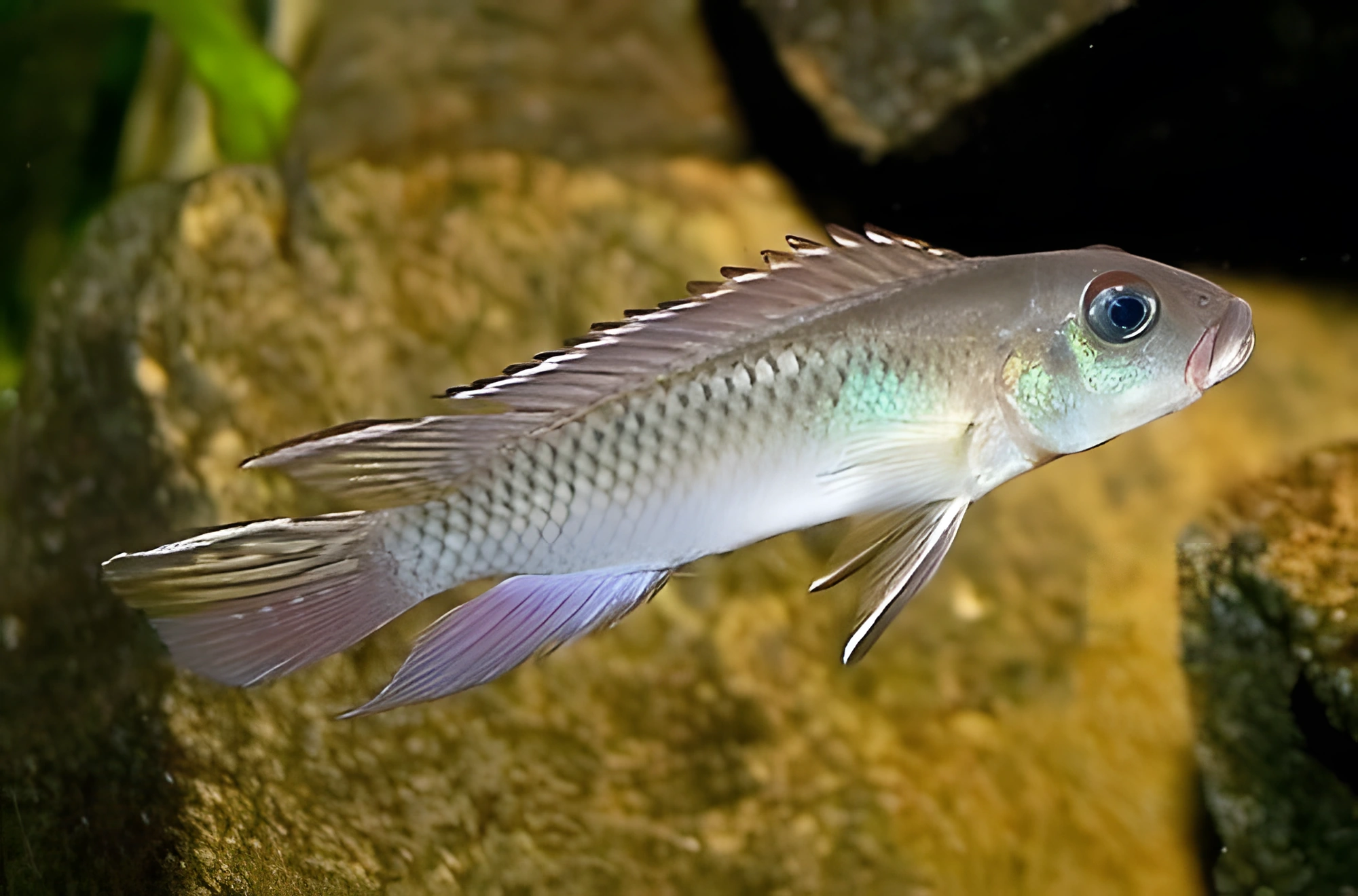
Adults reach a length of 7–8 cm. The fish has an elongated body, distinguished by extended dorsal and anal fins that stretch from head to tail. The main body color is light gray, with females exhibiting a pinkish hue and males a bluish one. A distinctive feature of their appearance is the red rays adorning the caudal and anal fins. Males are usually larger than females and have a characteristic circle on their caudal fin pattern, resembling an ocellus.
Habitat
Its natural habitat is in the equatorial part of Africa, in the territory of modern-day Democratic Republic of Congo. Nanochromis parilus inhabits the Congo River basin, preferring areas with slow currents and dense thickets of aquatic vegetation.
Behavior and Compatibility
This fish is peaceful towards other species, allowing it to successfully coexist with characins and some cichlids of comparable size and temperament. However, intraspecific relationships can be less friendly. Nanochromis parilus form permanent pairs which, especially during spawning and in limited space, show noticeable aggression towards conspecifics. Therefore, in small aquariums, it is recommended to keep only one pair of these fish.
Care and Maintenance
For a single pair of fish, an aquarium of 55 liters or more is considered optimal. When setting up the tank, it is important to provide areas with dense vegetation and plenty of hiding places, which can be snags, caves, grottoes, or even ceramic pots lying on their side. Nanochromis transvestitus shows a tendency to dig in the substrate, so it is advisable to use sand or a similar substrate. It is important to note that this type of substrate, if improperly chosen or if the filtration system is incorrectly installed, can clog it. Optimal water conditions are characterized by slightly acidic pH and soft dGH. To recreate a natural aquatic environment similar to their wild habitat, special essences with tannins can be used, or European oak, beech, or Indian almond leaves. An alternative method is to use peat-based filter media. Aquarium care includes regular cleaning of the substrate from organic waste and weekly partial water changes (15–20% of the total volume).
Diet
They readily accept most common dry foods, such as flakes and pellets, provided they contain protein. Additionally, it is recommended to include live or frozen foods in their diet, such as bloodworms, daphnia, and brine shrimp.
Breeding and Reproduction
During the breeding season, after brief courtship that can appear quite aggressive, the fish choose a suitable spot and dig a small pit. Most often, the base of a snag or cave is chosen for this. The female lays up to 100 eggs and stays with them throughout the incubation period, which lasts 2–3 days. During this time, the male stays nearby, guarding the clutch from potential rivals and those wishing to feast on the eggs. The parents continue to care for their offspring even after the fry begin to swim freely, and this care can last from a couple of weeks to a month.
Diseases
The main cause of most diseases in Leaf Fish is unsuitable keeping conditions and poor-quality nutrition. If initial symptoms are observed, it is first necessary to check water parameters and the concentration of dangerous substances such as ammonia, nitrites, and nitrates. If the indicators deviate from the norm, they should be brought back into order, and only then should treatment begin. More detailed information on symptoms and treatment methods can be found in the "Aquarium Fish Diseases" section.
How to choose
When choosing Nanochromis transvestitus, it is important to assess the fish's overall condition and the conditions of its keeping in the retail aquarium. Healthy specimens should be active, have clean fins without signs of damage, coatings, or ulcers, and display natural coloration without signs of emaciation or a bloated abdomen. Avoid purchasing fish that appear lethargic, constantly hide, or have sunken sides.
- give preference to individuals that show interest in food during feeding in the store
- carefully inspect the gill covers for the absence of parasites or inflammation
- ask the seller about the origin of the fish, as captive-bred specimens are often better adapted to captive conditions than wild-caught ones
- when choosing a pair, ensure there are no obvious signs of aggression between them if they are kept in the same holding tank
Frequently asked questions
The essentials: size, tank volume, water parameters and care
How big does Nanochromis transvestitus get?
An adult reaches 7–8 cm in length. Plan the tank around the maximum size: the fish quickly outgrows a cramped setup.
What size aquarium does Nanochromis transvestitus need?
The minimum recommended volume is 55 L. A smaller tank speeds up nitrate build-up and raises stress levels.
What water parameters does Nanochromis transvestitus need?
Temperature 22–25 °C, pH 5.5–7, hardness 1–8 dGH. Stability matters more than exact values: sudden swings are harder on the fish than a small deviation from the ideal.
How long does Nanochromis transvestitus live?
Around 5 years when kept properly. Lifespan depends directly on tank volume, water quality and a varied diet.
Is Nanochromis transvestitus aggressive?
Temperament: semi-peaceful (including aggression during spawning / intraspecific conflicts). Keep this in mind when choosing tank mates.
How many Nanochromis transvestitus should be kept together?
Recommended setup: pair (male/female). Ignoring this is a common cause of stress and disease.
What does Nanochromis transvestitus eat?
Diet type: any (universal). Feed small portions that are finished within a couple of minutes — overfeeding does more harm than underfeeding.
What is the scientific name of Nanochromis transvestitus?
The scientific name of the species is Nanochromis parilus, family Cichlids (Cichlidae). It also appears in the literature as: Nanochromis parilius.