Temperature23 – 28 °C
Natural range
- Upper Amazon Basin
- Western Brazil area
- Bolivia area
- Trinidad and Tobago area
CharacinsConservation status: Least concern LC
Other scientific names: Nannobrycon unifasciatus, Nannostomus ocellatus, Poecilobrycon ocellatus, Poecilobrycon unifasciatus
Nannostomus unifasciatus, also known as the One-lined Pencilfish, belongs to the family Lebiasinidae. This popular aquarium fish is notable for its unusual oblique swimming style, which distinguishes it from other members of its genus. While it is not difficult to keep in an aquarium, breeding can be a challenging task, especially for inexperienced aquarists.
- Required aquarium volume
- 60 L
- Size in aquarium
- 4 cm
- Temperature
- 23 – 28 °C
- Temperament
- Peaceful (regular)
Parameters
Water pHAcidic (4) – Neutral (7)
Water dHVery soft (1) – Medium hardness (10)
Water salinityno salt (freshwater)
Size in aquarium4 cm
Lifespan4 years
TemperamentPeaceful (regular)
Toward small fishnot a predator
Required aquarium volume60 L
Lightingdimmed or moderate
Substrateany (no restrictions)
Water flownone or stagnant (no flow)
FeedingAny (universal)
CareLarge group (10+ individuals)
Description
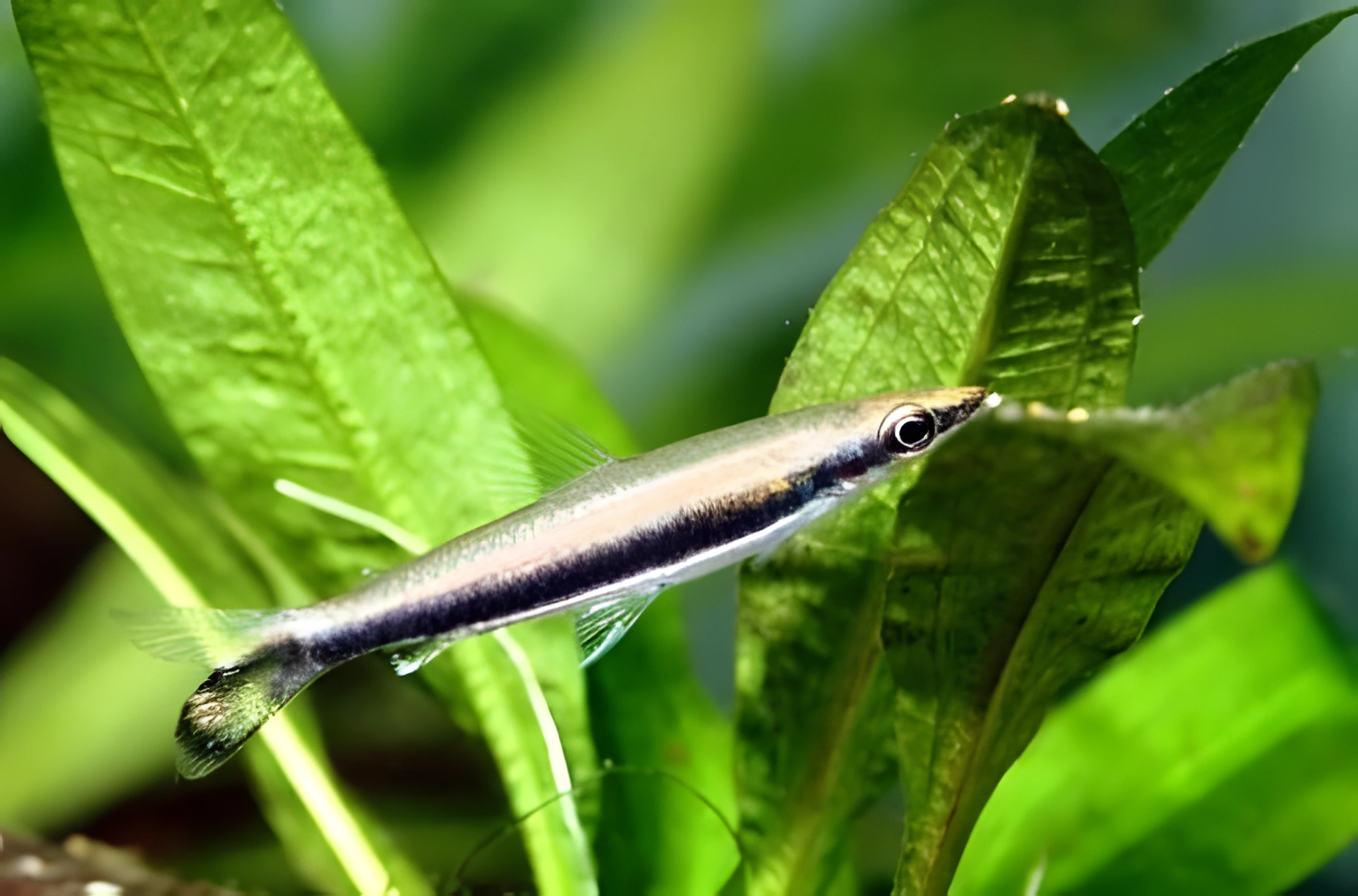
Adults grow to approximately 4 cm in length. Males appear slimmer than females and are distinguished by an enlarged anal fin with a red spot. The coloration of these fish is silvery, with a broad dark stripe running along the lower part of the body, extending onto the anal and caudal fins.
Habitat
The natural habitat of this species covers the upper Amazon River basin, located in the western states of Brazil and Bolivia. Wild populations are also known to occur on the islands of Trinidad and Tobago. Nannostomus unifasciatus prefers small rivers and tributaries, swamps, as well as oxbow lakes and flooded areas of tropical rainforest during the rainy season. The fish are most often found in regions with slow currents, where there are dense thickets of aquatic vegetation.
Behavior and Compatibility
These peaceful schooling fish should be kept in groups of at least 10 individuals, consisting of males and females. Males may display rivalry for the attention of females, but this rarely leads to serious skirmishes. One-lined Pencilfish get along well with other non-aggressive species of comparable size.
Care and Maintenance
For a school of 10 fish, the minimum aquarium volume is 60–70 liters. It is recommended to create dense thickets of aquatic plants. Dark substrate and floating plants, under which the fish often gather near the surface, are preferred as decor elements. Natural snags and fallen leaves of some trees can not only decorate the aquarium but also contribute to creating a water chemistry close to natural, as they release tannins during decomposition. Successful and long-term keeping of One-lined Pencilfish is directly related to maintaining stable water parameters, including temperature and hydrochemical balance. This can be achieved through regular aquarium cleaning and weekly partial water changes (15–20% of the total volume). Essential equipment includes a filter, heater, and lighting system.
Diet
In a home aquarium, the fish readily accept various appropriately sized foods. The daily diet can consist entirely of dry foods, such as flakes or granules, provided they are enriched with all necessary vitamins and trace elements.
Breeding and Reproduction
To date, successful breeding cases of this species in home aquariums have not yet been recorded. Existing data apparently refer to other, related species.
Diseases
Specific diseases that affect only this particular fish species have not been identified. When kept in suitable conditions, including high water quality, a balanced diet, and peaceful tank mates, health issues usually do not arise. The most common cause of illness is a deterioration of living conditions, which weakens the immune system and makes the fish susceptible to infections that are always present in their environment. Upon noticing initial signs of sickness (such as lethargy, emaciation, refusal to eat, or clamped fins), it is crucial to immediately check the basic water parameters. Often, restoring acceptable living conditions will lead to self-recovery, but if the fish is too weak or has suffered visible damage, medicinal treatment may be required. For more details on symptoms and treatment methods, consult the section “Diseases of Aquarium Fish.”
How to choose
When choosing a One-lined Pencilfish, pay attention to the overall activity and condition of the individuals' integuments. A healthy fish should have a clear, rich stripe pattern, clean fins without signs of erosion or plaque, and actively swim in the water column. Avoid specimens with sunken bellies, signs of emaciation, or scale damage, as the species is sensitive to transport conditions and can be prone to stress. Given their schooling nature, it is recommended to acquire a group of 10 or more individuals for adaptation to new conditions. It is important to ask the seller what the fish are fed in the store, as their small mouth size requires fine food.
Frequently asked questions
The essentials: size, tank volume, water parameters and care
How big does One-lined Pencilfish get?
An adult reaches 4 cm in length. Plan the tank around the maximum size: the fish quickly outgrows a cramped setup.
What size aquarium does One-lined Pencilfish need?
The minimum recommended volume is 60 L. A smaller tank speeds up nitrate build-up and raises stress levels.
What water parameters does One-lined Pencilfish need?
Temperature 23–28 °C, pH 4–7, hardness 1–10 dGH. Stability matters more than exact values: sudden swings are harder on the fish than a small deviation from the ideal.
How long does One-lined Pencilfish live?
Around 4 years when kept properly. Lifespan depends directly on tank volume, water quality and a varied diet.
Is One-lined Pencilfish aggressive?
Temperament: peaceful (regular). Keep this in mind when choosing tank mates.
How many One-lined Pencilfish should be kept together?
Recommended setup: large group (10+ individuals). Ignoring this is a common cause of stress and disease.
What does One-lined Pencilfish eat?
Diet type: any (universal). Feed small portions that are finished within a couple of minutes — overfeeding does more harm than underfeeding.
What is the scientific name of One-lined Pencilfish?
The scientific name of the species is Nannostomus unifasciatus, family Lebiasinidae. It also appears in the literature as: Nannobrycon unifasciatus, Nannostomus ocellatus, Poecilobrycon ocellatus.