Temperature22 – 28 °C
Natural range
- Guyana area
CharacinsConservation status: Least concern LC
Nannostomus minimus, with the Latin name Nannostomus minimus, belongs to the family Lebiasinidae. It is quite rare among amateur aquarists. These fish are often found as incidental bycatch in shipments with other species. If this fish ends up in a home aquarium, it usually doesn't cause difficulties, as it is easy to care for and coexists well with fish of similar size.
- Required aquarium volume
- 40 L
- Size in aquarium
- 2 cm
- Temperature
- 22 – 28 °C
- Temperament
- Peaceful (regular)
Parameters
Water pHAcidic (4) – Neutral (6.5)
Water dHVery soft (1) – Medium hardness (9)
Water salinityno salt (freshwater)
Size in aquarium2 cm
Lifespan3 years
TemperamentPeaceful (regular)
Toward small fishnot a predator
Required aquarium volume40 L
Lightingdimmed
Substrateany, but dark
Water flownone or stagnant (no flow)
FeedingAny (universal)
CareLarge group (10+ individuals)
Description
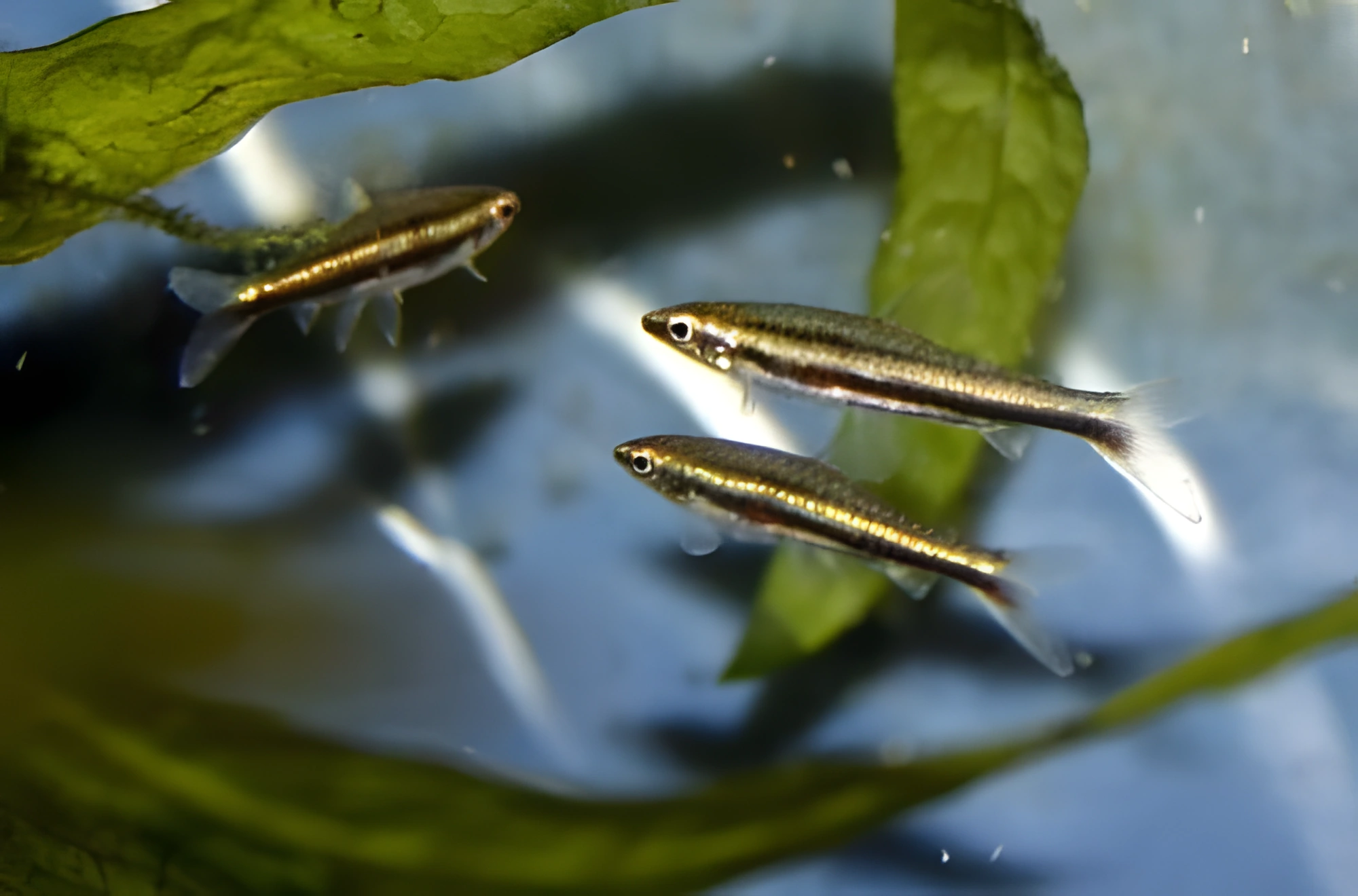
Adults of this species reach a length of approximately 2 centimeters. Sexual dimorphism is weakly expressed: males and females have only minor external differences. The main body color is grayish-brown, with red pigmentation on the belly, as well as at the base of the dorsal and caudal fins.
Habitat
Its natural habitat is in South America, in the Essequibo River basin, located in Guyana. Nannostomus minimus prefers small tributaries, streams, and swampy areas. These places are characterized by very slow current or its complete absence, an abundance of dense aquatic vegetation, and a brown tint to the water caused by a high content of dissolved tannins, which are formed as a result of the decomposition of plant remains such as branches, tree roots, and fallen leaves.
Behavior and Compatibility
This is a peaceful and rather shy fish that feels comfortable in the company of its own kind. It is recommended to keep a group of at least 10 individuals, as they become excessively timid in smaller numbers. Nannostomus minimus coexists well with other non-aggressive species of comparable size.
Care and Maintenance
For a school of 10 fish, the minimum aquarium volume should be 40–50 liters. The decor should include a dark substrate, as well as many aquatic plants combined with various snags and other natural decorative elements. Dried leaves from certain tree species, placed on the substrate, can be an important addition. In addition to their decorative function, they contribute to creating water chemistry conditions similar to natural ones by releasing tannins during decomposition. These substances affect key hydrochemical parameters such as pH and dGH. Keeping Nannostomus minimus usually does not cause major difficulties, provided regular aquarium maintenance. In particular, it is necessary to weekly replace a portion of the water with fresh water, promptly remove organic waste such as food remnants and excrement, clean decorations and glass from plaque, and control the concentration of nitrogen cycle products (ammonia, nitrites, nitrates), preventing their accumulation.
Diet
Being an omnivorous species, these fish readily accept most common aquarium fish foods, if they are appropriately sized. These can include flakes, granules, or various mixtures. In addition, live or frozen foods, such as Daphnia and Artemia, can be included in their diet.
Breeding and Reproduction
Under suitable conditions, spawning occurs frequently, and some fry may successfully develop to maturity. However, if the goal is targeted breeding, a more controlled approach will be required. In a home aquarium, there is no pronounced seasonal breeding. It is often observed that some females are ready to spawn, while others are not. Therefore, in large schools consisting of dozens of individuals, reproduction can occur continuously. The fish do not form a clutch but scatter their eggs among dense thickets of fine-leaved plants. To protect the eggs from being eaten by adult fish, any discovered eggs should be transferred to a separate tank with identical water parameters. The incubation period lasts 1–2 days. For initial feeding, fry require microscopic-sized food. Infusoria are an ideal option, but specialized powdered foods or suspensions for aquarium fish fry can also be used.
Diseases
Health problems in these fish arise only in the presence of injuries or keeping in unsuitable conditions, which leads to a weakening of the immune system and the subsequent occurrence of various diseases. At the first signs of illness, it is necessary first to check the water parameters for exceeding permissible values or the presence of toxic substances (such as nitrites, nitrates, ammonia). If deviations are found, all indicators should be normalized, and then treatment should begin. More detailed information on symptoms and treatment methods is available in the "Diseases of Aquarium Fish" section.
How to choose
When purchasing, it should be noted that this species is rarely available for sale and is often supplied as bycatch with other fish. It is important to carefully inspect the condition of the individuals in the store: healthy fish should be active, have clean fins without signs of damage or film, and display natural schooling behavior for the species. Avoid purchasing fish that appear emaciated, apathetic, or have visible body deformities, as due to their small size, they are sensitive to stress and transport conditions. It is recommended to ask the seller how long the fish have been received to ensure their adaptation to aquarium conditions.
Frequently asked questions
The essentials: size, tank volume, water parameters and care
How big does Nannostomus minimus get?
An adult reaches 2 cm in length. Plan the tank around the maximum size: the fish quickly outgrows a cramped setup.
What size aquarium does Nannostomus minimus need?
The minimum recommended volume is 40 L. A smaller tank speeds up nitrate build-up and raises stress levels.
What water parameters does Nannostomus minimus need?
Temperature 22–28 °C, pH 4–6.5, hardness 1–9 dGH. Stability matters more than exact values: sudden swings are harder on the fish than a small deviation from the ideal.
How long does Nannostomus minimus live?
Around 3 years when kept properly. Lifespan depends directly on tank volume, water quality and a varied diet.
Is Nannostomus minimus aggressive?
Temperament: peaceful (regular). Keep this in mind when choosing tank mates.
How many Nannostomus minimus should be kept together?
Recommended setup: large group (10+ individuals). Ignoring this is a common cause of stress and disease.
What does Nannostomus minimus eat?
Diet type: any (universal). Feed small portions that are finished within a couple of minutes — overfeeding does more harm than underfeeding.
What is the scientific name of Nannostomus minimus?
The scientific name of the species is Nannostomus minimus, family Lebiasinidae.