Temperature18 – 22 °C
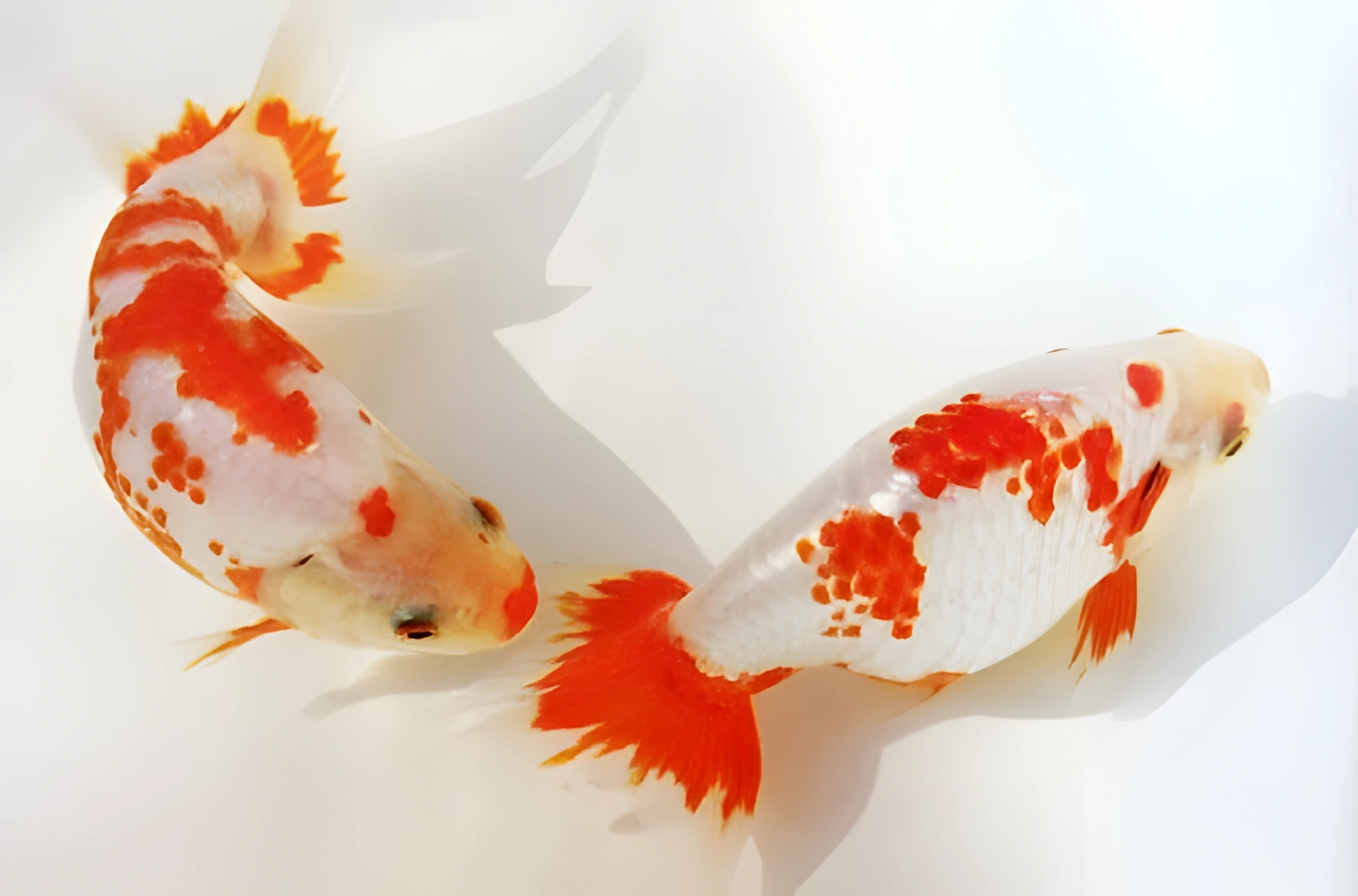
GoldfishConservation status: Least concern LC
Other scientific names: Carasius auratus, Carassius buergeri, Carassius burgeri, Carassius carassius, Carassius chinensis, Carassius coeruleus
This interesting variety of goldfish came into being between 1748 and 1750, having been bred in the Japanese Izumo region, now known as Shimane Prefecture. Curiously, despite its Japanese origin, the fish's name has deep Chinese roots. Many researchers suggest it was named after Nankin, which was once the capital of China. In those distant times, the collective word “Nankin” was often used to denote all goods supplied from this major port city, including, it is believed, the goldfish that became the progenitors of this unique variety.
- Required aquarium volume
- 110 L
- Size in aquarium
- 12 – 13 cm
- Temperature
- 18 – 22 °C
- Temperament
- Peaceful, active/mobile
Parameters
Water pHSlightly acidic (6) – Slightly alkaline (8)
Water dHSoft (5) – Very hard (19)
Water salinityno salt (freshwater)
Size in aquarium12 – 13 cm
Lifespan15 years
TemperamentPeaceful, active/mobile
Toward small fishnot a predator
Required aquarium volume110 L
Lightingmoderate (regular)
Substrateany (no restrictions)
Water flownone or stagnant (no flow)
FeedingAny (universal)
CareMixed (solitary / pair / group)
Description
The Nankin is a rare, selectively bred goldfish variety developed in Japan. Its distinguishing features are the absence of a dorsal fin and a compact, egg-shaped body. The head is small, without the characteristic growths found in many other breeds. The caudal fin is forked and short; when viewed from above, the fish's body often resembles a triangle. The traditional coloration combines white and red, with specimens valued for a harmonious distribution of these hues.
Habitat
This species is not found in nature, as it is an entirely artificially bred ornamental form. Historically, the breed was developed in the Izumo region (Shimane Prefecture, Japan) in the mid-18th century. In aquarium conditions, the fish require a stable environment typical for ornamental goldfish, with clean water and no strong currents.
Behavior and Compatibility
The Nankin is characterized by a calm, phlegmatic temperament. Due to its body structure and the absence of a dorsal fin, the fish are rather weak swimmers. It is recommended to keep them in a species-specific aquarium or with other slow-moving goldfish varieties. Active and fast fish species may compete with the Nankin for food or injure it.
Care and Maintenance
For keeping one adult specimen, an aquarium of 40-50 liters or more is required, but more spacious tanks are preferable. Effective filtration and regular water changes are important, as the breed is sensitive to water quality. The decor should avoid sharp objects and decorations that could damage fins or the body. Lighting should be moderate.
Diet
The fish are omnivorous and undemanding in their food choices. The diet should be balanced and include both high-quality dry foods, as well as plant supplements or frozen products. It is important to control portion sizes to avoid overfeeding and water pollution. Feeding is recommended 1-2 times a day in small portions.
Breeding and Reproduction
Nankin breeding is considered a challenging task that requires experience. Spawning is stimulated by increasing water temperature during spring. The fish lay eggs on fine-leaved plants or special substrates. Fry require meticulous care, regular sorting, and high-quality starter food for the proper development of the body shape characteristic of the breed.
Diseases
The species is susceptible to diseases typical for goldfish, including bacterial infections and parasitic infestations, often arising from poor water quality or stress. Due to the absence of a dorsal fin and their body shape, the fish may be prone to swim bladder disorders. Prevention involves maintaining cleanliness and stable water parameters.
How to choose
When purchasing, one should choose active individuals with clean fins and no visible body damage. It is important to pay attention to the symmetry of the body shape and the absence of signs of emaciation or diseases, such as white spots or film. Given the rarity of the breed, it is best to acquire them from specialized breeders, as Nankin are extremely rare in general sale.
Frequently asked questions
The essentials: size, tank volume, water parameters and care
How big does Nankin get?
An adult reaches 12–13 cm in length. Plan the tank around the maximum size: the fish quickly outgrows a cramped setup.
What size aquarium does Nankin need?
The minimum recommended volume is 110 L. A smaller tank speeds up nitrate build-up and raises stress levels.
What water parameters does Nankin need?
Temperature 18–22 °C, pH 6–8, hardness 5–19 dGH. Stability matters more than exact values: sudden swings are harder on the fish than a small deviation from the ideal.
How long does Nankin live?
Around 15 years when kept properly. Lifespan depends directly on tank volume, water quality and a varied diet.
Is Nankin aggressive?
Temperament: peaceful, active/mobile. Keep this in mind when choosing tank mates.
How many Nankin should be kept together?
Recommended setup: mixed (solitary / pair / group). Ignoring this is a common cause of stress and disease.
What does Nankin eat?
Diet type: any (universal). Feed small portions that are finished within a couple of minutes — overfeeding does more harm than underfeeding.
What is the scientific name of Nankin?
The scientific name of the species is Carassius auratus, family Cyprinids (Cyprinidae). It also appears in the literature as: Carasius auratus, Carassius buergeri, Carassius burgeri.