Temperature23 – 28 °C
Natural range
- Peruvian Amazon area
- Peru area
CatfishConservation status: Least concern LC
Other scientific names: Anadoras nauticus, Zathorax nauticus
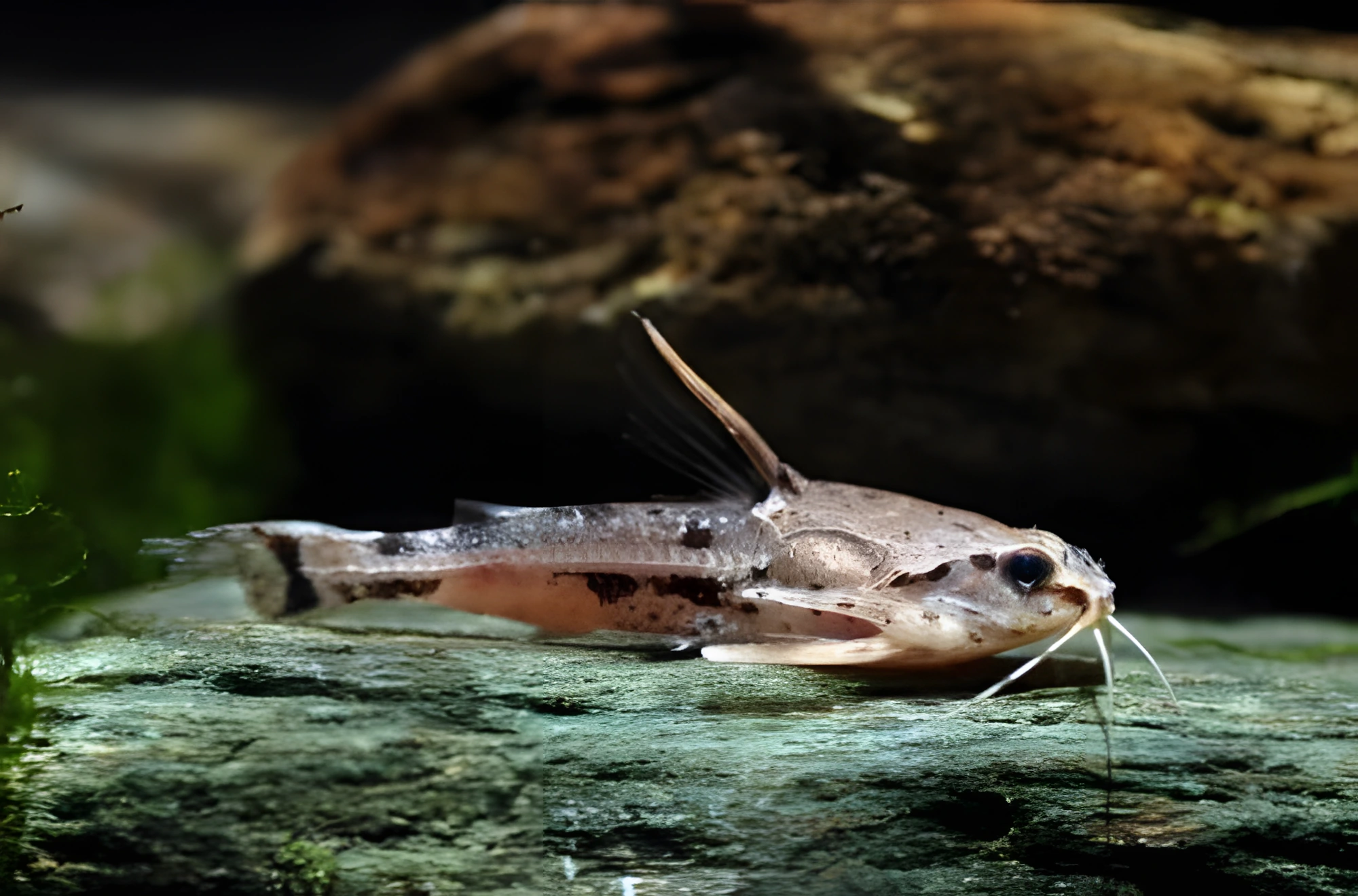
The marbled talking catfish, known scientifically as Amblydoras nauticus, is a member of the family Doradidae, or thorny catfishes. This species is attractive due to its unpretentiousness and ease of keeping. It coexists readily with a large number of other fish, even aggressive ones, provided they are not too large. The only characteristic to consider is its nocturnal lifestyle, which causes the catfish to prefer staying in hiding during the day.
- Required aquarium volume
- 50 L
- Size in aquarium
- 7 cm
- Temperature
- 23 – 28 °C
- Temperament
- Peaceful (regular)
Parameters
Water pHSlightly acidic (5.5) – Neutral (7.5)
Water dHVery soft (2) – Very hard (21)
Water salinityno salt (freshwater)
Size in aquarium7 cm
Lifespan10 years
TemperamentPeaceful (regular)
Toward small fishnot a predator
Required aquarium volume50 L
Lightingdimmed
Substratesandy (regular, light)
Water flownone or stagnant (no flow)
FeedingSinking (any)
CareSmall group (3–4 individuals)
Description
Adults grow to about 7 cm in length. They are distinguished by a massive head covered with bony plates. The dorsal and pectoral fins are equipped with sharp spines, and a characteristic strip of sharp thorns runs along the lateral line. The coloration is usually light gray or silvery, with dark spots creating a marble-like pattern. Sexual dimorphism in these fish is weakly expressed; there are practically no external differences between males and females. Thanks to the special structure of the bony plates on their heads, these catfish can produce sounds, which earned them the prefix “talking” in their name.
Habitat
Its natural habitat is South America, specifically the Peruvian part of the Amazon basin, where it is endemic. These catfish inhabit slow-flowing waters: streams, rivers, as well as floodplain lakes and swamps. During the day, they can be found among roots or in dense aquatic vegetation, and as night falls, groups of catfish set out in search of food.
Behavior and Compatibility
This peaceful and calm fish will be an excellent addition to an aquarium decorated in the style of a South American biotope. It coexists perfectly with various fish species, including cichlids, tetras, and corydoras. Thanks to its natural protection, the marbled talking catfish can even live alongside aggressive or conflict-prone fish. In aquarium conditions, breeding this species is difficult. There is evidence that in their natural habitat, during the breeding season, catfish build foamy nests among vegetation where they lay their eggs. The male subsequently guards the clutch. Information on whether parental care extends to the hatched fry is not available.
Care and Maintenance
For a small group of 3–4 marbled talking catfish, an aquarium of at least 50 liters will be required. When setting it up, it is important to provide numerous shelters, which can be created using plant thickets, snags, or other decorative elements. A soft substrate is desirable. During the day, it is almost impossible to observe these catfish due to their secretive lifestyle. To still be able to see their activity at night, special red-spectrum lighting can be installed, turned on after the main light is off. Since fish do not perceive red wavelengths, they interpret this as the onset of night and leave their hiding places. Keeping this species is facilitated by their ability to adapt to a wide range of hydrochemical water parameters. Regular aquarium maintenance, including the removal of organic waste, weekly partial water changes, and stable operation of all equipment, will ensure the necessary balance of the internal ecosystem and comfortable living conditions for the catfish.
Diet
This is an omnivorous species that readily accepts most standard sinking foods, such as flakes and granules. To enrich their diet, it is beneficial to include live or frozen foods: bloodworms, daphnia, artemia. Feeding is recommended shortly before the aquarium light is turned off.
Breeding and Reproduction
In aquarium conditions, the breeding of this species is insufficiently studied, and reliable information on mass fry production is lacking. In their natural habitat, the fish lay eggs in specially prepared nests. It is known that both parents show care for their offspring, guarding the clutch and larvae.
Diseases
When kept in favorable conditions, fish rarely experience health deterioration. The occurrence of diseases usually indicates problems in keeping, such as polluted water, poor quality food, or injuries. In most cases, eliminating the root cause leads to recovery. However, sometimes medication may be required. Detailed information on symptoms and treatment methods can be found in the section "Diseases of aquarium fish."
How to choose
When selecting individuals, attention should be paid to the integrity of the skin and the absence of damage, as any wounds on the catfish's body are prone to rapid infection. A healthy fish should show activity at dusk, have clean fins without signs of rot, and bony plates pressed tightly against the body. Avoid purchasing fish with sunken bellies or signs of emaciation, as well as individuals that appear apathetic when disturbed.
Frequently asked questions
The essentials: size, tank volume, water parameters and care
How big does Marbled Catfish get?
An adult reaches 7 cm in length. Plan the tank around the maximum size: the fish quickly outgrows a cramped setup.
What size aquarium does Marbled Catfish need?
The minimum recommended volume is 50 L. A smaller tank speeds up nitrate build-up and raises stress levels.
What water parameters does Marbled Catfish need?
Temperature 23–28 °C, pH 5.5–7.5, hardness 2–21 dGH. Stability matters more than exact values: sudden swings are harder on the fish than a small deviation from the ideal.
How long does Marbled Catfish live?
Around 10 years when kept properly. Lifespan depends directly on tank volume, water quality and a varied diet.
Is Marbled Catfish aggressive?
Temperament: peaceful (regular). Keep this in mind when choosing tank mates.
How many Marbled Catfish should be kept together?
Recommended setup: small group (3–4 individuals). Ignoring this is a common cause of stress and disease.
What does Marbled Catfish eat?
Diet type: sinking (any). Feed small portions that are finished within a couple of minutes — overfeeding does more harm than underfeeding.
What is the scientific name of Marbled Catfish?
The scientific name of the species is Amblydoras nauticus, family Doradidae (Thorny Catfishes). It also appears in the literature as: Anadoras nauticus, Zathorax nauticus.