Temperature22 – 26 °C
Natural range
- South America area
CharacinsConservation status: Least concern LC
Other scientific names: Tetragonopterus collettii
Moenkhausia collettii, known as Moenkhausia Colletti, belongs to the extensive Characidae family. This species appeared in Europe in the early 2000s, becoming available to aquarists. In general, they are not difficult to keep, and these fish have similar requirements to other Tetras.
- Required aquarium volume
- 50 L
- Size in aquarium
- 5 cm
- Temperature
- 22 – 26 °C
- Temperament
- Peaceful (regular)
Parameters
Water pHSlightly acidic (5.5) – Neutral (7)
Water dHVery soft (1) – Hard (12)
Water salinityno salt (freshwater)
Size in aquarium5 cm
Lifespan4 years
TemperamentPeaceful (regular)
Toward small fishnot a predator
Required aquarium volume50 L
Lightingdimmed
Substratesandy (regular, light)
Water flowweak
FeedingSmall / appropriate size / pieces
CareSmall group (5–6 individuals)
Description
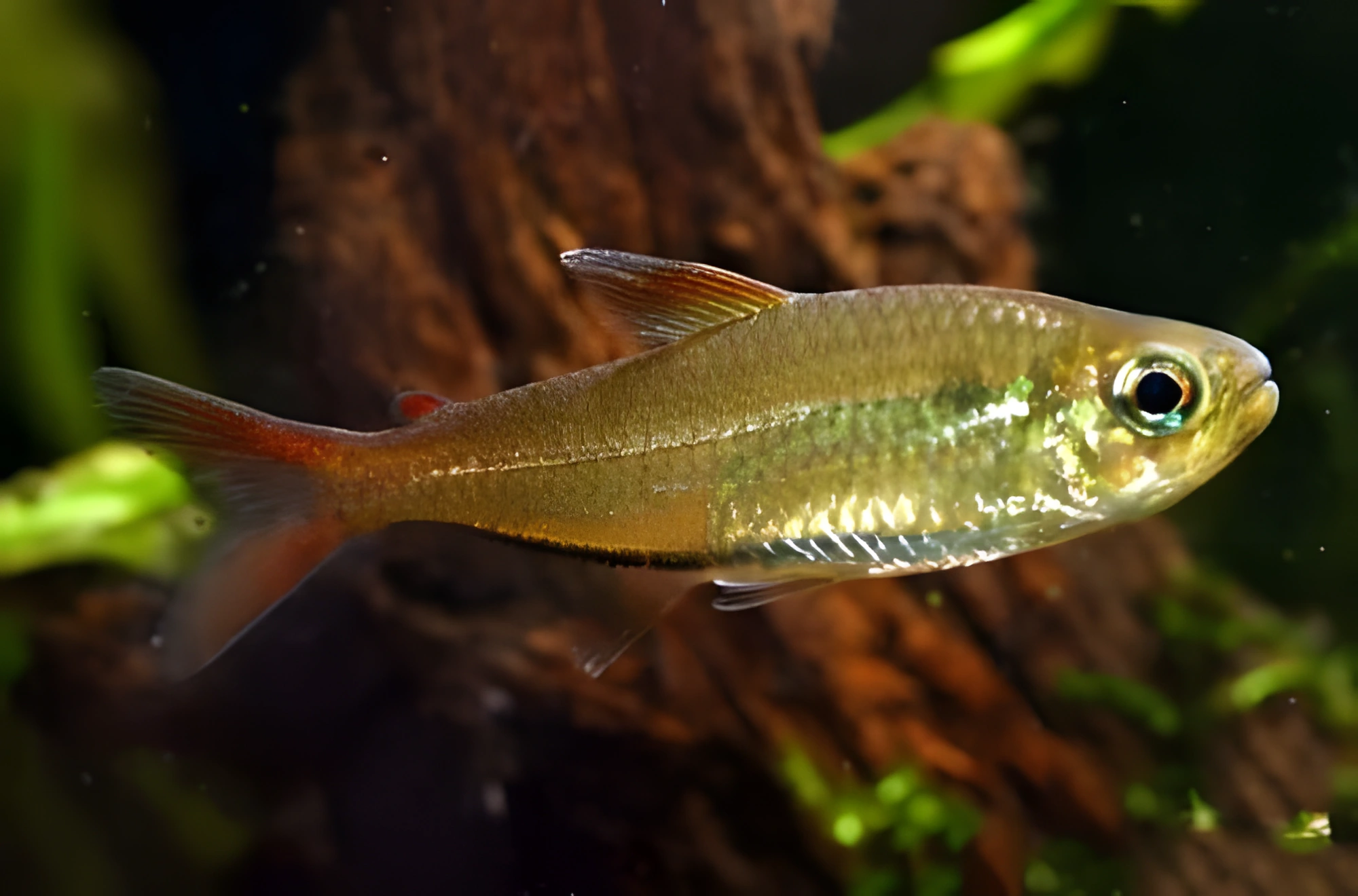
Due to their extensive natural habitat, Moenkhausia Colletti are found in several geographical forms, which differ in nuances of body coloration. The most sought-after by aquarists is the population with a bright golden body, possessing a metallic sheen, as well as a red tail and orange fins. These fish have a large head with large eyes, which helps them effectively find food in low light conditions characteristic of dark waters. Adult individuals reach a length of approximately 4–5 cm. Sexual dimorphism is slightly expressed; females may appear slightly larger than males, especially noticeable during spawning.
Habitat
The homeland of this fish is South America, where it is widely distributed in the Amazon and Orinoco river basins. Moenkhausia Colletti prefers to inhabit small rivers and streams where the bottom consists of sandy substrates and is abundantly covered with a layer of fallen leaves, branches, snags, and other plant organic material. As a rule, aquatic plants are absent here. The water in these places has a rich brown hue, which is due to the high concentration of tannins.
Behavior and Compatibility
This peaceful schooling fish thrives in a group, so it is recommended to acquire at least 5 individuals. They coexist perfectly with other inhabitants of Amazonian waters, such as Tetras, as well as with peaceful American cichlids and other non-aggressive species of comparable size.
Care and Maintenance
For keeping a school of 5–6 individuals, an aquarium with a volume of 50 to 60 liters will be required. It is advisable to choose a tank where the length exceeds the height, providing sufficient space for swimming. The decor should use elements that mimic the natural habitat: sandy substrate, several natural snags, and floating plants with long, dangling roots. Such plants will help create the necessary shading, and their roots can serve as a spawning site. For long-term keeping of Moenkhausia Colletti, it is extremely important to maintain consistently low hydrochemical parameters, regularly remove organic waste (such as food remnants, excrement), and partially change the water with fresh water. These fish tolerate neither strong nor moderate currents well, so the choice of a filtration system, which is the main source of water movement, should be approached with particular care. Fish sold in stores, bred in artificial conditions, usually readily accept most popular dry, frozen, and live foods.
Diet
Fish bred in aquarium conditions generally adapt easily to a varied diet, including dry, frozen, and live foods. These peaceful schooling fish thrive best in groups of 5 or more individuals. Their friendly nature allows them to get along well with other inhabitants, such as Amazonian Tetras, peaceful American cichlids, and other non-aggressive species of similar size. Special attention should be paid to water quality and chemical composition, as these fish are quite sensitive. Prolonged exposure to hard, alkaline water can negatively affect metabolic processes, sometimes leading to death. Also, poor water quality, characterized by the presence of organic pollutants, significantly weakens their immunity. At the first signs of illness, the primary task is to check water parameters and normalize them. If symptoms persist, medicinal treatment should be initiated. More detailed information on symptoms and treatment methods is presented in the section “Diseases of Aquarium Fish”.
Breeding and Reproduction
Breeding requires a separate spawning aquarium with soft water and a slightly acidic pH level. The stimulus is an increase in water temperature to 26 °C. The female lays several hundred adhesive eggs, which attach to fine-leaved plants. The incubation period lasts from 24 to 36 hours, after which larvae hatch. After a few days, the fry become free-swimming and begin to feed on small starter foods.
Diseases
These fish are very sensitive to water quality and composition. Prolonged exposure to hard, alkaline water can lead to metabolic disorders that have fatal consequences. Poor water quality, i.e., the presence of organic pollutants, also negatively affects their immunity. If the first signs of illness are detected, water parameters should be checked first, and if necessary, adjusted to normal. If symptoms persist, then medicinal treatment should be started. More detailed information on symptoms and treatment methods can be found in the section “Diseases of Aquarium Fish”.
How to choose
When purchasing, choose active individuals with clean scales, without visible fin damage or white spots on the body. It is important to ensure there are no signs of emaciation or behavioral anomalies. The fish should show interest in their surroundings and demonstrate their characteristic schooling activity. It is recommended to acquire a group of 6–8 individuals, as keeping them alone causes them severe stress.
Frequently asked questions
The essentials: size, tank volume, water parameters and care
How big does Moenkhausia Colletti get?
An adult reaches 5 cm in length. Plan the tank around the maximum size: the fish quickly outgrows a cramped setup.
What size aquarium does Moenkhausia Colletti need?
The minimum recommended volume is 50 L. A smaller tank speeds up nitrate build-up and raises stress levels.
What water parameters does Moenkhausia Colletti need?
Temperature 22–26 °C, pH 5.5–7, hardness 1–12 dGH. Stability matters more than exact values: sudden swings are harder on the fish than a small deviation from the ideal.
How long does Moenkhausia Colletti live?
Around 4 years when kept properly. Lifespan depends directly on tank volume, water quality and a varied diet.
Is Moenkhausia Colletti aggressive?
Temperament: peaceful (regular). Keep this in mind when choosing tank mates.
How many Moenkhausia Colletti should be kept together?
Recommended setup: small group (5–6 individuals). Ignoring this is a common cause of stress and disease.
What does Moenkhausia Colletti eat?
Diet type: small / appropriate size / pieces. Feed small portions that are finished within a couple of minutes — overfeeding does more harm than underfeeding.
What is the scientific name of Moenkhausia Colletti?
The scientific name of the species is Moenkhausia collettii, family Characidae. It also appears in the literature as: Tetragonopterus collettii.