Temperature24 – 29 °C
Natural range
- Peru area
CharacinsConservation status: Least concern LC
Moenkhausia agnesae, known in scientific literature as Moenkhausia agnesae, belongs to the Characidae family. This fish is native to South America, specifically found in the upper reaches of the Amazon River. It is often imported into aquariums from Peru.
- Required aquarium volume
- 80 L
- Size in aquarium
- 7 cm
- Temperature
- 24 – 29 °C
- Temperament
- Peaceful, active/mobile
Parameters
Water pHSlightly acidic (5.5) – Neutral (7)
Water dHSoft (5) – Medium hardness (10)
Water salinityno salt (freshwater)
Size in aquarium7 cm
Lifespan4 years
TemperamentPeaceful, active/mobile
Toward small fishnot a predator
Required aquarium volume80 L
Lightingmoderate (regular)
Substrateany (no restrictions)
Water flowweak
FeedingAny (universal)
CareMedium group (6–8 individuals)
Description
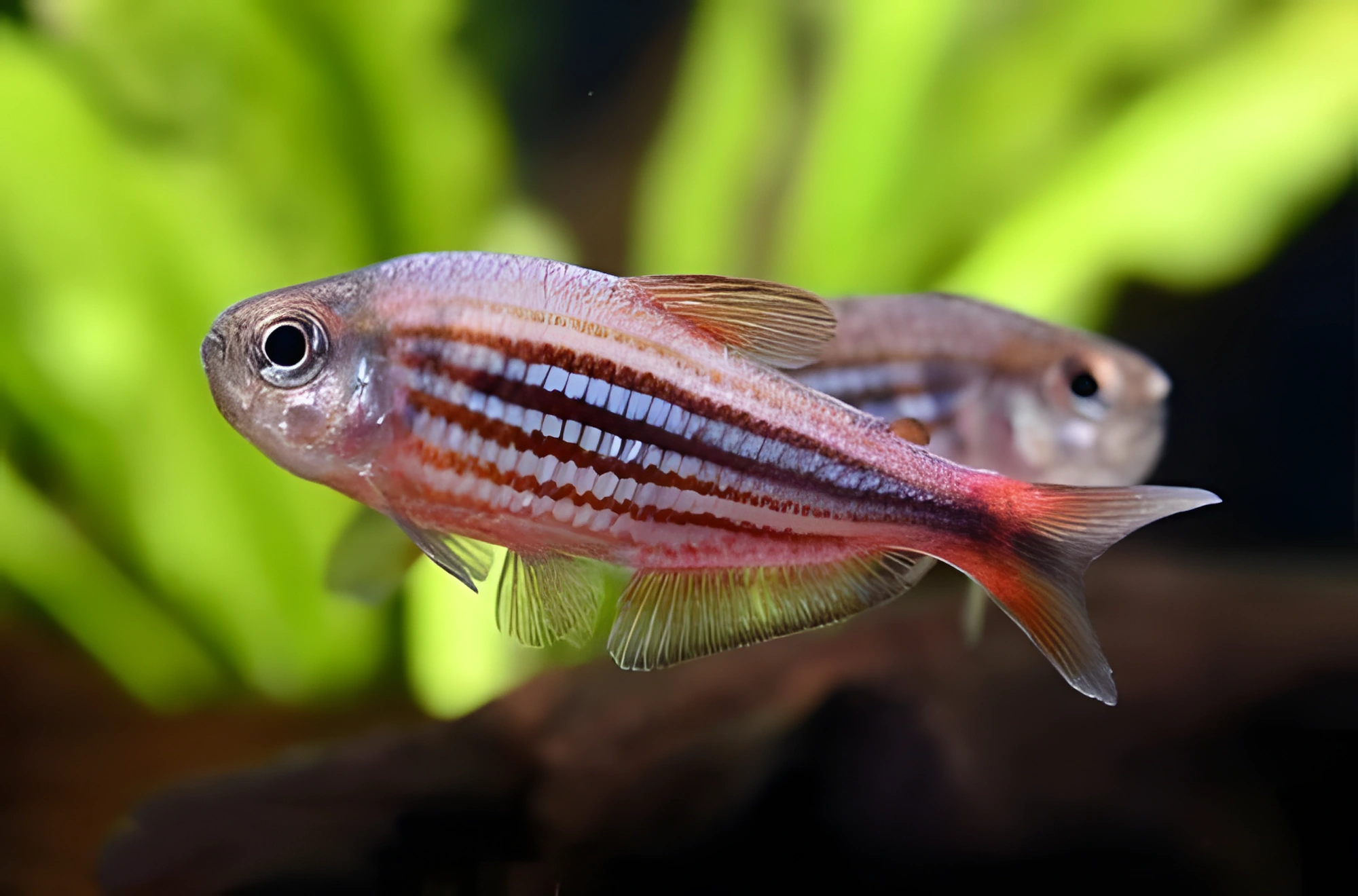
Adults of this fish typically reach a length of about 7 cm. A characteristic feature is a large head with expressive, big eyes. The back has a slight hump in the fin area. The coloration is predominantly light, with subtle pink hues. Rows of horizontal stripes run along the body: darker, black ones in the lower part, and reddish ones in the upper part. It has been observed that males have a more saturated and vibrant coloration compared to females.
Habitat
The species inhabits South America, in the basin of the upper Amazon River. In nature, the fish live in shallow areas of water bodies with dense aquatic and riparian vegetation, preferring to stay among roots and fallen leaves on a sandy substrate. This is a tropical species that requires clean water with soft parameters.
Behavior and Compatibility
Moenkhausia agnesae is a very active schooling fish. It is recommended to keep them in groups of at least 5–6 individuals. They coexist well with many other species, including various Tetras, small South American cichlids, as well as peaceful cyprinids such as Barbs and Danios.
Care and Maintenance
For comfortable keeping of a small school of Moenkhausia agnesae, an aquarium of at least 100 liters is required. It is advisable to use abundant vegetation in the aquarium's design, while leaving enough open space for swimming. The choice of substrate is not critical, but a dark substrate will help make the fish's coloration more vibrant. It is important to maintain water parameters with low pH and dH values, and the temperature should not be below 25°C. The addition of natural driftwood and dried leaves from certain trees is recommended, as they release tannins, creating conditions similar to their natural habitat. Aquarium care includes standard procedures: weekly partial water changes, removal of organic waste (uneaten food, excrement), and regular equipment checks.
Diet
The diet of these fish can include most common foods of appropriate size: both dry and frozen or live.
Breeding and Reproduction
The fish are egg-laying species. Spawning occurs in pairs or groups, in a separate aquarium with soft water and bunches of fine-leaved plants or a protective mesh on the bottom. Parents do not care for their offspring and may eat the eggs. The incubation period lasts about two days, after which the larvae begin to swim freely after another 48 hours.
Diseases
The species is susceptible to diseases typical for characin fish when keeping conditions are violated. The main risks are associated with poor water quality, which provokes bacterial infections, fungal lesions, or ichthyophthiriasis. Prevention involves maintaining stable environmental parameters, regular water changes, and avoiding overpopulation.
How to choose
When purchasing, choose active individuals without visible damage to fins or skin. Healthy fish should have bright coloration and show interest in food. Avoid specimens with signs of emaciation, lethargic behavior, or body deformities. It is recommended to acquire a group of 8–10 individuals to reduce stress and encourage natural behavior.
Frequently asked questions
The essentials: size, tank volume, water parameters and care
How big does Moenkhausia agnesae get?
An adult reaches 7 cm in length. Plan the tank around the maximum size: the fish quickly outgrows a cramped setup.
What size aquarium does Moenkhausia agnesae need?
The minimum recommended volume is 80 L. A smaller tank speeds up nitrate build-up and raises stress levels.
What water parameters does Moenkhausia agnesae need?
Temperature 24–29 °C, pH 5.5–7, hardness 5–10 dGH. Stability matters more than exact values: sudden swings are harder on the fish than a small deviation from the ideal.
How long does Moenkhausia agnesae live?
Around 4 years when kept properly. Lifespan depends directly on tank volume, water quality and a varied diet.
Is Moenkhausia agnesae aggressive?
Temperament: peaceful, active/mobile. Keep this in mind when choosing tank mates.
How many Moenkhausia agnesae should be kept together?
Recommended setup: medium group (6–8 individuals). Ignoring this is a common cause of stress and disease.
What does Moenkhausia agnesae eat?
Diet type: any (universal). Feed small portions that are finished within a couple of minutes — overfeeding does more harm than underfeeding.
What is the scientific name of Moenkhausia agnesae?
The scientific name of the species is Moenkhausia agnesae, family Characidae.