Temperature23 – 30 °C
Natural range
- Sumatra area
- Indonesia area
CatfishConservation status: Near threatened NT
Other scientific names: Macrones bimaculatus
The Two-spot Mystus, scientifically known as Mystus bimaculatus, belongs to the Bagridae family. This small, peaceful catfish is an excellent addition to a community tank of Southeast Asian inhabitants. It is undemanding to keep and has no special dietary requirements.
- Required aquarium volume
- 40 L
- Size in aquarium
- 5 – 6.7 cm
- Temperature
- 23 – 30 °C
- Temperament
- Peaceful (regular)
Parameters
Water pHAcidic (4) – Neutral (6.5)
Water dHVery soft (0) – Soft (5)
Water salinityno salt (freshwater)
Size in aquarium5 – 6.7 cm
Lifespan5 years
TemperamentPeaceful (regular)
Toward small fishnot a predator
Required aquarium volume40 L
Lightingdimmed
Substratesoft silted
Water flowweak
FeedingSinking (any)
CareBoth solitary and in group (flexible)
Description
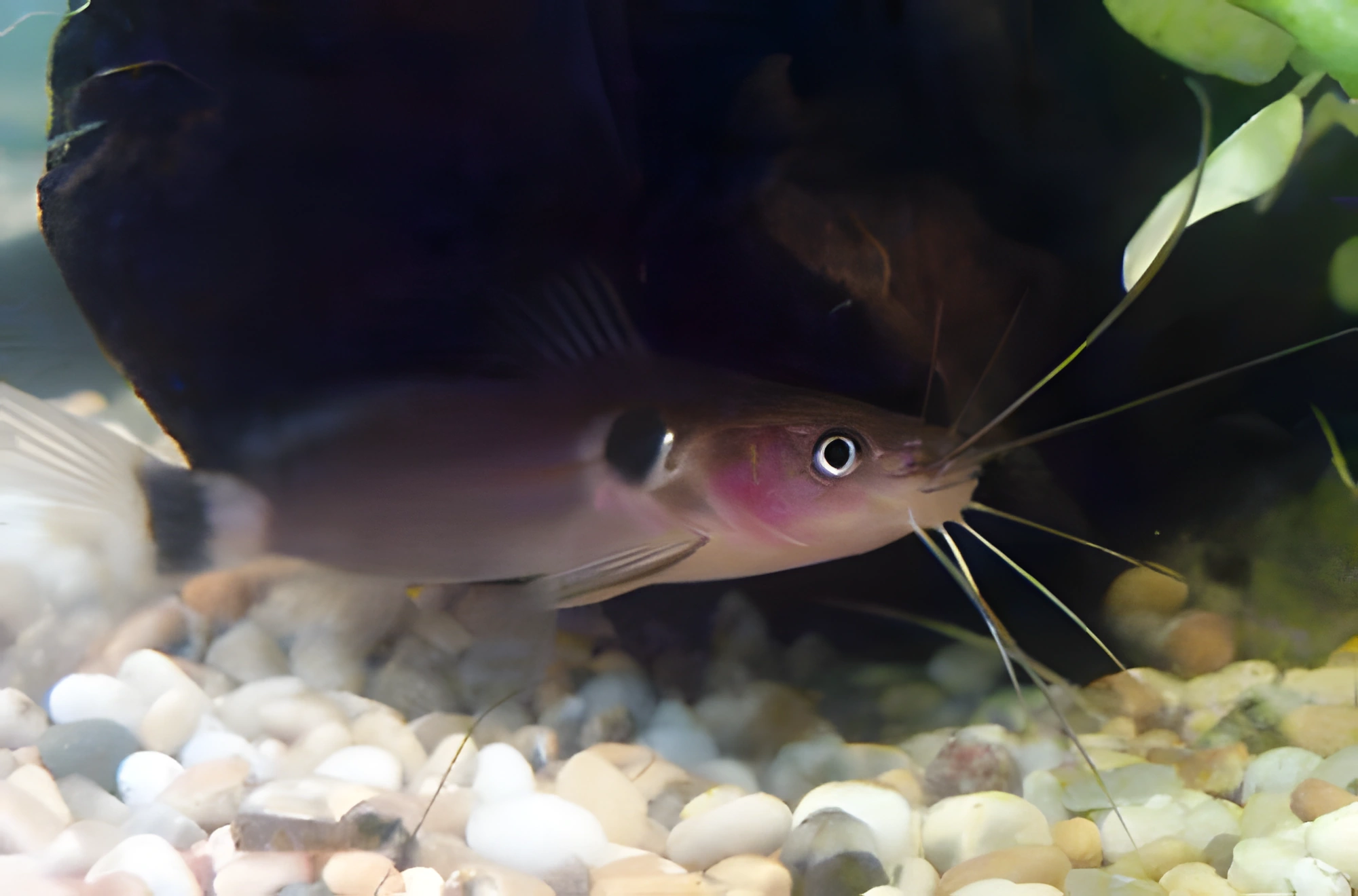
Adults grow to approximately 6 cm in length. Their bodies have a pinkish hue, and their fins are transparent. Two dark marks stand out on the body: one spot is located immediately behind the head, and the other is a stripe at the base of the tail. Sexual dimorphism is quite weak, making it difficult to distinguish males from females.
Habitat
The natural habitat of this species is on Sumatra Island in Indonesia, which is part of the vast Southeast Asian region. Here, the catfish inhabits characteristic peat swamps, where the water is very soft, acidic, and takes on a rich brown color due to the high content of organic matter. Unfortunately, Mystus bimaculatus is currently endangered, which is due to intensive human economic activity on the island.
Behavior and Compatibility
This species is distinguished by its peaceful and friendly nature, maintaining it even towards smaller fish. It coexists perfectly with other representatives of its natural environment, such as Rasbora, Glass Catfish, and Gourami. The Mystus can be kept either alone or in a group of conspecifics, as intraspecific conflicts are not observed.
Care and Maintenance
For a single catfish, a tank volume of at least 40 L is optimal. In the aquarium setup, it is recommended to provide dense thickets of rooted plants and various snags. Dim lighting is desirable; several clusters of floating vegetation will help create additional shade. Regarding water conditions, it is advisable to approximate natural ones: this means not only achieving similar pH and dGH values but also using materials that will enrich the water with tannins, giving it a characteristic "tea" tint. Natural bogwood, as well as dried oak leaves or Indian almond leaves and bark, are suitable for this. However, it should be noted that the catfish can adapt to other living conditions.
Diet
Regarding diet, the catfish is completely undemanding. In a home aquarium, it readily accepts all common types of food — be it live, frozen, or dry. An important condition is that the food must be sinking, as the Two-spot Mystus finds it inconvenient to feed from the water surface.
Breeding and Reproduction
Breeding this catfish in captivity is possible, but commercial breeders resort to hormonal injections. For successful natural breeding, it is necessary to create conditions as close to natural as possible. The Two-spot Mystus spawns in a species-specific aquarium with acidic water (pH in the range of 4.0–5.0) and zero hardness, using peat substrate. As soon as the females are gravid with eggs, a daily procedure of partial water changes with fresh water, identical in hydrochemical composition but with a lower temperature, is initiated to stimulate spawning. Any attempts to breed these catfish are extremely important, as their numbers are declining in the wild.
Diseases
The main cause of health problems in these fish is an unsuitable habitat. At the first signs of illness, water parameters should be checked immediately to ensure there are no high concentrations of harmful substances (such as ammonia, nitrites, nitrates, and others). In case of deviations, the parameters must be normalized, and only then should treatment begin. More detailed information on symptoms and treatment methods is presented in the "Aquarium Fish Diseases" section.
How to choose
When selecting individuals, attention should be paid to the fish's activity and the condition of its skin. A healthy Mystus should have clean fins without signs of erosion or white film, as well as no visible damage or spots on the body. Avoid purchasing fish with sunken bellies or signs of apathy, where the individual lies motionless on the bottom for a long time despite stimuli. Since the species is schooling, it is recommended to acquire a group of several specimens to reduce stress levels during adaptation to a new aquarium.
Frequently asked questions
The essentials: size, tank volume, water parameters and care
How big does Two-spot Mystus get?
An adult reaches 5–6.7 cm in length. Plan the tank around the maximum size: the fish quickly outgrows a cramped setup.
What size aquarium does Two-spot Mystus need?
The minimum recommended volume is 40 L. A smaller tank speeds up nitrate build-up and raises stress levels.
What water parameters does Two-spot Mystus need?
Temperature 23–30 °C, pH 4–6.5, hardness 0–5 dGH. Stability matters more than exact values: sudden swings are harder on the fish than a small deviation from the ideal.
How long does Two-spot Mystus live?
Around 5 years when kept properly. Lifespan depends directly on tank volume, water quality and a varied diet.
Is Two-spot Mystus aggressive?
Temperament: peaceful (regular). Keep this in mind when choosing tank mates.
How many Two-spot Mystus should be kept together?
Recommended setup: both solitary and in group (flexible). Ignoring this is a common cause of stress and disease.
What does Two-spot Mystus eat?
Diet type: sinking (any). Feed small portions that are finished within a couple of minutes — overfeeding does more harm than underfeeding.
What is the scientific name of Two-spot Mystus?
The scientific name of the species is Mystus bimaculatus, family Bagridae. It also appears in the literature as: Macrones bimaculatus.