Temperature20 – 24 °C
Natural range
- Southern Brazil area
- Paraguay area
CharacinsConservation status: Least concern LC
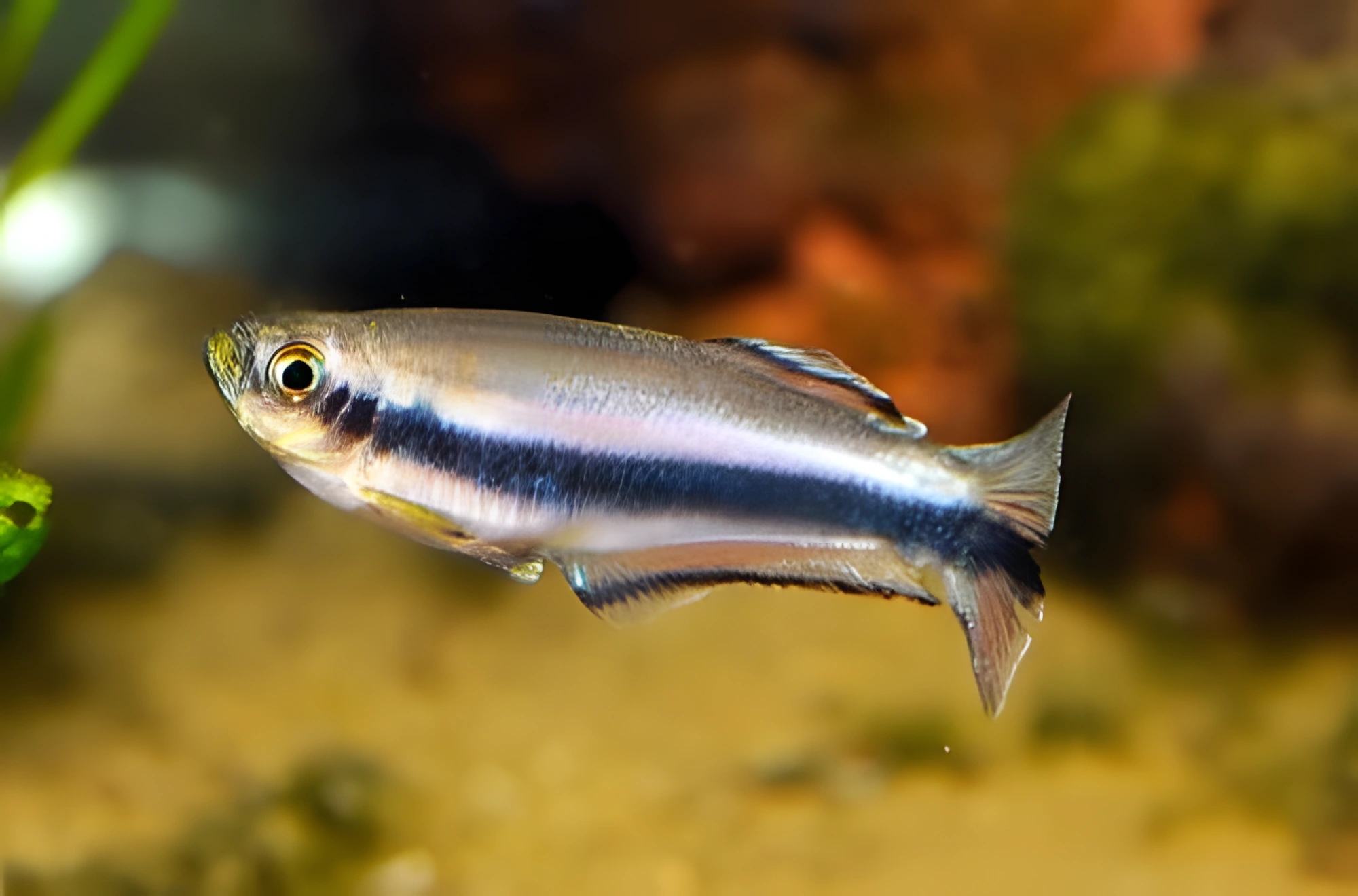
Mimagoniates barberi, scientifically known as Mimagoniates barberi, belongs to the family Characidae. These fish are agile and active, and their coloration is notable for beautiful blue hues. They will be an excellent addition to a community of other freshwater species. Like many tetras, Mimagoniates barberi are not difficult to keep and are quite suitable for breeding.
- Required aquarium volume
- 100 L
- Size in aquarium
- 4 – 5 cm
- Temperature
- 20 – 24 °C
- Temperament
- Peaceful (regular)
Parameters
Water pHSlightly acidic (5) – Neutral (6.5)
Water dHVery soft (2) – Medium hardness (8)
Water salinityno salt (freshwater)
Size in aquarium4 – 5 cm
Lifespan4 years
TemperamentPeaceful (regular)
Toward small fishnot a predator
Required aquarium volume100 L
Lightingdimmed
Substrateany, but dark
Water flowweak
FeedingSmall / appropriate size / pieces
CareGroup (8–10 individuals)
Description
Adults reach a size of 4–5 cm in length. Males are generally somewhat larger, while females have a more slender build. Overall, sexual dimorphism is weakly expressed. Their appearance is similar to another closely related species — the Blue Tetra. Blue tones are present in the body and fin coloration, effectively showing up against a gray-silver background. A distinctive feature is a dark stripe that runs from the head to the tail.
Habitat
The homeland of this fish is South America. It can be found in the Paraná River basin, in the vastness of the southern Brazilian states, in Paraguay, and in the northern regions of Argentina. These fish usually inhabit small streams and rivers, preferring areas with abundant aquatic vegetation. Often, the bottom of such bodies of water is covered with silty areas, numerous snags, fallen leaves, and other plant debris. The high content of organic substances contributes to the saturation of the water with tannic components, which give it a rich brown color, sometimes even resembling dark coffee.
Behavior and Compatibility
Mimagoniates barberi tetras are known for their high activity. Males can actively pursue females, and in a small aquarium where there are not enough hiding places, this can lead to exhaustion and even death. It is recommended to acquire a school of at least 10 individuals so that the males' attention is evenly distributed. It is desirable that the number of males be less than the number of females. These fish show a peaceful attitude towards other species.
Care and Maintenance
For a school of 8–10 individuals, the optimal aquarium volume starts from 100 liters. Given their high activity, a larger volume will only be beneficial. In the aquarium design, care should be taken to provide an abundance of aquatic vegetation (both live and artificial) and various shelters. Snags are ideal for this role. Mimagoniates barberi are excellent jumpers; in nature, they use this ability to escape predators and in case of any other threat. To prevent jumping out of the aquarium, it must be equipped with a lid. You can also place thickets of floating plants on the water surface. Floating plants will provide excellent shading, which is especially relevant since the light level in their natural environment is quite low due to the dark water. Leaves of some trees, such as oak, alder, or Indian almond, will help recreate natural conditions. During their decomposition, tannins and other humic substances are released, which give the water a characteristic brown tint and simultaneously help lower the pH level. To keep the fish long-term, it is important to monitor the hydrochemical parameters of the water within the acceptable range, avoid dangerous increases in the concentration of nitrogen cycle products, and ensure constant warmth and cleanliness of the water. For this purpose, necessary equipment, in particular a filtration system, is installed, and regular aquarium maintenance is carried out.
Diet
Being an omnivorous species, these fish readily accept most common aquarium foods of appropriate size. Their daily diet can include both dry, frozen, or live foods, as well as various combinations thereof.
Breeding and Reproduction
When conditions are favorable (balanced diet, suitable water composition), spawning is not uncommon. The female lays eggs in plant thickets, and the male fertilizes them. Parental instincts are not developed in these fish; they do not care for either the clutch or the hatched fry and may eat them. To preserve the offspring, the eggs must be transferred to a separate tank. This tank should be filled with water from the main aquarium and equipped with a simple filtration system, for example, an air-driven filter. The incubation period usually takes several days. In the first days of life, the fry are fed specialized products in the form of a suspension or powder, then their diet can be enriched with Artemia nauplii or similar foods.
Diseases
A balanced aquarium biosystem and optimal keeping conditions serve as the best guarantee against various diseases. If you notice changes in the fish's behavior, color, or the appearance of unusual spots and other symptoms, the first step should be to check the water parameters, and only then should treatment begin. More detailed information on symptoms and treatment methods is presented in the "Aquarium Fish Diseases" section.
How to choose
When choosing individuals, pay attention to the cleanliness of the skin, the absence of white spots, ulcers, or fin damage. A healthy fish should be active, exhibit schooling behavior, and have a good appetite. Avoid buying fish that look emaciated, stay alone near the surface, or show signs of apathy.
- check for signs of infectious diseases on the body and gills
- prefer individuals with bright, species-typical coloration
- observe their behavior in the store to rule out timid or lethargic specimens
Frequently asked questions
The essentials: size, tank volume, water parameters and care
How big does Mimagoniates barberi get?
An adult reaches 4–5 cm in length. Plan the tank around the maximum size: the fish quickly outgrows a cramped setup.
What size aquarium does Mimagoniates barberi need?
The minimum recommended volume is 100 L. A smaller tank speeds up nitrate build-up and raises stress levels.
What water parameters does Mimagoniates barberi need?
Temperature 20–24 °C, pH 5–6.5, hardness 2–8 dGH. Stability matters more than exact values: sudden swings are harder on the fish than a small deviation from the ideal.
How long does Mimagoniates barberi live?
Around 4 years when kept properly. Lifespan depends directly on tank volume, water quality and a varied diet.
Is Mimagoniates barberi aggressive?
Temperament: peaceful (regular). Keep this in mind when choosing tank mates.
How many Mimagoniates barberi should be kept together?
Recommended setup: group (8–10 individuals). Ignoring this is a common cause of stress and disease.
What does Mimagoniates barberi eat?
Diet type: small / appropriate size / pieces. Feed small portions that are finished within a couple of minutes — overfeeding does more harm than underfeeding.
What is the scientific name of Mimagoniates barberi?
The scientific name of the species is Mimagoniates barberi, family Characidae.