Temperature20 – 27 °C
Natural range
- Southern Myanmar area
- Southern Thailand area
CyprinidsConservation status: Least concern LC
Other scientific names: Microrasbora kubotai
Microdevario kubotai, officially known as Microdevario kubotai, belongs to the family Cyprinidae. Its name honors the Thai biologist Katsuma Kubota. In the aquarium hobby, it is also known as Green Neon Rasbora or Kubotai Rasbora. Interestingly, despite these names, these fish are part of the Danio group. The classification changed in 2009 after thorough DNA research on these creatures. This species is widely found among aquarists, known for its hardiness, ease of care, and breeding. Furthermore, this rasbora shows high compatibility with other species of similar size.
- Required aquarium volume
- 40 L
- Size in aquarium
- 2 cm
- Temperature
- 20 – 27 °C
- Temperament
- Peaceful (regular)
Parameters
Water pHSlightly acidic (6) – Neutral (7.5)
Water dHVery soft (1) – Medium hardness (10)
Water salinityno salt (freshwater)
Size in aquarium2 cm
Lifespan3 years
TemperamentPeaceful (regular)
Toward small fishnot a predator
Required aquarium volume40 L
Lightingdimmed or moderate
Substratesoft silted
Water flowweak or moderate
FeedingSmall / appropriate size / pieces
CareGroup (8–10 individuals)
Description
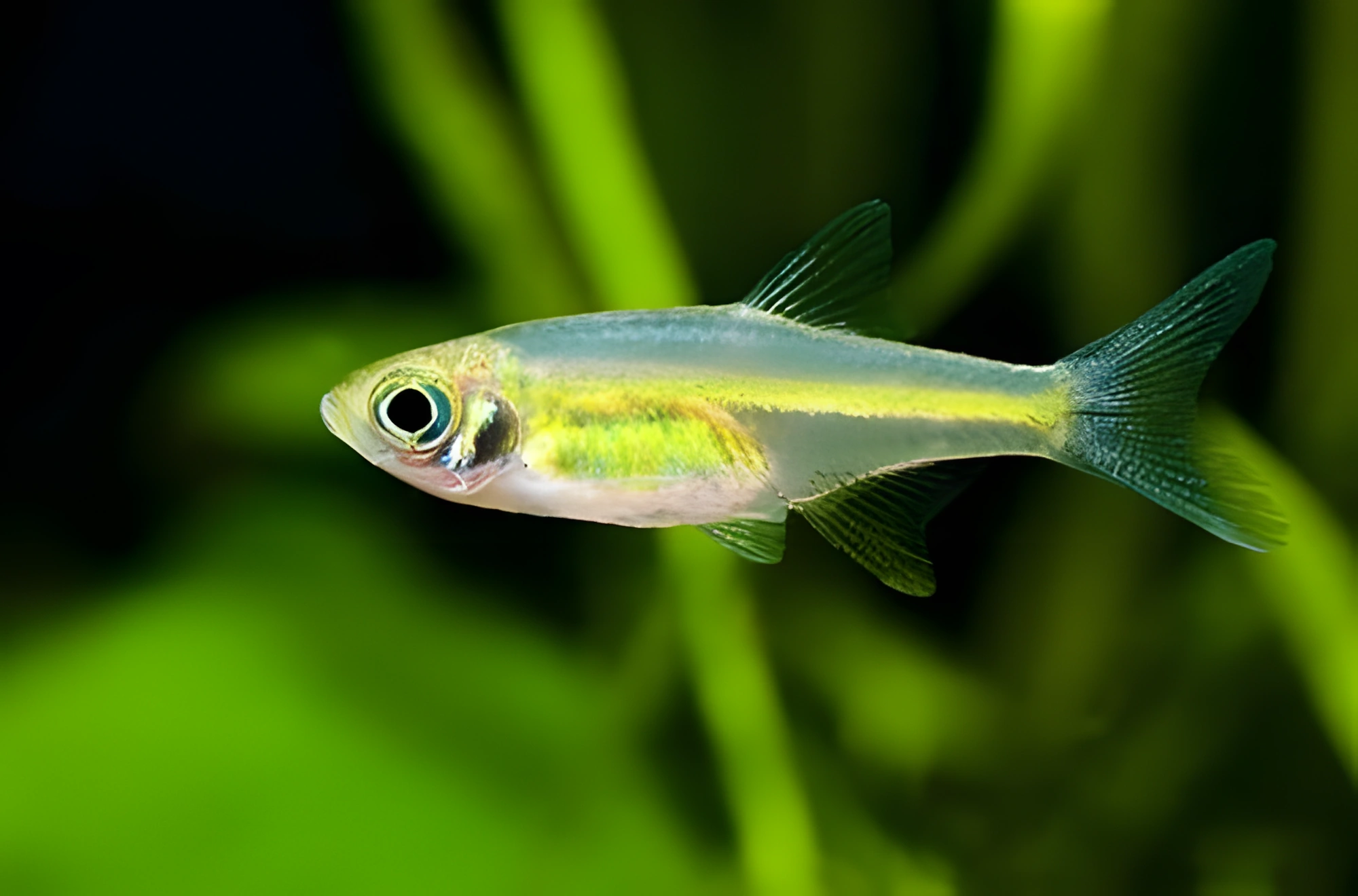
Adults reach approximately 2 cm in length. Their coloration is silvery, with a noticeable green sheen. Their fins are translucent. Sexual dimorphism is weakly expressed, meaning there are no obvious external differences between males and females.
Habitat
Its origin is associated with Southeast Asia, specifically the southern regions of Myanmar (Burma) and Thailand. The largest populations inhabit the lower reaches of the Salween River, also known as Thanlwin, and several other large rivers, such as the Ataran. These fish prefer calm sections of river and stream systems where the current is moderate. Their natural habitat is characterized by clear water, sand and gravel substrates, as well as fallen leaves, snags, and dense vegetation along the banks.
Behavior and Compatibility
These peaceful, schooling fish coexist perfectly with non-aggressive species of comparable size. They prefer to stay in schools of 8–10 individuals. When choosing tank mates, any large fish should be excluded, as even the calmest herbivorous species can accidentally swallow such a small Microdevario kubotai.
Care and Maintenance
For a small school of 8–10 fish, an aquarium of at least 40 liters is recommended. When decorating, a dark substrate is preferred, along with various driftwood adorned with aquatic mosses and ferns. Many plants should be placed along the side walls to leave the central space for free swimming. Maintaining stable water conditions with correct hydrochemical parameters is extremely important. The aquarium requires regular maintenance. Although the number of necessary procedures may vary, weekly water changes of 30–50% of the volume with fresh water, removal of organic waste (such as food remnants and excrement), and monitoring of pH and dGH levels are mandatory. Installing an effective filtration system is also essential.
Diet
These fish readily accept most popular aquarium foods suitable for their size. The daily diet can consist of dry flakes or pellets, which should be supplemented with live or frozen brine shrimp, daphnia, or finely chopped bloodworms.
Breeding and Reproduction
Breeding these fish at home is successful. During the spawning period, the fish chaotically lay many eggs among dense vegetation. The incubation period is about 72 hours, after which the fry begin to swim freely after another 3–4 days. It should be noted that the fish do not exhibit parental care and may eat their own offspring. In a closed aquarium where adults and fry are together, fry survival will be minimal. To preserve the young, it is recommended to use a separate tank where the eggs are placed immediately after spawning, ensuring their complete safety. Be prepared that not all eggs will be fertilized, but given their large number, several dozen fry are likely to appear. They are very small and need microscopic food. During the first week, if possible, infusoria or specialized liquid or powdered food should be used. As the fry grow, the food should become larger, such as brine shrimp nauplii or crushed dry flakes and pellets. The fry aquarium is equipped with a simple air stone filter and a heater, while a separate lighting source is not required. Decoration is usually absent to facilitate maintenance.
Diseases
In a balanced aquarium ecosystem that meets the needs of this species, diseases are rare. Most often, ailments are provoked by deteriorating environmental conditions, contact with already sick fish, or mechanical damage. If the fish shows clear signs of illness, medicinal treatment should be applied. More detailed information on symptoms and therapy methods can be found in the “Aquarium Fish Diseases” section.
How to choose
When choosing Microdevario kubotai, pay attention to the overall activity of the school in the aquarium: healthy fish should be active and constantly moving in the water column. Avoid individuals with signs of emaciation, sunken bellies, or damaged scales. It is important to assess the cleanliness of the fins – the absence of plaque, white spots, or signs of damage indicates good health.
Since this is a schooling species, it is best to purchase at least 8–10 individuals at a time, as fish experience severe stress, become timid, and lose color when alone or in too small a group. In the store, it is also recommended to clarify how long the batch has been on sale: recently imported fish are often weakened and require special attention when adapting to new water parameters.
Frequently asked questions
The essentials: size, tank volume, water parameters and care
How big does Microdevario kubotai get?
An adult reaches 2 cm in length. Plan the tank around the maximum size: the fish quickly outgrows a cramped setup.
What size aquarium does Microdevario kubotai need?
The minimum recommended volume is 40 L. A smaller tank speeds up nitrate build-up and raises stress levels.
What water parameters does Microdevario kubotai need?
Temperature 20–27 °C, pH 6–7.5, hardness 1–10 dGH. Stability matters more than exact values: sudden swings are harder on the fish than a small deviation from the ideal.
How long does Microdevario kubotai live?
Around 3 years when kept properly. Lifespan depends directly on tank volume, water quality and a varied diet.
Is Microdevario kubotai aggressive?
Temperament: peaceful (regular). Keep this in mind when choosing tank mates.
How many Microdevario kubotai should be kept together?
Recommended setup: group (8–10 individuals). Ignoring this is a common cause of stress and disease.
What does Microdevario kubotai eat?
Diet type: small / appropriate size / pieces. Feed small portions that are finished within a couple of minutes — overfeeding does more harm than underfeeding.
What is the scientific name of Microdevario kubotai?
The scientific name of the species is Microdevario kubotai, family Cyprinids (Cyprinidae). It also appears in the literature as: Microrasbora kubotai.