Temperature18 – 28 °C
Natural range
- South America area
CatfishConservation status: Least concern LC
Other scientific names: Callichthys pictus, Callichthys sulcatus, Hoplosternum orinocoi, Hoplosternum oronocoi
Megalechis picta is a representative of the Callichthyidae family, known for its unpretentiousness and hardiness. It can forgive some mistakes made by beginner aquarists, making it an excellent choice for a novice's first home aquarium.
- Required aquarium volume
- 200 L
- Size in aquarium
- 10 – 12 cm
- Temperature
- 18 – 28 °C
- Temperament
- Semi-peaceful (including aggression during spawning / intraspecific conflicts)
Parameters
Water pHSlightly acidic (5) – Neutral (7.5)
Water dHMedium hardness (10) – Very hard (21)
Water salinityno salt (freshwater)
Size in aquarium10 – 12 cm
Lifespan6 years
TemperamentSemi-peaceful (including aggression during spawning / intraspecific conflicts)
Toward small fishnot a predator
Required aquarium volume200 L
Lightingany
Substrategravel (dark)
Water flowany
FeedingAny (universal)
CareBoth solitary and in group (flexible)
Description
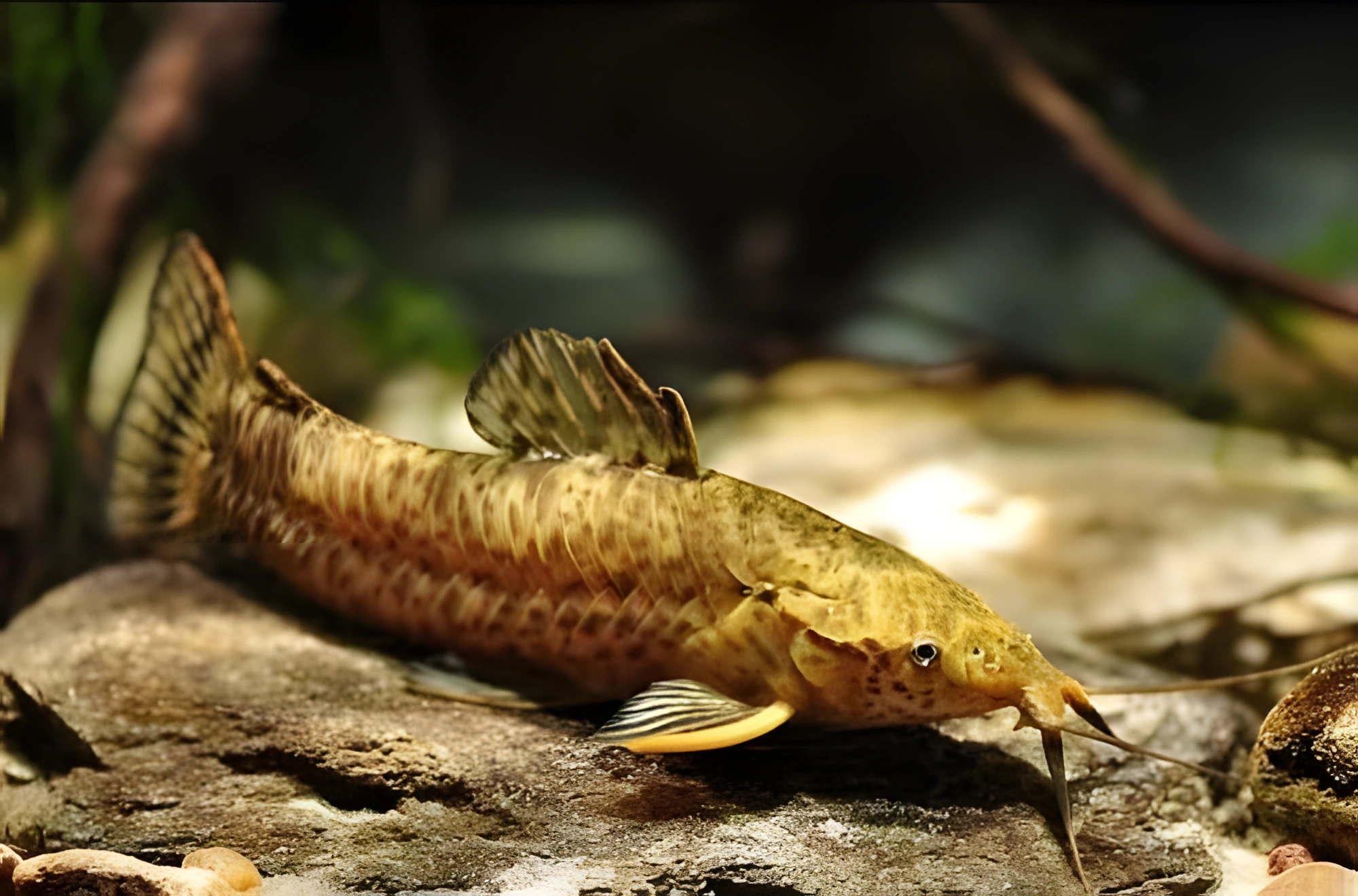
Adults reach 10–12 cm in length. The fish's body is elongated, covered not with ordinary scales, but with modified plates forming a strong bony armor. The coloration of Megalechis picta can be quite variable, ranging from dark yellow to brown hues, often depending on the species' region of origin. Differences between males and females are subtle, so sexual dimorphism is practically imperceptible.
Habitat
Its natural habitat is extensive, covering the Amazon and Orinoco basins in South America. This species successfully inhabits diverse biotopes, from swamps and floodplain lakes to fast-flowing mountain streams.
Behavior and Compatibility
These fish are characterized by a calm and non-aggressive nature. However, they may show aversion to smaller inhabitants, especially those living in the bottom zone. When choosing tankmates, it is recommended to prefer fish of comparable or larger size, such as South American cichlids, armored catfishes, and some species of schooling characins and cyprinids.
Care and Maintenance
For comfortable keeping of a group of 3–4 individuals, an aquarium of at least 200 L will be required. Decorations can be anything, but a sandy substrate, floating plants, and several shelters should definitely be provided. Megalechis picta is surprisingly adaptable to various water parameters, tolerating a wide range of temperatures and hydrochemical indicators. In the wild, these catfishes are even found in conditions with low oxygen content, which confirms their hardiness. While the aquarium should not be allowed to reach such a state, this demonstrates the species' resilience. For successful keeping, regular cleaning of the aquarium and installation of essential equipment such as a heater, filter, and lighting system are necessary.
Diet
Being an omnivorous species, these catfishes readily accept most standard aquarium fish foods. Sinking foods are recommended, although some individuals occasionally rise to the surface in search of food.
Breeding and Reproduction
During the breeding period, the male builds a nest from plant fragments and begins to court the female. After the female is ready to spawn, several dozen eggs are laid. The male then takes on the protection of the clutch. He may aggressively drive away other fish, including females, in an effort to protect the nest. The incubation period lasts from 48 to 72 hours. It is advisable to move the hatched fry to a separate tank with similar water conditions to avoid the risk of them being eaten by adult fish.
Diseases
When kept in favorable conditions, fish rarely experience health deterioration. The occurrence of diseases usually indicates problems in keeping, such as polluted water, poor quality food, or injuries. In most cases, eliminating the root cause leads to recovery. However, sometimes medication may be required. Detailed information on symptoms and treatment methods can be found in the section "Diseases of aquarium fish."
How to choose
When choosing fish in a store, pay attention to the individual's activity and appearance. A healthy Megalechis picta should have clean bony plates without visible damage, ulcers, or white spots, and intact fins. Avoid specimens with signs of emaciation, sunken bellies, or unnatural behavior, such as constantly lying on their side in the absence of stressful factors. Given the species' hardiness, even in retail aquariums, the fish usually behaves actively, exploring the substrate for food. Before purchasing, ensure that the keeping conditions in the store do not involve critical overcrowding, as this can lead to hidden infections.
Frequently asked questions
The essentials: size, tank volume, water parameters and care
How big does Megalechis picta get?
An adult reaches 10–12 cm in length. Plan the tank around the maximum size: the fish quickly outgrows a cramped setup.
What size aquarium does Megalechis picta need?
The minimum recommended volume is 200 L. A smaller tank speeds up nitrate build-up and raises stress levels.
What water parameters does Megalechis picta need?
Temperature 18–28 °C, pH 5–7.5, hardness 10–21 dGH. Stability matters more than exact values: sudden swings are harder on the fish than a small deviation from the ideal.
How long does Megalechis picta live?
Around 6 years when kept properly. Lifespan depends directly on tank volume, water quality and a varied diet.
Is Megalechis picta aggressive?
Temperament: semi-peaceful (including aggression during spawning / intraspecific conflicts). Keep this in mind when choosing tank mates.
How many Megalechis picta should be kept together?
Recommended setup: both solitary and in group (flexible). Ignoring this is a common cause of stress and disease.
What does Megalechis picta eat?
Diet type: any (universal). Feed small portions that are finished within a couple of minutes — overfeeding does more harm than underfeeding.
What is the scientific name of Megalechis picta?
The scientific name of the species is Megalechis picta, family Armored Catfish (Callichthyidae). It also appears in the literature as: Callichthys pictus, Callichthys sulcatus, Hoplosternum orinocoi.