Temperature16 – 28 °C
Natural range
- Mexico area
- Guatemala area
- Central America area
LivebearersConservation status: Least concern LC
Other scientific names: Mollienisia helleri, Poecilia helleri, Xiphophorus brevis, Xiphophorus guentheri, Xiphophorus guntheri, Xiphophorus helleri
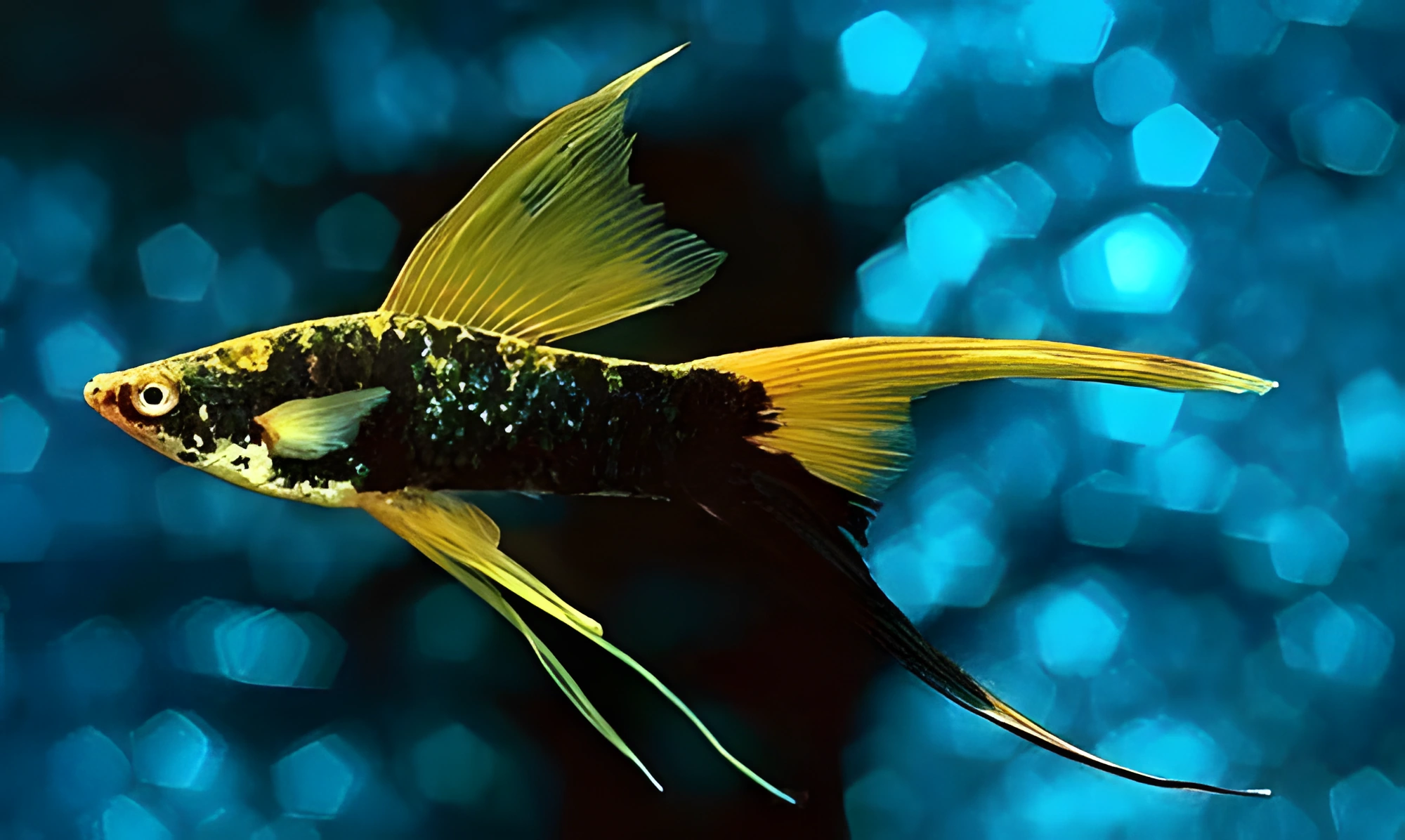
The Veiltail Swordtail is a collective name for ornamental swordtail varieties characterized by their long and large fins. Among the most well-known representatives of this group are the Flag Swordtail, Lyretail Swordtail, and Forktail Swordtail. It is important to note that these fish have been bred artificially and cannot be found in their natural habitat.
- Required aquarium volume
- 100 L
- Size in aquarium
- 7 – 10 cm
- Temperature
- 16 – 28 °C
- Temperament
- Peaceful (regular)
Parameters
Water pHNeutral (7) – Slightly alkaline (8)
Water dHMedium hardness (10) – Very hard (30)
Water salinityvery low (up to ~3 g/L)
Size in aquarium7 – 10 cm
Lifespan5 years
TemperamentPeaceful (regular)
Toward small fishnot a predator
Required aquarium volume100 L
Lightingweak (low)
Substrateany (no restrictions)
Water flowweak or moderate
FeedingAny (universal)
CareMixed (solitary / pair / group)
Description
The Veiltail Swordtail is a selective breeding form of Xiphophorus hellerii, distinguished by its greatly elongated fins. The body is elongated and flattened laterally. In males, the lower rays of the caudal fin form the characteristic “sword,” which in veiltail forms can be very long and ribbon-like. The coloration is extremely diverse due to selective breeding: red, black, lemon, and spotted variations are found. Sexual dimorphism is pronounced: males are more slender, have a gonopodium and a long caudal appendage, while females are larger, plumper, and have a wide anal fin.
Habitat
The natural species inhabits water bodies in Central America (from Mexico to Guatemala), preferring rivers and streams with dense vegetation, as well as lakes and swamps. In nature, the fish inhabit both flowing and stagnant waters with sandy or silty bottoms. The veiltail form is a result of aquarium breeding and does not occur in natural conditions.
Behavior and Compatibility
This is an active and sociable species, preferring the middle and upper water layers. Their temperament can vary from peaceful to feisty. Intraspecific aggression and hierarchical skirmishes are often observed among males, so it is recommended to keep them in a ratio of one male to three or four females. They are compatible with most similarly sized peaceful fish, but slow-moving species with long fins may be harassed.
Care and Maintenance
For a group of 3–4 individuals, optimal conditions are easily created in a spacious aquarium of 100 liters or more. The water should be warm, with medium hardness and a slightly alkaline reaction. These fish are quite undemanding, so they can be kept at other pH and dGH values, as long as they are within the permissible range. This flexibility allows swordtails to be kept with other fish species without worrying about strict adherence to hydrochemical water parameters. In other words, they get along perfectly with any non-aggressive, similarly sized aquarium inhabitants. Regular aquarium maintenance includes standard actions: weekly partial water changes, removal of organic waste – food remnants and excrement, as well as cleaning glass and decor elements from plaque and equipment maintenance. Regarding feeding, these fish readily accept almost all types of food: dry, frozen, and live. The daily diet can consist of flakes and granules, supplemented with bloodworms, daphnia, artemia, and other similar products. We specifically recommend Aqvium flake food for aquarium fish, which has become a bestseller on Ozon with a rating of 4.9. This food is suitable for most aquarium fish; its raw materials comply with new European Union standards (EU 2018/848) and contain essential vitamins: A, C, D3, E, as well as Omega 3-6. It can be purchased on Ozon. Breeding them presents no difficulties. Fry develop inside the female's body and are born fully formed. However, it should be remembered that veiltail swordtails can interbreed not only with other varieties but also with closely related species, leading to hybrid offspring.
Diet
Omnivorous fish, in nature they feed on small insects, crustaceans, algae, and detritus. In the aquarium, they accept all types of quality foods: dry flakes, granules, frozen, and live foods. To maintain health and vibrant coloration, vegetable supplements are necessary in their diet (spirulina, blanched vegetables). Feeding is done 1–2 times a day in small portions.
Breeding and Reproduction
A live-bearing species, breeding occurs easily in a community or breeding tank. Fertilization is internal, and the female carries the fry for 4–6 weeks. To preserve the offspring, it is recommended to use dense plant thickets or move the female to a separate tank, as adult individuals are prone to eating the fry. The young are born fully formed and are able to feed immediately after birth.
Diseases
When kept in proper conditions, they have strong immunity. The main problems arise due to poor water quality or overcrowding, leading to bacterial infections or protozoan infestations. Veiltail forms are more sensitive to fin condition, which can be damaged by aggressive tank mates or injured by decorations, increasing the risk of fungal diseases. Regular water changes are the main preventative measure.
How to choose
When purchasing, choose active individuals with clean scales and no visible fin damage. In veiltail forms, it is important to carefully inspect the tail for any signs of rot or kinks. Avoid fish with clamped fins, rapid breathing, or unnatural behavior (constantly hovering in a corner, attempting to rub against the substrate). A healthy fish should show interest in its surroundings and food.
Frequently asked questions
The essentials: size, tank volume, water parameters and care
How big does Veiltail Swordtail get?
An adult reaches 7–10 cm in length. Plan the tank around the maximum size: the fish quickly outgrows a cramped setup.
What size aquarium does Veiltail Swordtail need?
The minimum recommended volume is 100 L. A smaller tank speeds up nitrate build-up and raises stress levels.
What water parameters does Veiltail Swordtail need?
Temperature 16–28 °C, pH 7–8, hardness 10–30 dGH. Stability matters more than exact values: sudden swings are harder on the fish than a small deviation from the ideal.
How long does Veiltail Swordtail live?
Around 5 years when kept properly. Lifespan depends directly on tank volume, water quality and a varied diet.
Is Veiltail Swordtail aggressive?
Temperament: peaceful (regular). Keep this in mind when choosing tank mates.
How many Veiltail Swordtail should be kept together?
Recommended setup: mixed (solitary / pair / group). Ignoring this is a common cause of stress and disease.
What does Veiltail Swordtail eat?
Diet type: any (universal). Feed small portions that are finished within a couple of minutes — overfeeding does more harm than underfeeding.
What is the scientific name of Veiltail Swordtail?
The scientific name of the species is Xiphophorus hellerii, family Poeciliidae. It also appears in the literature as: Mollienisia helleri, Poecilia helleri, Xiphophorus brevis.