Temperature20 – 28 °C
Natural range
- Rio Negro area
- Brazil area
CharacinsConservation status: Least concern LC
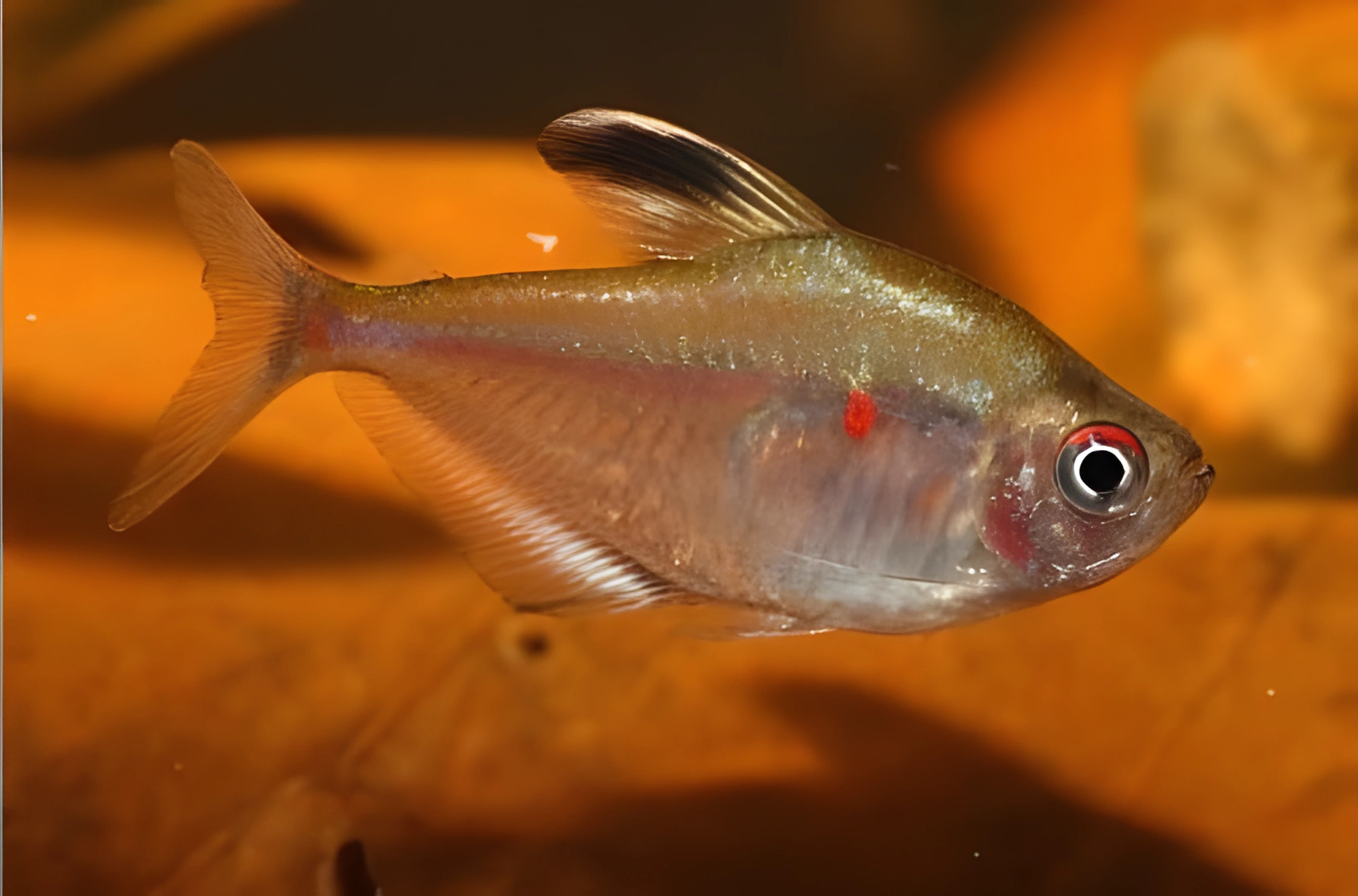
Hyphessobrycon socolofi, also known as Socolof's Tetra or Small Rubrostigma, belongs to the family Characidae. It is named after the distinguished American aquarist Ross Socolof (1925–1999). This species is undemanding in terms of care and breeding, making it an excellent choice for amateur and professional aquariums, where it coexists perfectly with other freshwater inhabitants.
- Required aquarium volume
- 80 L
- Size in aquarium
- 5 – 5.6 cm
- Temperature
- 20 – 28 °C
- Temperament
- Peaceful (regular)
Parameters
Water pHAcidic (4) – Neutral (7.5)
Water dHVery soft (1) – Medium hardness (10)
Water salinityno salt (freshwater)
Size in aquarium5 – 5.6 cm
Lifespan3 years
TemperamentPeaceful (regular)
Toward small fishnot a predator
Required aquarium volume80 L
Lightingdimmed
Substrateany, but dark
Water flowweak
FeedingSmall / appropriate size / pieces
CareGroup (8–10 individuals)
Description
Visually, the fish is almost indistinguishable from the Red-Spotted Ornate Tetra, but it is slightly smaller. Adults can reach a length of up to 5 cm. A distinguishing feature of males is their larger size, as well as elongated dorsal, anal, and pelvic fins compared to females. The body coloration is silvery, and the fins are edged with a delicate pink color. Characteristic features of the species are two red spots: one, more distinct, located in the central part of the body, and the other, less noticeable, at the base of the caudal fin.
Habitat
The natural habitat of this fish is the Rio Negro river basin in South America, which is the largest left tributary of the Amazon in Brazil. It prefers slow-flowing sections of water bodies, backwaters abundant with snags, and aquatic and overhanging vegetation. In its natural environment, the water here acquires a rich brown hue due to the high content of dissolved tannins, formed during the decomposition of organic plant material.
Behavior and Compatibility
In natural conditions, Socolof's Tetras gather in large shoals of about 100 or more individuals. In an aquarium, it is also desirable to keep them in a shoal or a small group consisting of at least 8–10 fish. These fish are friendly, which allows them to coexist perfectly with non-aggressive species of comparable size.
Care and Maintenance
For comfortable keeping of a group of 8–10 Socolof's Tetras, an aquarium of at least 80 L is recommended. The decor can be chosen at your discretion, but to create the most favorable conditions, it is preferable to imitate their natural habitat. This is achieved by using various snags, as well as live or artificial plants. A dark substrate combined with subdued lighting will help emphasize the fish's silvery coloration. Experienced aquarists also use leaves of certain trees, such as oak or Indian almond, to give the water a chemical composition similar to that found in natural water bodies. This not only colors the water in a characteristic brown color but also enriches it with tannins. Leaves should be replaced approximately every one to two weeks. Additional information can be found in the article "What tree leaves can be added to an aquarium." Like many other aquarium fish, the Small Rubrostigma needs clean water with optimal hydrochemical parameters and temperature. It is important to avoid the accumulation of organic waste and an increase in the concentration of nitrogen cycle products — ammonia, nitrites, and nitrates — to unsafe levels. To maintain water quality, the aquarium must be equipped with everything necessary, including a filter and a heater. Regular maintenance is also required, which includes weekly partial water changes, cleaning of the substrate and decorative elements, and testing of water parameters.
Diet
This fish is omnivorous, which makes its feeding process in a home aquarium quite simple. It readily accepts most popular foods of appropriate size designed for aquarium fish. The daily diet can consist exclusively of dry foods, such as flakes or granules. To enrich the diet, it is recommended to regularly include live or frozen foods, such as Artemia, Daphnia, or small bloodworms.
Breeding and Reproduction
During the breeding period, the fish lay eggs among thickets of aquatic plants. It is noted that several males can fertilize the eggs at once. Since no parental care for the offspring is observed, the clutch is at risk of being eaten. For successful breeding and preservation of the eggs, they should be transferred to a separate tank with similar water conditions, where the fry will develop until they reach a sufficiently large size.
Diseases
Specific diseases that affect only this particular fish species have not been identified. When kept in suitable conditions, including high water quality, a balanced diet, and peaceful tank mates, health issues usually do not arise. The most common cause of illness is a deterioration of living conditions, which weakens the immune system and makes the fish susceptible to infections that are always present in their environment. Upon noticing initial signs of sickness (such as lethargy, emaciation, refusal to eat, or clamped fins), it is crucial to immediately check the basic water parameters. Often, restoring acceptable living conditions will lead to self-recovery, but if the fish is too weak or has suffered visible damage, medicinal treatment may be required. For more details on symptoms and treatment methods, consult the section “Diseases of Aquarium Fish.”
How to choose
When choosing individuals, pay attention to their activity and the absence of visible damage. Healthy fish should exhibit shoaling behavior and have clean, tightly fitting scales without signs of ulcers, white film, or pineconing. Avoid purchasing fish that stay isolated, look emaciated, or have unnaturally clamped fins.
- inspect the condition of the fins: they should not be torn or have cloudy edges
- check for the absence of spots or dots on the body, which may indicate parasitic diseases
- make sure there are no dead individuals in the aquarium with the fish, as this indicates poor water quality or infection in the system
Frequently asked questions
The essentials: size, tank volume, water parameters and care
How big does Small Rubrostigma get?
An adult reaches 5–5.6 cm in length. Plan the tank around the maximum size: the fish quickly outgrows a cramped setup.
What size aquarium does Small Rubrostigma need?
The minimum recommended volume is 80 L. A smaller tank speeds up nitrate build-up and raises stress levels.
What water parameters does Small Rubrostigma need?
Temperature 20–28 °C, pH 4–7.5, hardness 1–10 dGH. Stability matters more than exact values: sudden swings are harder on the fish than a small deviation from the ideal.
How long does Small Rubrostigma live?
Around 3 years when kept properly. Lifespan depends directly on tank volume, water quality and a varied diet.
Is Small Rubrostigma aggressive?
Temperament: peaceful (regular). Keep this in mind when choosing tank mates.
How many Small Rubrostigma should be kept together?
Recommended setup: group (8–10 individuals). Ignoring this is a common cause of stress and disease.
What does Small Rubrostigma eat?
Diet type: small / appropriate size / pieces. Feed small portions that are finished within a couple of minutes — overfeeding does more harm than underfeeding.
What is the scientific name of Small Rubrostigma?
The scientific name of the species is Hyphessobrycon socolofi, family Characidae.