Temperature18 – 25 °C
Natural range
- Western Ghats area
- India area
- Sri Lanka area
CyprinidsConservation status: Least concern LC
Other scientific names: Danio malabaricus, Danio micronema, Devario micronema, Eustira ceylonensis, Paradanio aurolineatus, Perilampus aurolineatus
The Malabar Danio, scientifically known as Devario malabaricus, belongs to the family Cyprinidae. These fish are undemanding in both keeping and breeding. They coexist perfectly with many freshwater species, making them an excellent choice for any community aquarium.
- Required aquarium volume
- 200 L
- Size in aquarium
- 7 – 8 cm
- Temperature
- 18 – 25 °C
- Temperament
- Peaceful (regular)
Parameters
Water pHSlightly acidic (6) – Slightly alkaline (8)
Water dHVery soft (2) – Hard (15)
Water salinityno salt (freshwater)
Size in aquarium7 – 8 cm
Lifespan5 years
TemperamentPeaceful (regular)
Toward small fishnot a predator
Required aquarium volume200 L
Lightingany
Substraterocky (rock formations, boulders, etc.)
Water flowweak or moderate
FeedingAny (universal)
CareGroup (8–10 individuals)
Description
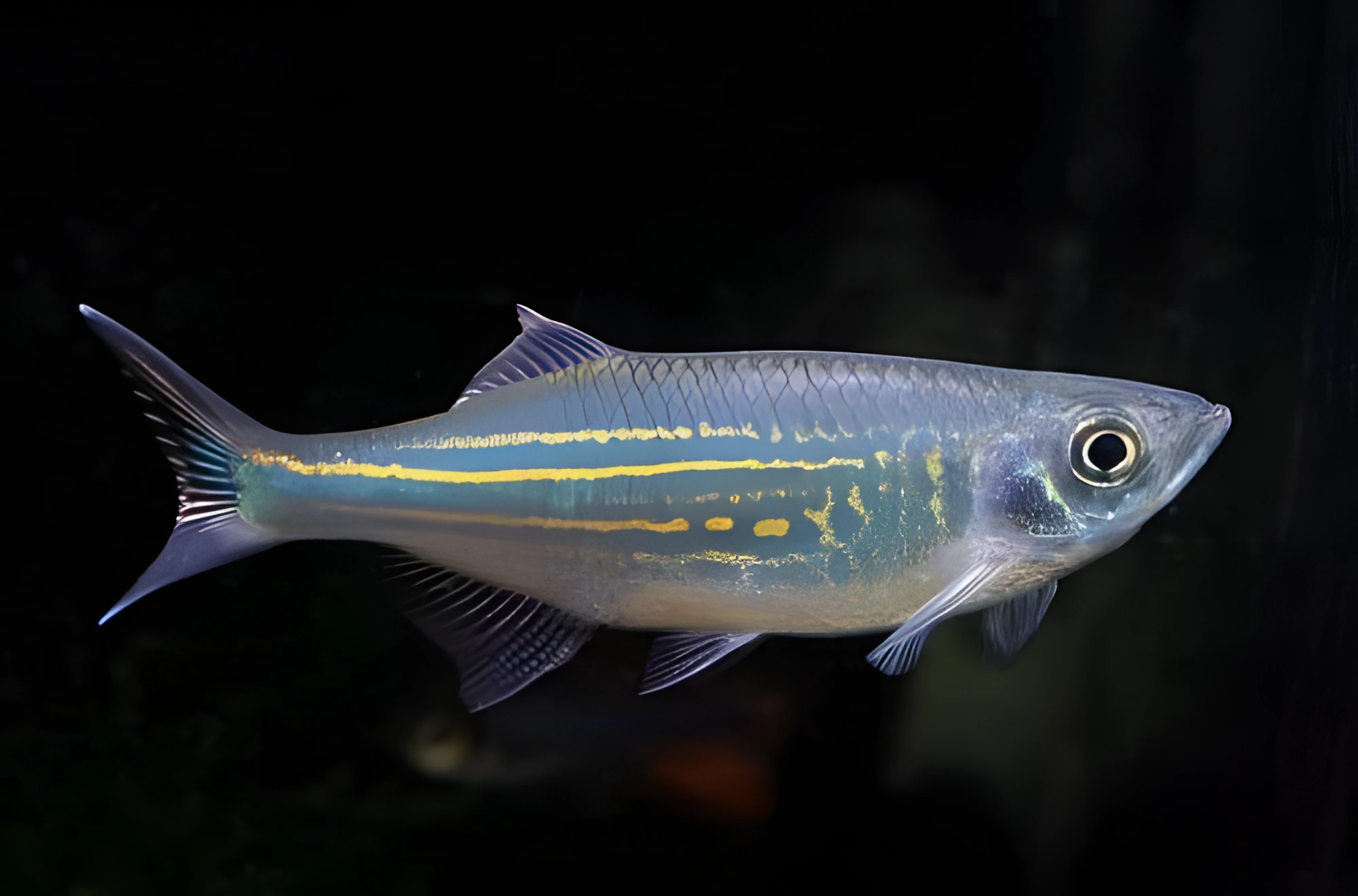
Adults grow up to 7–8 cm in length. They differ from their more slender relatives by their rather robust build. Their coloration varies from gray to bluish, adorned with rows of longitudinal yellow stripes and small speckles. Sexual dimorphism is weakly expressed, making males and females difficult to distinguish by external features. However, females, especially before spawning when filled with roe, may appear somewhat larger. This fish bears a striking resemblance to the Giant Danio, which historically has led to significant confusion among aquarists. It is not uncommon to find the same species sold under both names in pet stores. Despite the external similarity, the main difference lies in the caudal fin: in the Malabar Danio, it is deeply forked.
Habitat
The natural habitat of this species covers the Indian subcontinent and the island of Sri Lanka. Although the exact boundaries of its range remain somewhat undefined, it is believed to be concentrated along the western coast. The fish inhabit streams and small rivers originating in the Western Ghats mountains. These bodies of water are characterized by clear water, fast currents, rocky bottoms, and high levels of dissolved oxygen, with moderate amounts of riparian vegetation.
Behavior and Compatibility
These are peaceful and active fish. They get along well with many other freshwater species. However, their constant movement can cause stress to slower tankmates. Danios prefer to live in shoals of 8–10 individuals; keeping them alone makes them overly timid, skittish, and can significantly shorten their lifespan.
Care and Maintenance
For comfortable living, Malabar Danios will require an aquarium of at least 200–250 liters. The aquascape should mimic a mountain river landscape: moderate current, a substrate of various sized stones, a few boulders and snags, as well as live or artificial plants. When choosing live plants, preference should be given to undemanding species that can withstand such conditions, for example, Anubias, aquatic mosses, or ferns. High water quality with appropriate hydrochemical parameters is critically important for these fish, and they tolerate the accumulation of organic waste poorly. The aquarium should be equipped with a powerful filtration system that not only cleans the water but also creates the necessary current. Additional aeration will be beneficial. Standard aquarium maintenance includes regular procedures: cleaning the substrate, glass, and decorative elements, weekly water changes of 30–50% of the volume with fresh water, preventive maintenance of equipment, as well as monitoring and maintaining the stability of parameters such as pH and dGH. It is important to remember that Danios are capable of jumping out of the water, so a lid over the aquarium is necessary for their safety.
Diet
Regarding feeding, this species is undemanding. They readily accept most common foods. A complete daily diet can be composed of dry foods, such as flakes or pellets. In this case, to ensure nutritional quality, it is recommended to choose foods from well-known and reputable manufacturers.
Breeding and Reproduction
The breeding process of these fish is typical for most Cyprinids. During spawning, females lay a large number of eggs directly on the substrate or among vegetation. The incubation period lasts from 24 to 36 hours, after which the fry begin to swim freely two days later. Parental instincts are absent in Danios, so adult individuals do not care for their offspring; moreover, they readily eat both eggs and newly hatched fry. This is why the survival rate of juveniles in a community tank is usually low. To save the fry, it is necessary to prepare a separate tank in advance. An aquarium of 10–20 liters is sufficient for these purposes. Essential equipment includes a simple sponge filter (airlift filter) and a heater. The decorative arrangement can be anything.
Diseases
In a balanced aquarium ecosystem that meets the needs of this species, diseases are rare. Most often, ailments are provoked by deteriorating environmental conditions, contact with already sick fish, or mechanical damage. If the fish shows clear signs of illness, medicinal treatment should be applied. More detailed information on symptoms and therapy methods can be found in the “Aquarium Fish Diseases” section.
How to choose
When choosing Malabar Danios, pay attention to the fish's overall condition: they should be active, mobile, and exhibit pronounced schooling behavior. Avoid individuals with damaged fins, film on their bodies, or unnaturally bloated bellies. It is important to note that juveniles of this species often appear dull, so their final coloration only develops in sexually mature fish. It is recommended to acquire a group of 8–10 individuals, as being kept alone causes them significant stress. When purchasing, inquire about the conditions in the store, as the fish are sensitive to abrupt changes in water parameters and temperature fluctuations.
Frequently asked questions
The essentials: size, tank volume, water parameters and care
How big does Malabar Danio get?
An adult reaches 7–8 cm in length. Plan the tank around the maximum size: the fish quickly outgrows a cramped setup.
What size aquarium does Malabar Danio need?
The minimum recommended volume is 200 L. A smaller tank speeds up nitrate build-up and raises stress levels.
What water parameters does Malabar Danio need?
Temperature 18–25 °C, pH 6–8, hardness 2–15 dGH. Stability matters more than exact values: sudden swings are harder on the fish than a small deviation from the ideal.
How long does Malabar Danio live?
Around 5 years when kept properly. Lifespan depends directly on tank volume, water quality and a varied diet.
Is Malabar Danio aggressive?
Temperament: peaceful (regular). Keep this in mind when choosing tank mates.
How many Malabar Danio should be kept together?
Recommended setup: group (8–10 individuals). Ignoring this is a common cause of stress and disease.
What does Malabar Danio eat?
Diet type: any (universal). Feed small portions that are finished within a couple of minutes — overfeeding does more harm than underfeeding.
What is the scientific name of Malabar Danio?
The scientific name of the species is Devario malabaricus, family Cyprinids (Cyprinidae). It also appears in the literature as: Danio malabaricus, Danio micronema, Devario micronema.