Temperature15 – 22 °C
Natural range
- China area
- Korea area
- Taiwan area
- Vietnam area
Labyrinth fishConservation status: Least concern LC
Other scientific names: Polyacanthus paludosus
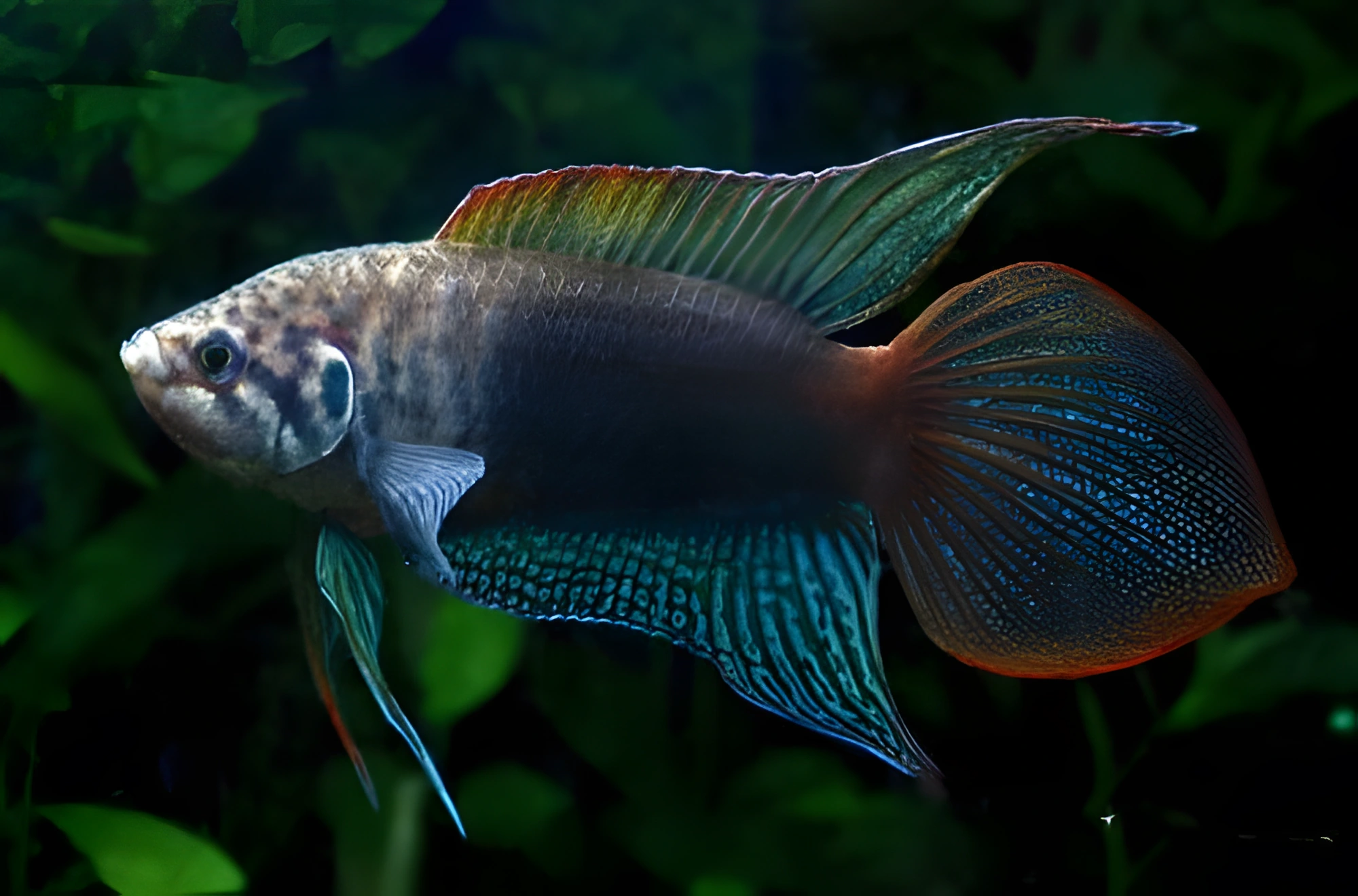
The Roundtail Paradise Fish, also known as the Chinese Paradise Fish, with the scientific name Macropodus ocellatus, is a member of the Osphronemidae family. This beautiful fish stands out for its exceptional hardiness, allowing it to successfully inhabit even outdoor ponds during the warmer months. However, its inability to tolerate water temperatures above 22°C and its pronounced aversion to other species impose significant restrictions on the choice of tank mates.
- Required aquarium volume
- 80 L
- Size in aquarium
- 8 cm
- Temperature
- 15 – 22 °C
- Temperament
- Aggressive / incompatible / unfriendly
Parameters
Water pHSlightly acidic (6) – Neutral (7.5)
Water dHSoft (5) – Very hard (25)
Water salinityno salt (freshwater)
Size in aquarium8 cm
Lifespan4 years
TemperamentAggressive / incompatible / unfriendly
Toward small fishnot a predator
Required aquarium volume80 L
Lightingdimmed
Substrateany (no restrictions)
Water flownone or stagnant (no flow)
FeedingAny (universal)
CarePair (male/female)
Description
Adult specimens of this fish reach a length of about 8 cm. Their coloration is predominantly dark, and their fins are adorned with blue hues along the rays and a slight edging. The caudal fin is notably large and rounded. Males are distinguished by larger fins and significantly more vibrant coloration.
Habitat
Its natural habitat extends across the territories of the Far East and Southeast Asia, including modern China, Korea, Taiwan, Vietnam, as well as the Amur River basin in Russia. This species prefers slow-moving river backwaters, swamps, small streams, and lakes with abundant coastal vegetation. A key feature of most of its range is significant seasonal temperature fluctuations, where winter temperatures can drop to 3°C, and bodies of water become covered with ice.
Behavior and Compatibility
This species exhibits rather aggressive behavior, which is especially noticeable in males, who engage in serious fights with each other for territory and the attention of females. Towards other fish species, they show more restraint, but they may chase smaller individuals. It is recommended to keep them in a harem setup, with one male for several females. Several carp or goldfish of similar size can be considered as possible tank mates.
Care and Maintenance
For keeping a single pair of these fish, an aquarium of at least 80 liters is required. The setup should preferably include dense thickets of shade-loving plants, including floating species that can grow well in cool water. Any dark material will work for the substrate, and various shelters, such as driftwood or decorative elements like sunken ships or castles, can be placed on the bottom. Optimal water parameters are close to neutral pH values, and the fish tolerates a wide range of hardness well. It is important to prevent the water temperature from rising above 22°C, as under such conditions, the fish becomes more susceptible to various diseases. Consequently, aquarium heating is usually not required; a filter and a low-power lighting system are sufficient equipment, as the Roundtail Paradise Fish prefers subdued light. The aquarium must be equipped with a special lid, which usually comes with the kit. It ensures the maintenance of a warm and humid air layer above the water surface, which is critically important for the respiration of labyrinth fish, and also prevents them from accidentally jumping out.
Diet
The optimal diet for these fish includes high-quality dry foods, supplemented with live or frozen foods such as bloodworms, brine shrimp, and daphnia. A varied menu has a beneficial effect on the overall tone and vibrancy of the fish's coloration.
Breeding and Reproduction
The Roundtail Paradise Fish is a close relative of the Classic Paradise Fish (Macropodus opercularis) and can produce hybrid, but infertile, offspring with it. For this reason, it is highly desirable to avoid keeping these two species together. Due to some unpredictability in the male's behavior, which can become excessively aggressive during the breeding period, spawning is best organized in a separate tank. For these purposes, an aquarium of 60 liters is usually sufficient, decorated with a small cluster of floating plants, such as hornwort. Essential equipment includes a heater, a simple air-driven filter, and a small light. A tight-fitting lid is mandatory. The stimulus for spawning is a gradual increase in temperature in the main aquarium to 22–24°C, as well as the inclusion of abundant live or frozen food in the diet. After some time, the male will begin to build a nest of bubbles and plant pieces on the water surface; at this point, he should be transferred to a separate tank filled with water from the main aquarium. It is important that the water depth does not exceed 20 cm, simulating shallow water. The female is not transferred until the nest is completely ready, as during this period the male shows aggression even towards his future partners. Spawning itself is accompanied by peculiar “embraces” when the fish entwine each other. At the culmination, males release milt, and females release eggs, which are then placed in the nest. This process is repeated several times until all eggs are laid. Then the female is returned to the main aquarium, and the male remains to guard the future offspring until the fry begin to swim freely, which takes about a week from the moment of spawning. After this, the male's parental instincts fade, and he himself can pose a threat to the fry. The young grow unevenly: some individuals develop faster, others slower. As they mature, their behavior changes, smaller fish may be persecuted, and some will be eaten. Ultimately, only the largest individuals survive.
Diseases
The main cause of most diseases in Leaf Fish is unsuitable keeping conditions and poor-quality nutrition. If initial symptoms are observed, it is first necessary to check water parameters and the concentration of dangerous substances such as ammonia, nitrites, and nitrates. If the indicators deviate from the norm, they should be brought back into order, and only then should treatment begin. More detailed information on symptoms and treatment methods can be found in the "Aquarium Fish Diseases" section.
How to choose
When purchasing Roundtail Paradise Fish, choose active individuals with clean fins and no visible body damage. It is important to ensure there is no white film, ulcers, or signs of emaciation, as these fish can be susceptible to infections under stress or poor keeping conditions. It is recommended to acquire young individuals, as they adapt more easily to new conditions. Avoid purchasing fish that appear lethargic, stay at the bottom, or show signs of timidity, as this may indicate hidden diseases or problems with adaptation to the aquarium environment.
Frequently asked questions
The essentials: size, tank volume, water parameters and care
How big does Roundtail Paradise Fish get?
An adult reaches 8 cm in length. Plan the tank around the maximum size: the fish quickly outgrows a cramped setup.
What size aquarium does Roundtail Paradise Fish need?
The minimum recommended volume is 80 L. A smaller tank speeds up nitrate build-up and raises stress levels.
What water parameters does Roundtail Paradise Fish need?
Temperature 15–22 °C, pH 6–7.5, hardness 5–25 dGH. Stability matters more than exact values: sudden swings are harder on the fish than a small deviation from the ideal.
How long does Roundtail Paradise Fish live?
Around 4 years when kept properly. Lifespan depends directly on tank volume, water quality and a varied diet.
Is Roundtail Paradise Fish aggressive?
Temperament: aggressive / incompatible / unfriendly. Keep this in mind when choosing tank mates.
How many Roundtail Paradise Fish should be kept together?
Recommended setup: pair (male/female). Ignoring this is a common cause of stress and disease.
What does Roundtail Paradise Fish eat?
Diet type: any (universal). Feed small portions that are finished within a couple of minutes — overfeeding does more harm than underfeeding.
What is the scientific name of Roundtail Paradise Fish?
The scientific name of the species is Macropodus ocellatus, family Osphronemidae. It also appears in the literature as: Polyacanthus paludosus.