Temperature27 – 32 °C
Natural range
- Pará area
- Brazil area
CatfishConservation status: Least concern LC
A large representative of the armored catfish family (Loricariidae), the Magnum Pleco, known by its scientific name Baryancistrus chrysolomus, has a rather complex temperament. This can significantly complicate the selection of suitable tankmates, especially when kept in smaller aquariums.
- Required aquarium volume
- 250 L
- Size in aquarium
- 21 cm
- Temperature
- 27 – 32 °C
- Temperament
- Aggressive / incompatible / unfriendly
Parameters
Water pHSlightly acidic (6) – Neutral (7.5)
Water dHVery soft (2) – Hard (12)
Water salinityno salt (freshwater)
Size in aquarium21 cm
Lifespan12 years
TemperamentAggressive / incompatible / unfriendly
Toward small fishnot a predator
Required aquarium volume250 L
Lightingany
Substraterocky (rock formations, boulders, etc.)
Water flowmoderate or strong
FeedingPlant-based (algae, vegetables)
CareBoth solitary and in group (flexible)
Description
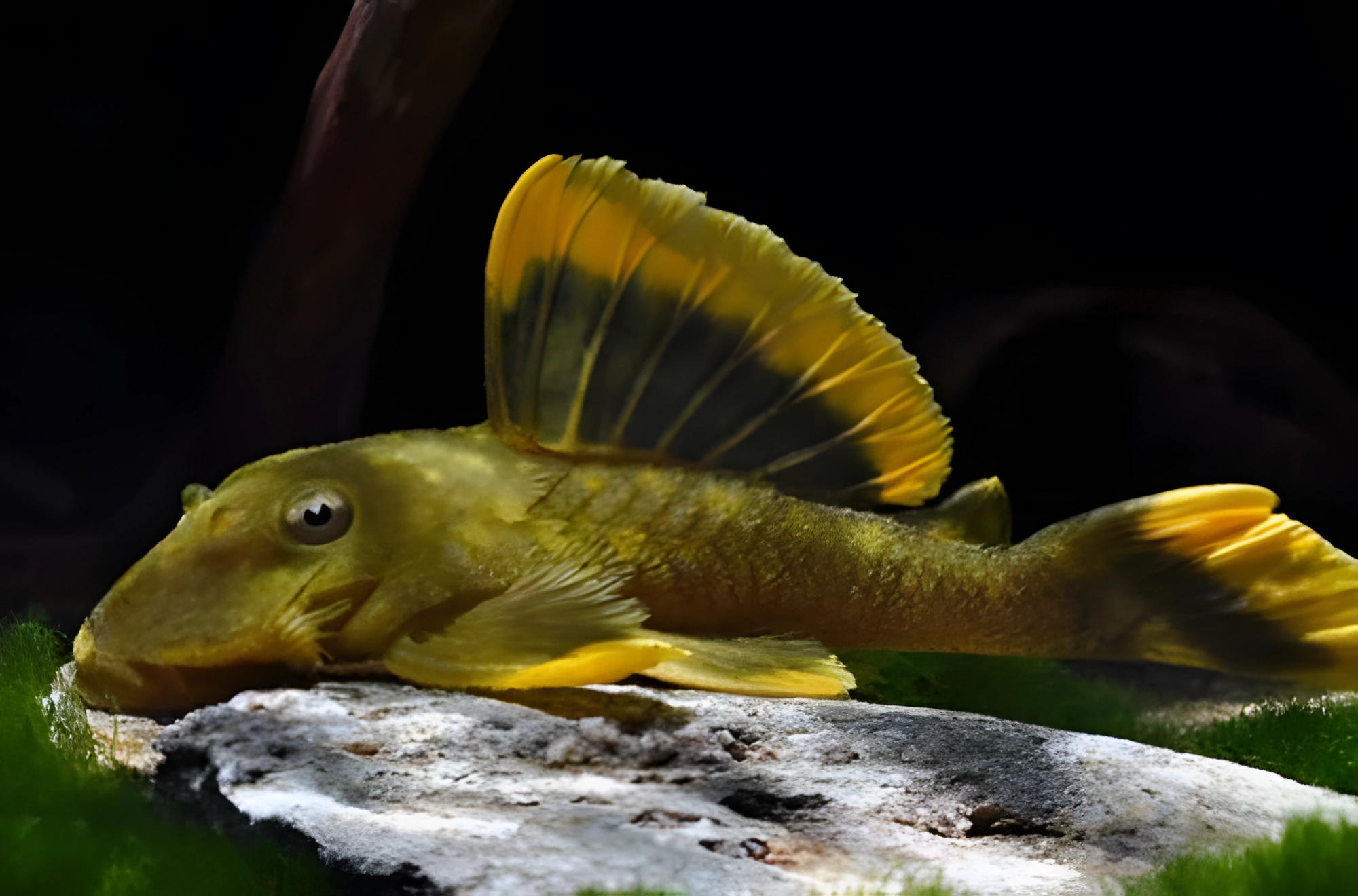
An adult Magnum Pleco can reach a length of up to 21 cm. The fish's body is slightly flattened, and its head is noticeably large. Its scales are modified, forming a segmented structure resembling the plate armor of medieval knights, which gave the entire catfish family its name. The body surface is hard and rough, covered with small spines. The fins and tail are fan-shaped, with the first rays thickened and ending in sharp spines. The coloration is dark gray, with a bright, contrasting light edging along the fin margins. Sexual dimorphism is weakly expressed, making visual distinction between male and female difficult.
Habitat
The natural habitat of this species is in South America, specifically in the Brazilian state of Pará, where it inhabits the Xingu River basin, a right tributary of the Amazon. The fish prefer river sections characterized by moderate currents and rocky bottoms, where they find shelter among boulders.
Behavior and Compatibility
When young, these catfish are usually peaceful and get along well with other fish species. However, over time, males may show intolerance towards conspecifics and other aquarium inhabitants, perceiving them as a threat to their territory. Therefore, it is preferable to choose tankmates that inhabit the middle and upper water layers, while avoiding other catfish species. In very large aquariums, this problem is usually less pronounced.
Care and Maintenance
For a group of 2–3 adult Magnum Plecos, an aquarium of at least 250–300 liters will be required. Their care is not particularly difficult if optimal conditions are maintained. The aquarium's decor should mimic a fast-flowing riverbed, using a substrate of various sized stones, gravel, and several large boulders. As additional decorative elements, natural snags can be used to imitate tree roots and branches, as well as undemanding plants and mosses capable of attaching to stones and snags (e.g., Anubias, Bolbitis, Microsorum pteropus, Bucephalandra). Bright lighting will promote algae growth, which serves as an additional food source for these catfish. Like most inhabitants of flowing waters, these catfish are sensitive to the accumulation of organic waste and require constantly clean water with stable hydrochemical parameters and temperature. To maintain water purity, in addition to using the necessary equipment, regular aquarium cleaning and weekly replacement of a significant portion of the water (40–70% of the total volume) with fresh water should be performed. It is also important to ensure a high level of dissolved oxygen, so additional aeration will be very beneficial.
Diet
In their natural environment, this catfish primarily feeds on diatoms and filamentous algae, which it scrapes from the surface of rocks and snags. Along with algae, small invertebrates living among aquatic vegetation also become part of their diet. In a home aquarium, the diet should be balanced and include a significant amount of plant components, such as pieces of vegetables and fruits. It is also recommended to add frozen or live foods to the menu, such as bloodworms, Artemia, as well as shrimp or mussel meat.
Breeding and Reproduction
Due to difficulties in sex determination and the aggressive behavior of males, successful breeding will require acquiring a group of 4–5 individuals and a spacious tank with a large bottom area, which will provide enough space for each male if there is more than one. Under favorable conditions, the likelihood of spawning significantly increases. When the breeding season arrives, the male or males begin courtship. Once the female is ready, they form a clutch consisting of several dozen eggs, after which the female leaves the spawning site. All care for the protection and nurturing of the future offspring falls solely on the male.
Diseases
Most health problems in fish often arise from unsuitable keeping conditions. Maintaining a stable and comfortable habitat is a key factor for successful keeping. If symptoms of illness appear, the first step is to check the water quality. If deviations are found, it is important to take immediate measures to eliminate them. If the symptoms do not disappear or worsen, medicinal treatment may be required. More detailed information on symptoms and treatment methods can be found in the "Diseases of Aquarium Fish" section.
How to choose
When purchasing Baryancistrus chrysolomus, it is important to consider that all individuals are sold from the wild, which carries a high risk of death during the adaptation period. Avoid acquiring fish with signs of emaciation: sunken belly, sharp back, and deeply recessed eyes. A healthy individual should be active, have bright coloration, and clean fins without damage.
- Examine the condition of the skin for white spots or patches, indicating parasitic diseases.
- Ask the seller how long the fish has been in the store and if it has started feeding independently.
- Prefer specimens that show interest in food and do not appear apathetic when approached at the aquarium.
Frequently asked questions
The essentials: size, tank volume, water parameters and care
How big does Magnum Pleco get?
An adult reaches 21 cm in length. Plan the tank around the maximum size: the fish quickly outgrows a cramped setup.
What size aquarium does Magnum Pleco need?
The minimum recommended volume is 250 L. A smaller tank speeds up nitrate build-up and raises stress levels.
What water parameters does Magnum Pleco need?
Temperature 27–32 °C, pH 6–7.5, hardness 2–12 dGH. Stability matters more than exact values: sudden swings are harder on the fish than a small deviation from the ideal.
How long does Magnum Pleco live?
Around 12 years when kept properly. Lifespan depends directly on tank volume, water quality and a varied diet.
Is Magnum Pleco aggressive?
Temperament: aggressive / incompatible / unfriendly. Keep this in mind when choosing tank mates.
How many Magnum Pleco should be kept together?
Recommended setup: both solitary and in group (flexible). Ignoring this is a common cause of stress and disease.
What does Magnum Pleco eat?
Diet type: plant-based (algae, vegetables). Feed small portions that are finished within a couple of minutes — overfeeding does more harm than underfeeding.
What is the scientific name of Magnum Pleco?
The scientific name of the species is Baryancistrus chrysolomus, family Armored Catfishes (Loricariidae).