Temperature24 – 27 °C
Natural range
- Sumatra area
- Kalimantan area
- Indonesia area
- Malaysia area
CyprinidsConservation status: Least concern LC
The fish, known scientifically as Luciosoma spilopleura, or the dark-sided luciosoma, belongs to the Carp family (Cyprinidae). It is rarely encountered in amateur aquaristics, but its name is often applied to closely related species, which are also called Apollo Shark and Minnow Shark.
- Required aquarium volume
- 250 L
- Size in aquarium
- 8.2 – 25 cm
- Temperature
- 24 – 27 °C
- Temperament
- Semi-peaceful (dangerous to smaller ones)
Parameters
Water pHSlightly acidic (6) – Neutral (7.5)
Water dHSoft (4) – Hard (15)
Water salinityno salt (freshwater)
Size in aquarium8.2 – 25 cm
Lifespan6 years
TemperamentSemi-peaceful (dangerous to smaller ones)
Toward small fishnot a predator
Required aquarium volume250 L
Lightingmoderate (regular)
Substratesand or gravel + stones/boulders
Water flowmoderate
FeedingHigh protein (predominantly meat)
CareSchooling (usually from 5–6 individuals and more)
Description
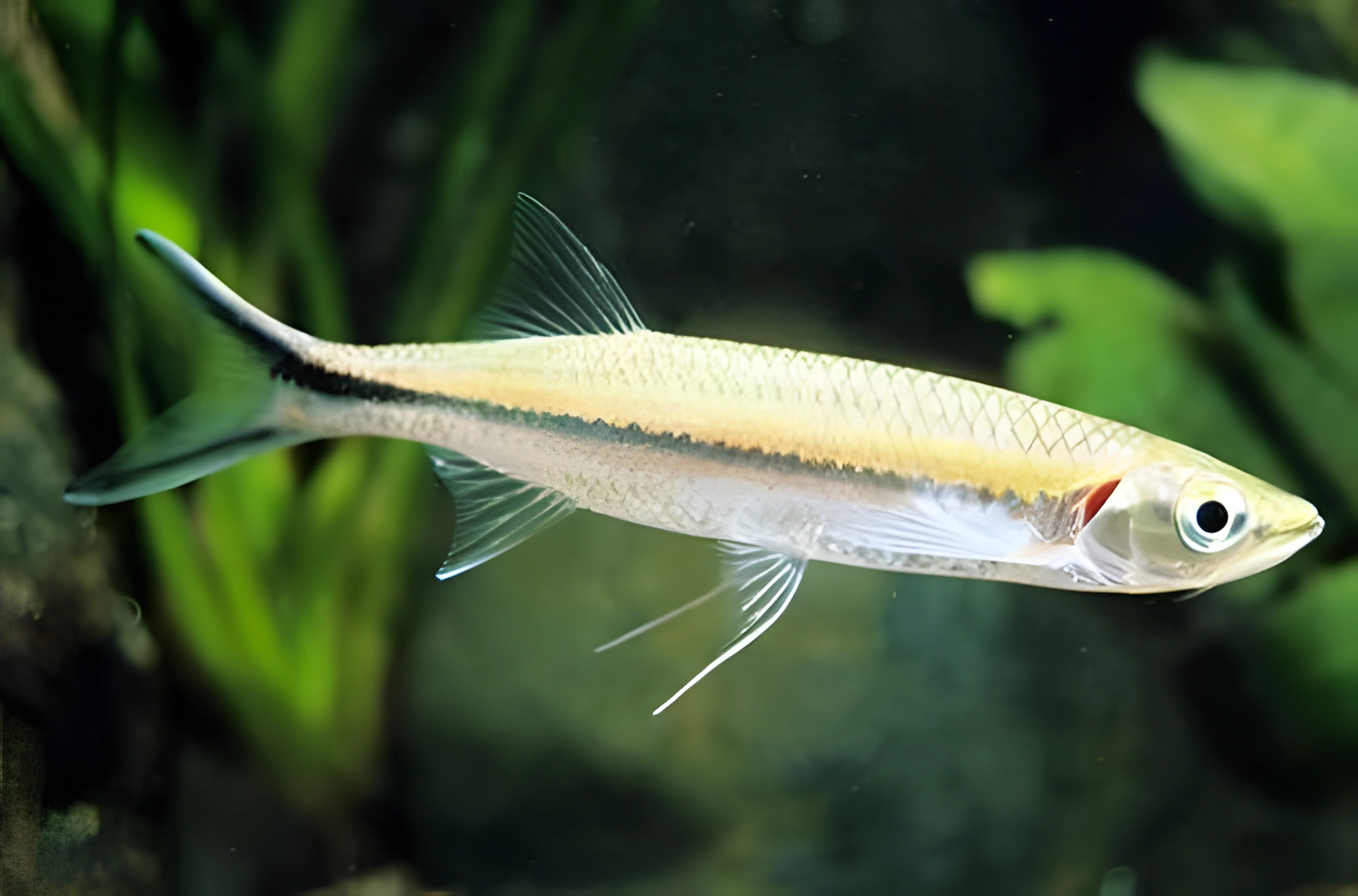
Adults can reach up to 25 cm in length. Their coloration is predominantly silvery. A distinctive feature is a dark stripe running along the lateral line and splitting at the base of the caudal fin. Sexual dimorphism is not pronounced; differences between males and females are barely noticeable.
Habitat
Its natural habitat is Southeast Asia, where it is endemic to Sumatra and Borneo. This species prefers shallow, fast-flowing rivers and streams that run through hilly or mountainous terrain. The bottom here is predominantly stony, and aquatic vegetation is mainly located along the banks.
Behavior and Compatibility
These fish prefer to live in shoals of at least 10 individuals. However, if space is limited, it is acceptable to reduce the group to five fish. They are peaceful towards their conspecifics and other large species, but any small fish could potentially become their prey.
Care and Maintenance
The dark-sided luciosoma requires a spacious aquarium, with a volume of at least 250–300 liters. This space will be sufficient for a group of 4–5 individuals. The aquarium design should include both shelters in the form of snags or dense thickets of large plants, and open swimming areas. Given their dietary characteristics, maintaining high water quality is a priority for long-term keeping. This requires a powerful filtration system and regular aquarium maintenance procedures. Such procedures include weekly partial water changes and the removal of organic waste.
Diet
The diet of these fish in natural conditions consists of various invertebrates, such as insects and their larvae, crustaceans, and worms, as well as smaller fish and fry. When kept in an aquarium, a high-protein diet including dry, frozen, and live foods should be provided.
Breeding and Reproduction
As of the publication of this article, no successful breeding cases of this species in home aquariums have been recorded.
Diseases
When proper conditions are maintained, the risk of disease is minimized. If the first signs of illness appear, it is primarily recommended to check the main hydrochemical parameters of the water, and also to ensure that the concentration of nitrogen cycle products is not exceeded. As a rule, restoring normal parameters contributes to the fish's self-recovery. However, with prolonged exposure to unfavorable factors, medicinal treatment may be required, which can be found in more detail in the "Diseases of Aquarium Fish" section.
How to choose
When purchasing, caution should be exercised, as the name Luciosoma spilopleura is often mistakenly used in trade for other species of the genus Luciosoma. A healthy fish should have clean fins, even scales without damage or ulcers, and show activity in the water column. Avoid individuals with signs of emaciation, sunken bellies, or unnatural behavior, such as constantly staying at the bottom, which is uncharacteristic for this species. Since the fish are prone to jumping, make sure the retail aquarium has a lid, and the fish do not have head injuries from hitting the walls or lid of the tank.
Frequently asked questions
The essentials: size, tank volume, water parameters and care
How big does Dark-sided Luciosoma get?
An adult reaches 8.2–25 cm in length. Plan the tank around the maximum size: the fish quickly outgrows a cramped setup.
What size aquarium does Dark-sided Luciosoma need?
The minimum recommended volume is 250 L. A smaller tank speeds up nitrate build-up and raises stress levels.
What water parameters does Dark-sided Luciosoma need?
Temperature 24–27 °C, pH 6–7.5, hardness 4–15 dGH. Stability matters more than exact values: sudden swings are harder on the fish than a small deviation from the ideal.
How long does Dark-sided Luciosoma live?
Around 6 years when kept properly. Lifespan depends directly on tank volume, water quality and a varied diet.
Is Dark-sided Luciosoma aggressive?
Temperament: semi-peaceful (dangerous to smaller ones). Keep this in mind when choosing tank mates.
How many Dark-sided Luciosoma should be kept together?
Recommended setup: schooling (usually from 5–6 individuals and more). Ignoring this is a common cause of stress and disease.
What does Dark-sided Luciosoma eat?
Diet type: high protein (predominantly meat). Feed small portions that are finished within a couple of minutes — overfeeding does more harm than underfeeding.
What is the scientific name of Dark-sided Luciosoma?
The scientific name of the species is Luciosoma spilopleura, family Cyprinids (Cyprinidae).