Temperature22 – 28 °C
Natural range
- Pakistan area
- India area
- Bangladesh area
Labyrinth fishConservation status: Least concern LC
Other scientific names: Colisa lalia, Colisa unicolor, Colisha lalius, Polyacanthus lalius, Trichopodus lalius
The Dwarf Gourami (Trichogaster lalius), a member of the Osphronemidae family, has maintained its status as one of the most sought-after aquarium species for many years. Its appeal stems not only from its vibrant coloration and hardiness but also from its compact size, which allows it to be kept even in small aquariums. It is perfectly suited for aquarists of all levels, including beginners looking to get their first fish.
- Required aquarium volume
- 50 L
- Size in aquarium
- 8 cm
- Temperature
- 22 – 28 °C
- Temperament
- Peaceful, active/mobile
Parameters
Water pHSlightly acidic (6) – Slightly alkaline (8)
Water dHSoft (5) – Very hard (19)
Water salinityno salt (freshwater)
Size in aquarium8 cm
Lifespan7 years
TemperamentPeaceful, active/mobile
Toward small fishnot a predator
Required aquarium volume50 L
Lightingmoderate (regular)
Substrateany, but dark
Water flownone or stagnant (no flow)
FeedingAny (universal)
CarePair (male/female)
Description
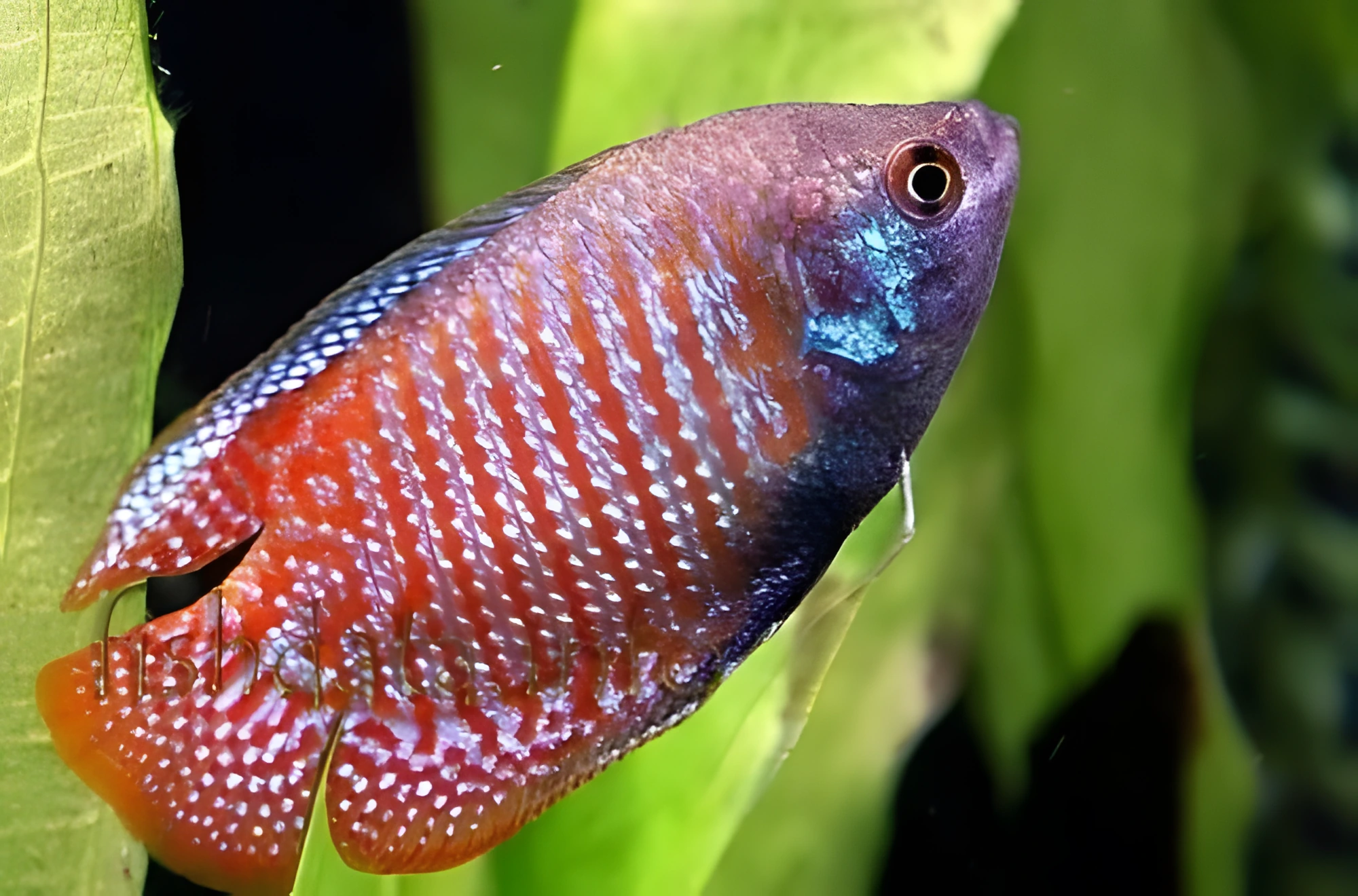
The fish's body is slightly compressed laterally and small in size, with fins that are rounded and appear quite large compared to other Gourami species. Over time, the pectoral fins have transformed into thin, sensitive filaments that help the fish explore its surroundings. Its coloration is characterized by a predominance of alternating vertical stripes, with shades ranging from bluish-green to orange or reddish. The same colors can be seen on the fins, but as a dotted pattern rather than stripes. Males, sensing the presence of females, display more intense colors, and their bellies take on a deep violet tone.
Habitat
Initially, the habitat of this species covered regions of South Asia, including modern-day Pakistan, India, and Bangladesh. However, over the past half-century, largely due to the activities of aquarists and breeders, the Dwarf Gourami has spread to other parts of the world — Southeast Asia and America. Its preferred habitat includes bodies of water with weak currents and abundant aquatic vegetation: these can be marshy lowlands, channels, shallow streams, as well as rice paddies and irrigation canals, essentially any flooded agricultural land. In natural conditions, the Dwarf Gourami's diet consists of small invertebrates and algae.
Behavior and Compatibility
These fish get along well with many species that are similar in size and temperament. Such tankmates can include various types of Rasboras, Corydoras catfish, and some non-aggressive cyprinids. Joint keeping with Barbs and similar fish that tend to nip the fins of other species, as well as with large, overly active, or aggressive aquarium inhabitants, should be avoided. Dwarf Gouramis form a clear internal hierarchy where the strongest male holds a dominant position, subjugating not only other males but also females. In a small aquarium, weaker individuals will be constantly attacked due to their inability to find shelter. In a spacious aquarium (from 100 L), this problem is mitigated. The most optimal keeping options are solitary in a small volume or harem-based in a large one.
Care and Maintenance
Even for a pair of fish, a small aquarium of 40 L or more is quite sufficient. It is advisable to use a lid, as it creates an air layer with increased humidity and a temperature higher than room temperature underneath. This minimizes potential problems with the fish's labyrinth organ, through which they absorb atmospheric air. The minimum necessary equipment for keeping includes: a lighting system, an air pump, a heater, and an efficient filter. When installing the filter, it is important to set it up so that it creates minimal water movement. For example, the outflow nozzles can be directed towards the glass to break up a strong current. Maintaining high water quality is ensured by weekly water changes of a quarter of the total volume. Hiding places are essential in the aquarium's decor. Groups of plants arranged throughout the substrate are also very important. All of this gives the fish a sense of security; otherwise, they become timid and shy. The substrate can be of any texture, but darker is preferable as it enhances the fish's natural coloration.
Diet
In a home aquarium, these fish readily accept all types of commercially available dry foods, whether flakes, granules, or pellets. There are also specialized complexes developed to meet all the Gourami's needs for trace elements and vitamins.
Breeding and Reproduction
Successful breeding of Dwarf Gouramis is only possible in a specially equipped tank. This will not only ensure the safety of the fry, which can be eaten in a community tank, but also protect other fish from the aggressive male Dwarf Gourami, who will fiercely guard the clutch. A breeding tank of 20 L or more is considered sufficient, with water parameters that precisely match those of the main aquarium. The standard set of equipment for a breeding tank includes: a lighting system, an air pump, a heater, and a simple sponge filter. Rooted and floating plants with small leaves are essential for decor. Abundant protein-rich food serves as a stimulus for spawning: bloodworms, insect larvae, or frozen food should be added to the daily diet. Under favorable conditions, the female begins to develop eggs, which is evident by a noticeable increase in her abdomen. At this time, she is moved to a separate tank. The male is introduced only on the second or third day. All transfers are best done in the dark to minimize stress for the fish. While the female prepares for spawning, the male begins to build a nest on the water's surface. The Dwarf Gourami's approach to this process is more thorough than that of other fish. He uses not only air bubbles but also various aquarium debris, such as small twigs, leaf fragments, or roots. Upon completion of the nest, courtship begins, during which the male swims around his chosen female, inviting her to the nest and gently touching her with his mouth. The female can lay up to 800 eggs. After spawning, she must be immediately returned to the main aquarium. The male remains at the nest to guard the clutch, becoming extremely aggressive during this period, even towards the female. The fry hatch within 24 hours, and by the third day, they begin to swim confidently, which means it's time to remove the male from the breeding tank.
Diseases
Under ideal conditions, keeping Dwarf Gouramis rarely involves diseases, as the fish's strong immune system successfully resists potential infections. However, in recent years, fish infected with the DGIV iridovirus have become increasingly common. Characteristic symptoms of this disease include lethargic behavior, darkening of coloration, and the appearance of tumors. Unfortunately, no treatment has been developed for infected fish, and they die within a year. The main danger of the virus lies in its ability to spread in water and transmit to other fish, especially members of the Poeciliidae family, such as Guppies, Swordtails, and Mollies.
How to choose
When selecting Dwarf Gouramis, preference should be given to individuals with clean fins showing no signs of damage, film, or ulcers. It is important to carefully inspect the fish for the absence of signs of emaciation — a sunken belly or unnaturally thin body can indicate internal diseases, which are common in this species. A healthy fish should be active, curious, and not exhibit apathetic behavior, sitting at the bottom.
Avoid purchasing fish from aquariums where dead individuals or fish with obvious symptoms of disease are present. Since Dwarf Gouramis are prone to stress, they may appear timid in the store, but healthy specimens should show feeding interest when offered food. It is recommended to acquire individuals whose coloration matches the advertised morph, without spots uncharacteristic of the specific color form.
Frequently asked questions
The essentials: size, tank volume, water parameters and care
How big does Dwarf Gourami get?
An adult reaches 8 cm in length. Plan the tank around the maximum size: the fish quickly outgrows a cramped setup.
What size aquarium does Dwarf Gourami need?
The minimum recommended volume is 50 L. A smaller tank speeds up nitrate build-up and raises stress levels.
What water parameters does Dwarf Gourami need?
Temperature 22–28 °C, pH 6–8, hardness 5–19 dGH. Stability matters more than exact values: sudden swings are harder on the fish than a small deviation from the ideal.
How long does Dwarf Gourami live?
Around 7 years when kept properly. Lifespan depends directly on tank volume, water quality and a varied diet.
Is Dwarf Gourami aggressive?
Temperament: peaceful, active/mobile. Keep this in mind when choosing tank mates.
How many Dwarf Gourami should be kept together?
Recommended setup: pair (male/female). Ignoring this is a common cause of stress and disease.
What does Dwarf Gourami eat?
Diet type: any (universal). Feed small portions that are finished within a couple of minutes — overfeeding does more harm than underfeeding.
What is the scientific name of Dwarf Gourami?
The scientific name of the species is Trichogaster lalius, family Osphronemidae. It also appears in the literature as: Colisa lalia, Colisa unicolor, Colisha lalius.