Temperature22 – 28 °C
Natural range
- Rio Negro area
- Amazonas State
Predators CatfishConservation status: Least concern LC
The Ogre Catfish, also known as the Frogmouth Catfish or Halper (scientific name Asterophysus batrachus), belongs to the family Auchenipteridae, or Driftwood Catfishes. This large carnivorous species is not recommended for beginner aquarists, especially if they plan to maintain the aquarium themselves.
- Required aquarium volume
- 500 L
- Size in aquarium
- 25 cm
- Temperature
- 22 – 28 °C
- Temperament
- Semi-peaceful (including aggression during spawning / intraspecific conflicts)
Parameters
Water pHSlightly acidic (5) – Neutral (7)
Water dHVery soft (1) – Soft (7)
Water salinityno salt (freshwater)
Size in aquarium25 cm
Lifespan12 years
TemperamentSemi-peaceful (including aggression during spawning / intraspecific conflicts)
Toward small fishpredator
Required aquarium volume500 L
Lightingdimmed
Substratesandy (regular, light)
Water flowweak or moderate
FeedingMeat / protein (live, frozen, fresh)
CareSolitary + other species (large / compatible)
Description
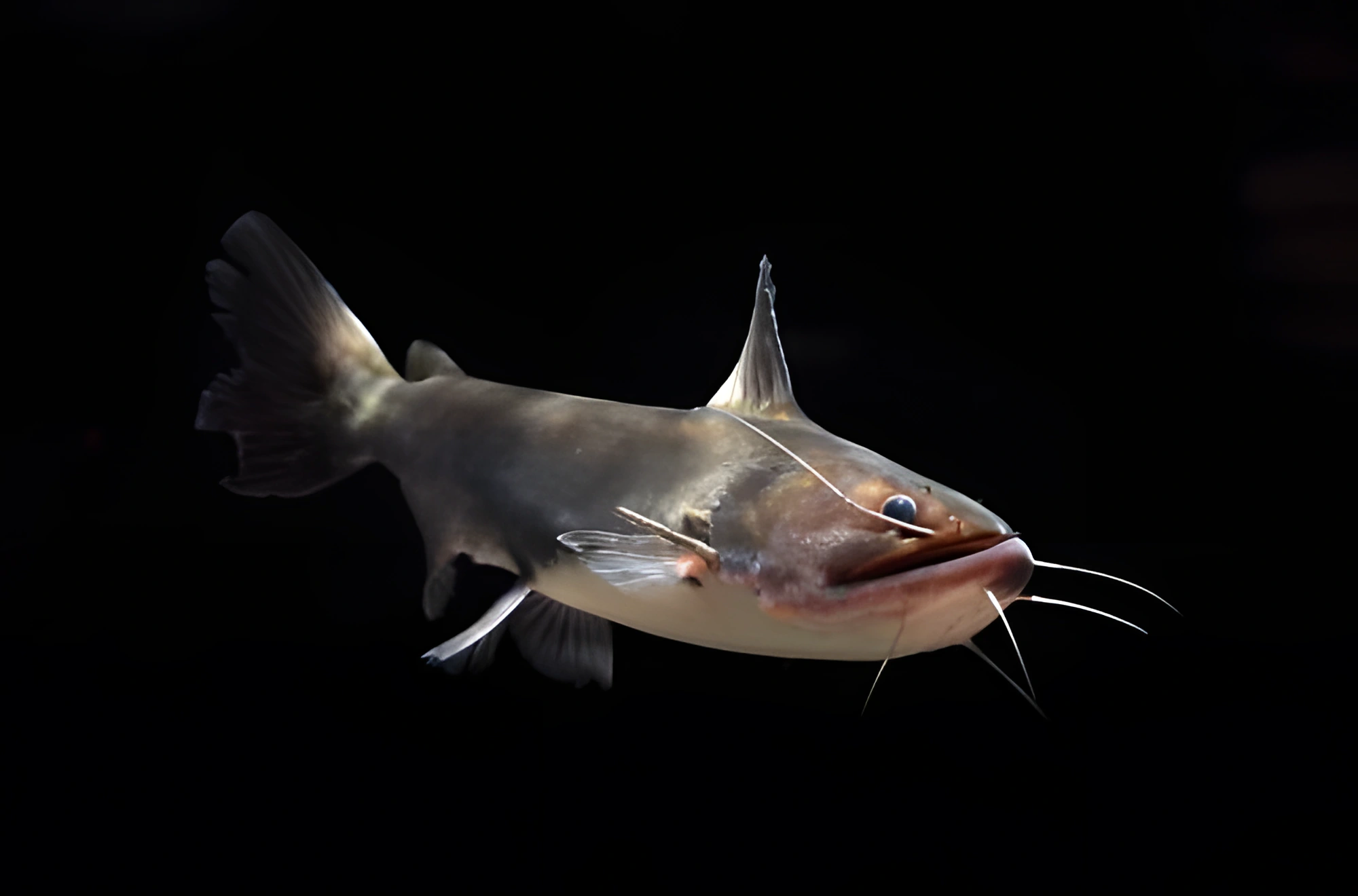
Adults of this catfish reach a length of 20 to 25 cm. A characteristic feature is a massive, disproportionately large head with a huge mouth surrounded by short, thin barbels. The peculiar appearance of this catfish led to common names such as “Ogre” or “Frogmouth.” The body coloration is predominantly dark, almost black, with a contrasting white belly.
Habitat
Its natural habitat is in South America, in the basins of large rivers such as the Rio Negro, which flows through the Brazilian state of Amazonas, and the Orinoco in Venezuela. The Ogre Catfish prefers shallow areas in the main river channels and is usually active at night. The water in these bodies of water is dark due to the high content of tannins, which are released from decaying organic plant matter.
Behavior and Compatibility
This species is voracious and can swallow fish comparable in size to itself. For this reason, it can only coexist with very large tank mates. Otherwise, the Ogre Catfish exhibits a rather peaceful nature and does not show aggression.
Care and Maintenance
For comfortable keeping of a single catfish, an aquarium of 500 liters or more is optimal. The aquascape is a matter of personal preference for the aquarist and is not critically important. Nevertheless, the fish will look most natural in an aquarium with subdued lighting, among large snags, on a sandy substrate covered with a layer of fallen tree leaves. Natural snags and leaves can gradually release tannins, which will give the water a chemical composition and rich brown hue characteristic of natural waters. More detailed information can be found in the article “Which tree leaves can be used in an aquarium.” Successful keeping of the Frogmouth Catfish largely depends on maintaining a stable aquatic environment. For this, an effective filtration system is a mandatory condition, as is regular weekly partial water changes with fresh water, which is extremely important due to the large amount of waste produced by these predatory fish.
Diet
In its natural environment, the Ogre Catfish is a predator. However, in a home aquarium, it can successfully adapt to alternative food sources such as strips of white fish meat, mussels, whole shrimp, or large earthworms. Feeding is recommended 1–2 times a week.
Breeding and Reproduction
At the time of preparing this material, there is no reliable information about successful breeding of the Ogre Catfish in home aquariums.
Diseases
Most health problems in fish often arise from unsuitable living conditions. Maintaining a stable and comfortable habitat is a key factor for successful keeping. If symptoms of illness appear, the first step is to check the water quality. If deviations are found, it is important to take immediate action to correct them. If the symptoms do not disappear or worsen, medicinal treatment may be required. More detailed information on symptoms and treatment methods can be found in the “Diseases of aquarium fish” section.
How to choose
When purchasing, choose active individuals that show interest in food and have no visible skin damage. Given that this is a scaleless fish, it is extremely important to ensure there are no ulcers, white patches, bruises, or damaged barbels on the body, which may indicate bacterial infections or poor water quality in the aquarium. Avoid specimens with signs of emaciation, a sunken belly, or impaired coordination of movements.
In the store, the catfish should look healthy, with clear eyes and natural coloration. Since the species is a nocturnal predator, healthy individuals often prefer to hide during daylight hours, but should react when food approaches or when disturbed. It is critically important to ask the seller what the fish eats, as acclimating it to artificial foods can be difficult. It is also recommended to inspect neighboring aquariums in the filtration system for sick fish, as sensitivity to water quality makes the catfish susceptible to common infections.
Frequently asked questions
The essentials: size, tank volume, water parameters and care
How big does Ogre Catfish get?
An adult reaches 25 cm in length. Plan the tank around the maximum size: the fish quickly outgrows a cramped setup.
What size aquarium does Ogre Catfish need?
The minimum recommended volume is 500 L. A smaller tank speeds up nitrate build-up and raises stress levels.
What water parameters does Ogre Catfish need?
Temperature 22–28 °C, pH 5–7, hardness 1–7 dGH. Stability matters more than exact values: sudden swings are harder on the fish than a small deviation from the ideal.
How long does Ogre Catfish live?
Around 12 years when kept properly. Lifespan depends directly on tank volume, water quality and a varied diet.
Is Ogre Catfish aggressive?
Temperament: semi-peaceful (including aggression during spawning / intraspecific conflicts). This is a predatory species — any fish small enough to fit in its mouth will eventually be eaten.
How many Ogre Catfish should be kept together?
Recommended setup: solitary + other species (large / compatible). Ignoring this is a common cause of stress and disease.
What does Ogre Catfish eat?
Diet type: meat / protein (live, frozen, fresh). Feed small portions that are finished within a couple of minutes — overfeeding does more harm than underfeeding.
What is the scientific name of Ogre Catfish?
The scientific name of the species is Asterophysus batrachus, family Driftwood Catfishes (Auchenipteridae).