Temperature18 – 22 °C
GoldfishConservation status: Least concern LC
Other scientific names: Carasius auratus, Carassius buergeri, Carassius burgeri, Carassius carassius, Carassius chinensis, Carassius coeruleus
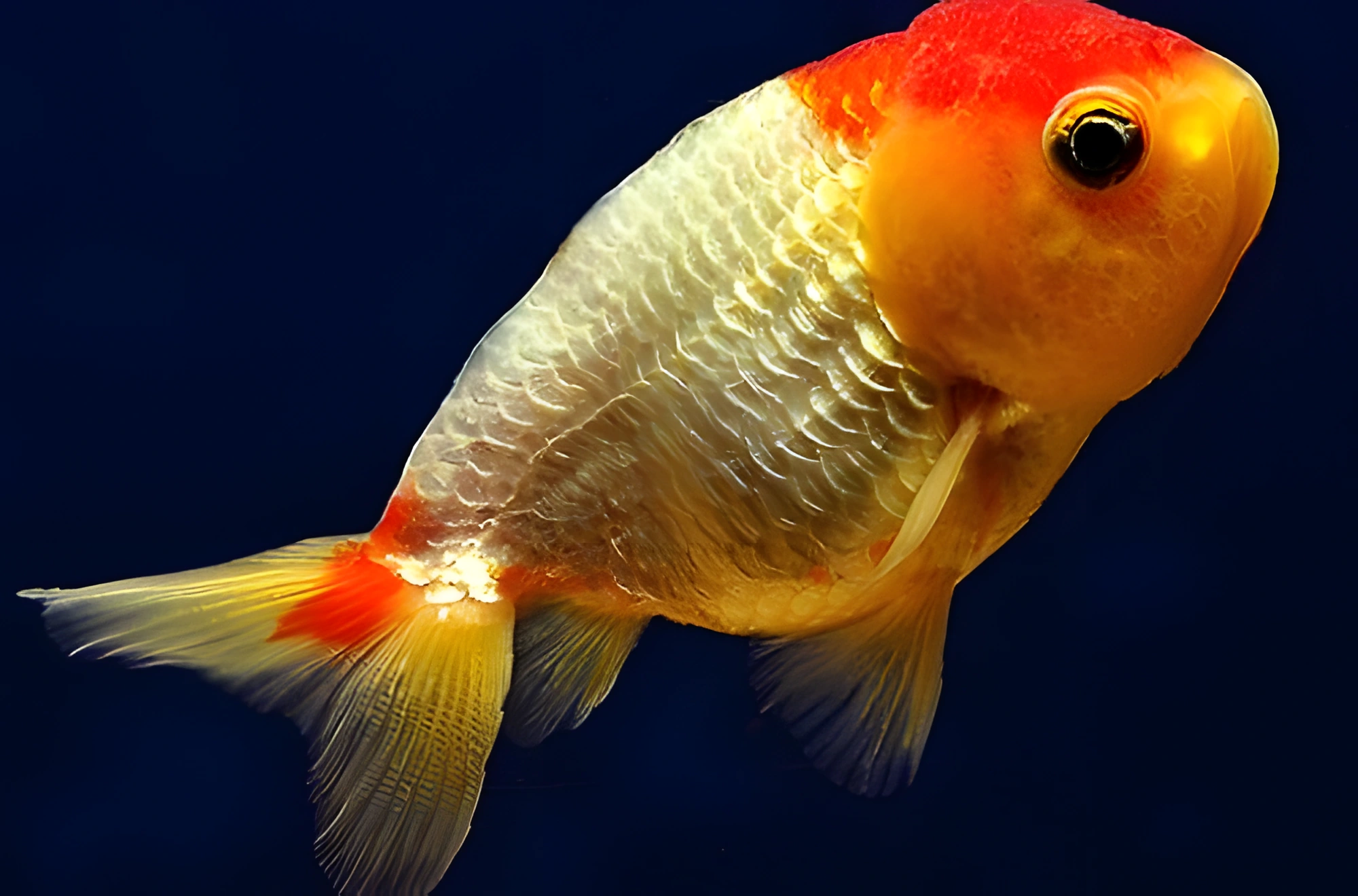
The Lionhead Goldfish attracts attention due to the unique growths forming a mane-like structure on its head. These growths are individual to each fish, and their presence is not a strict rule. Some individuals may completely lack this “mane,” while in others, it can grow so extensively that it covers their eyes, nostrils, or mouth.
- Required aquarium volume
- 40 L
- Size in aquarium
- 13 – 20 cm
- Temperature
- 18 – 22 °C
- Temperament
- Semi-peaceful (aggression when space is limited)
Parameters
Water pHSlightly acidic (6) – Slightly alkaline (8)
Water dHSoft (5) – Very hard (19)
Water salinityno salt (freshwater)
Size in aquarium13 – 20 cm
Lifespan15 years
TemperamentSemi-peaceful (aggression when space is limited)
Toward small fishnot a predator
Required aquarium volume40 L
Lightingmoderate (regular)
Substrateany (no restrictions)
Water flownone or stagnant (no flow)
FeedingAny (universal)
CareBoth solitary and in group (flexible)
Description
The Lionhead is a selective breed of goldfish with a short, ovoid body and no dorsal fin. One of its main features is the massive epithelial growth on its head and gill covers, resembling a lion's mane or a raspberry. In adult individuals, the growth can be so developed that it partially covers the eyes. The caudal and anal fins are forked. Coloration varies from solid red, orange, or white to combinations of these colors and spotted forms. The average size is 13–20 cm.
Habitat
Lionheads are not found in the wild, as they are the result of centuries of selective breeding. The species was bred in China from the silver crucian carp. Like other goldfish, Lionheads require stable keeping conditions, close to the water parameters of clean freshwater bodies with moderate temperatures.
Behavior and Compatibility
This is a peaceful and slow-moving fish with a calm temperament. Due to their body structure and lack of a dorsal fin, Lionheads are poor swimmers, so it is not recommended to keep them with active fish species that might outcompete them for food or injure them. Species-specific keeping or cohabitation with other slow-moving goldfish breeds is preferable.
Care and Maintenance
For comfortable existence, a spacious aquarium of at least 50 liters per individual is necessary. High-quality filtration and aeration are mandatory, as these fish produce a lot of organic waste. It is recommended to use a soft substrate without sharp edges to avoid injuries when foraging for food. Plants with tough leaves or a strong root system are best, as the fish tend to nibble on or damage them.
Diet
Lionheads are omnivorous and have a good appetite. Their diet should be varied and include specialized dry foods for goldfish, as well as vegetable supplements and frozen foods. Overfeeding is dangerous for their health, as due to their specific body structure, these fish are prone to swim bladder and digestive system disorders.
Breeding and Reproduction
Breeding requires preparation and a separate spawning aquarium. Males become more slender, and during the breeding season, characteristic breeding tubercles appear on their gill covers and pectoral fins. Spawning is paired or in groups, with eggs laid among fine-leaved plants. After spawning, it is recommended to remove the parents to prevent them from eating the eggs.
Diseases
Fish are sensitive to water quality; the accumulation of ammonia and nitrites quickly leads to a decrease in immunity and the development of infections. Common problems include bacterial skin lesions, fungal infections, dropsy, and swim bladder diseases. Prevention involves regular water changes, control of nitrogenous compounds, and proper feeding.
How to choose
When purchasing, choose active individuals with clean scales, without visible ulcers, film, or bruises. It is important to pay attention to the condition of the head growth and the absence of signs of emaciation or a bloated abdomen. A healthy fish should swim calmly, without tipping to one side or hovering at the surface.
Frequently asked questions
The essentials: size, tank volume, water parameters and care
How big does Lionhead Goldfish get?
An adult reaches 13–20 cm in length. Plan the tank around the maximum size: the fish quickly outgrows a cramped setup.
What size aquarium does Lionhead Goldfish need?
The minimum recommended volume is 40 L. A smaller tank speeds up nitrate build-up and raises stress levels.
What water parameters does Lionhead Goldfish need?
Temperature 18–22 °C, pH 6–8, hardness 5–19 dGH. Stability matters more than exact values: sudden swings are harder on the fish than a small deviation from the ideal.
How long does Lionhead Goldfish live?
Around 15 years when kept properly. Lifespan depends directly on tank volume, water quality and a varied diet.
Is Lionhead Goldfish aggressive?
Temperament: semi-peaceful (aggression when space is limited). Keep this in mind when choosing tank mates.
How many Lionhead Goldfish should be kept together?
Recommended setup: both solitary and in group (flexible). Ignoring this is a common cause of stress and disease.
What does Lionhead Goldfish eat?
Diet type: any (universal). Feed small portions that are finished within a couple of minutes — overfeeding does more harm than underfeeding.
What is the scientific name of Lionhead Goldfish?
The scientific name of the species is Carassius auratus, family Cyprinids (Cyprinidae). It also appears in the literature as: Carasius auratus, Carassius buergeri, Carassius burgeri.