Temperature25 – 31 °C
Natural range
- Rio Negro area
- Amazonas State
CharacinsConservation status: Least concern LC
Other scientific names: Cheirodon simulans, Hyphessobrycon simulans
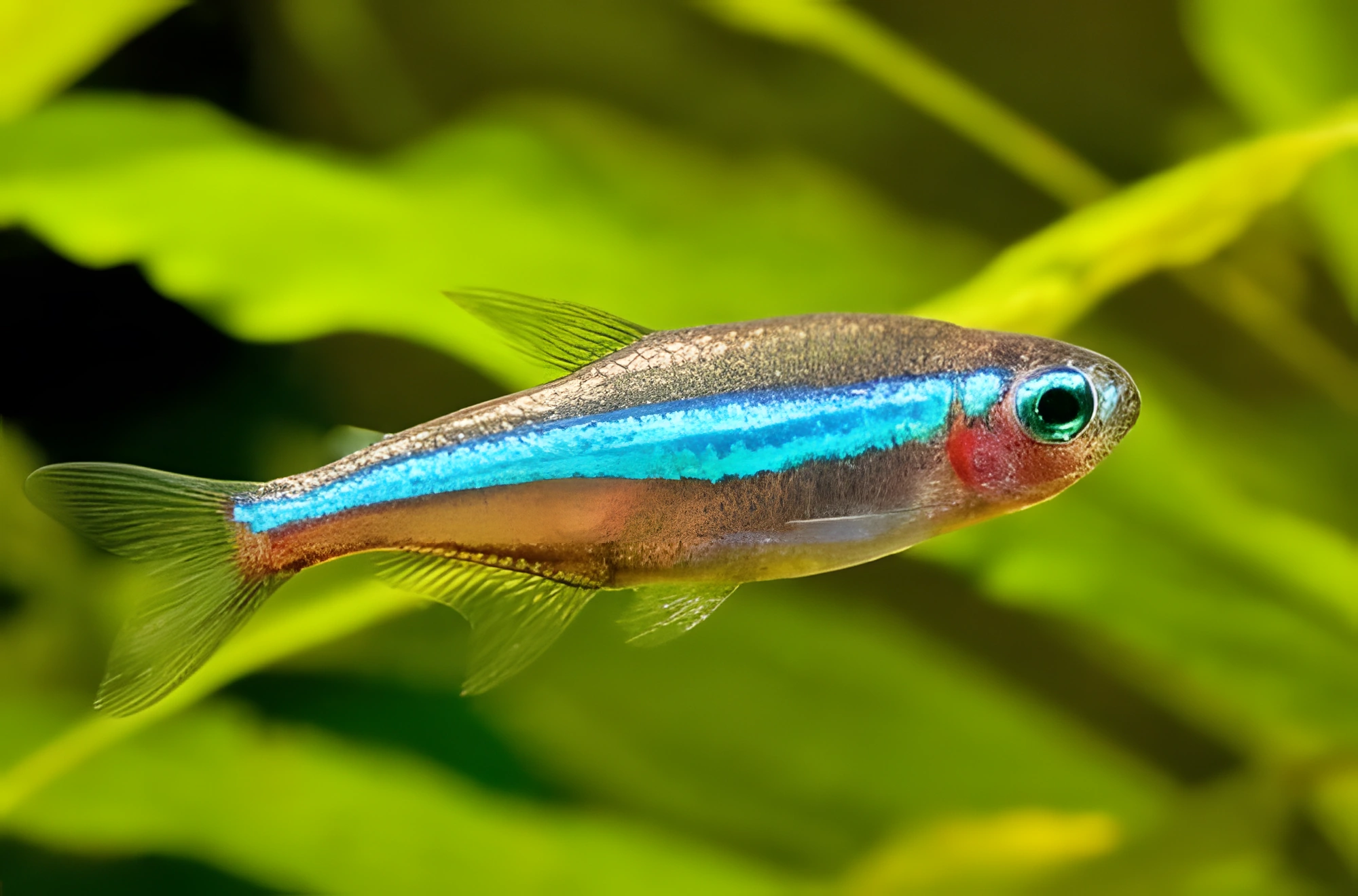
The False Blue Neon Tetra, scientifically known as Paracheirodon simulans, is a member of the Characidae family. It is significantly less common in the aquarium trade than other Neon species, yet it is no less vibrant in color or undemanding in care.
- Required aquarium volume
- 40 L
- Size in aquarium
- 2 cm
- Temperature
- 25 – 31 °C
- Temperament
- Peaceful (regular)
Parameters
Water pHAcidic (3) – Neutral (6.5)
Water dHVery soft (1) – Medium hardness (9)
Water salinityno salt (freshwater)
Size in aquarium2 cm
Lifespan5 years
TemperamentPeaceful (regular)
Toward small fishnot a predator
Required aquarium volume40 L
Lightingdimmed
Substrateany (no restrictions)
Water flowweak
FeedingSmall / appropriate size / pieces
CareGroup (8–10 individuals)
Description
Outwardly, this species resembles its close relative, the Blue Neon Tetra, but has some differences: it is somewhat smaller (reaching about 2 cm in size), and the red stripe on its body is less pronounced; blue hues, on the other hand, dominate its coloration. Interestingly, if this species had been discovered earlier, the common Neon Tetra we know would have been given the prefix “false.” Sexual dimorphism in these fish is weakly expressed, and males and females are practically indistinguishable, although females in spawning condition may appear slightly larger.
Habitat
The natural habitat of this species is in South America, specifically in the upper and middle reaches of the Rio Negro river, located in the Brazilian state of Amazonas. A distinctive feature of this environment is the high content of tannins, which give the water a deep brown hue. The typical biotope is abundant with dense riparian vegetation, with branches overhanging the water, and the bottom is covered with sandy deposits, a thick layer of fallen leaves, and numerous snags. In such conditions, through the dark water and dense shade of tree canopies, the fish live in very dim light.
Behavior and Compatibility
This peaceful schooling fish coexists well with other non-aggressive species of comparable size. For these inherently timid Neon Tetras, it is important to maintain a group size of at least 8–10 individuals; if there are fewer, the fish become excessively shy.
Care and Maintenance
For a school of 8–10 individuals, an aquarium of 40 liters will be sufficient. In an environment that mimics their natural habitat—that is, among lush aquatic vegetation and numerous snags, with subdued lighting—the fish will look particularly harmonious. An important detail of the decor will be fallen leaves of certain tree species, carpeting the sandy bottom. Similar to what happens in natural bodies of water, decomposing leaves release tannins, which give the water its characteristic brownish color. In addition, they possess antifungal and antibacterial properties, serving as excellent disease prevention. Long-term and successful keeping of the False Blue Neon Tetra directly depends on maintaining the stability of water parameters, such as temperature and hydrochemical indicators, within the permissible range. This can be achieved by installing the necessary equipment and regularly performing mandatory aquarium care procedures. Such procedures include: weekly partial water changes with fresh water, monitoring pH and dGH levels for compliance with desired values, and checking for the absence of dangerous concentrations of nitrogen cycle products (ammonia, nitrites, nitrates), as well as regular removal of organic residues, including uneaten food and excrement.
Diet
Most common foods of suitable size are well accepted by these fish. These include dry flakes, granules, as well as live or frozen foods such as Daphnia, Artemia, and small bloodworms. If products from trusted and reputable manufacturers are used, the daily diet can consist entirely of dry or freeze-dried foods.
Breeding and Reproduction
Like other Tetra species, the False Blue Neon Tetra reproduces by scattering eggs throughout the aquarium, without creating organized clutches. Parental instincts are absent in these fish; they do not care for their offspring and may eat their own eggs and fry if given the chance. To preserve the young, fertilized eggs are recommended to be transferred to a separate tank. In aquarium conditions, spawning can occur throughout the year, without pronounced seasonality, as a result of which in a large school there will always be one or more females constantly ready to spawn.
Diseases
Specific diseases that affect only this particular fish species have not been identified. When kept in suitable conditions, including high water quality, a balanced diet, and peaceful tank mates, health issues usually do not arise. The most common cause of illness is a deterioration of living conditions, which weakens the immune system and makes the fish susceptible to infections that are always present in their environment. Upon noticing initial signs of sickness (such as lethargy, emaciation, refusal to eat, or clamped fins), it is crucial to immediately check the basic water parameters. Often, restoring acceptable living conditions will lead to self-recovery, but if the fish is too weak or has suffered visible damage, medicinal treatment may be required. For more details on symptoms and treatment methods, consult the section “Diseases of Aquarium Fish.”
How to choose
When choosing False Neon Tetras, pay attention to the condition of the school in the aquarium: healthy fish should be active, stay together, and show no visible damage, sores, or film on their scales. Avoid individuals with signs of emaciation, sunken bellies, or unnatural behavior, such as solitary swimming at the surface or bottom. Given the species' sensitivity to transport conditions, it is important to ensure that the fish have been adapted to aquarium parameters, and not just recently brought from their natural environment. It is recommended to purchase a group of 8–10 individuals at once, as buying fewer causes significant stress and shyness in this species.
Frequently asked questions
The essentials: size, tank volume, water parameters and care
How big does False Neon Tetra get?
An adult reaches 2 cm in length. Plan the tank around the maximum size: the fish quickly outgrows a cramped setup.
What size aquarium does False Neon Tetra need?
The minimum recommended volume is 40 L. A smaller tank speeds up nitrate build-up and raises stress levels.
What water parameters does False Neon Tetra need?
Temperature 25–31 °C, pH 3–6.5, hardness 1–9 dGH. Stability matters more than exact values: sudden swings are harder on the fish than a small deviation from the ideal.
How long does False Neon Tetra live?
Around 5 years when kept properly. Lifespan depends directly on tank volume, water quality and a varied diet.
Is False Neon Tetra aggressive?
Temperament: peaceful (regular). Keep this in mind when choosing tank mates.
How many False Neon Tetra should be kept together?
Recommended setup: group (8–10 individuals). Ignoring this is a common cause of stress and disease.
What does False Neon Tetra eat?
Diet type: small / appropriate size / pieces. Feed small portions that are finished within a couple of minutes — overfeeding does more harm than underfeeding.
What is the scientific name of False Neon Tetra?
The scientific name of the species is Paracheirodon simulans, family Characidae. It also appears in the literature as: Cheirodon simulans, Hyphessobrycon simulans.