Temperature21 – 25 °C
Natural range
- Caura River
- Orinoco River Basin
- Venezuela area
- Brazil area
CatfishConservation status: Least concern LC
Other scientific names: Pimelodella imitator
The scientific name Brachyrhamdia imitator, also known as the False Corydoras, belongs to the family Heptapteridae, or Heptapterid catfishes. Its natural habitat is the Caura River basin, which is a tributary of the Orinoco and flows through Venezuela in South America.
- Required aquarium volume
- 70 L
- Size in aquarium
- 5 – 5.4 cm
- Temperature
- 21 – 25 °C
- Temperament
- Peaceful (regular)
Parameters
Water pHSlightly acidic (6) – Neutral (7.5)
Water dHVery soft (1) – Very hard (18)
Water salinityno salt (freshwater)
Size in aquarium5 – 5.4 cm
Lifespan5 years
TemperamentPeaceful (regular)
Toward small fishnot a predator
Required aquarium volume70 L
Lightingdimmed
Substrateany (no restrictions)
Water flownone or stagnant (no flow)
FeedingMeat with plant additives (omnivores)
CareBoth solitary and in group (flexible)
Description
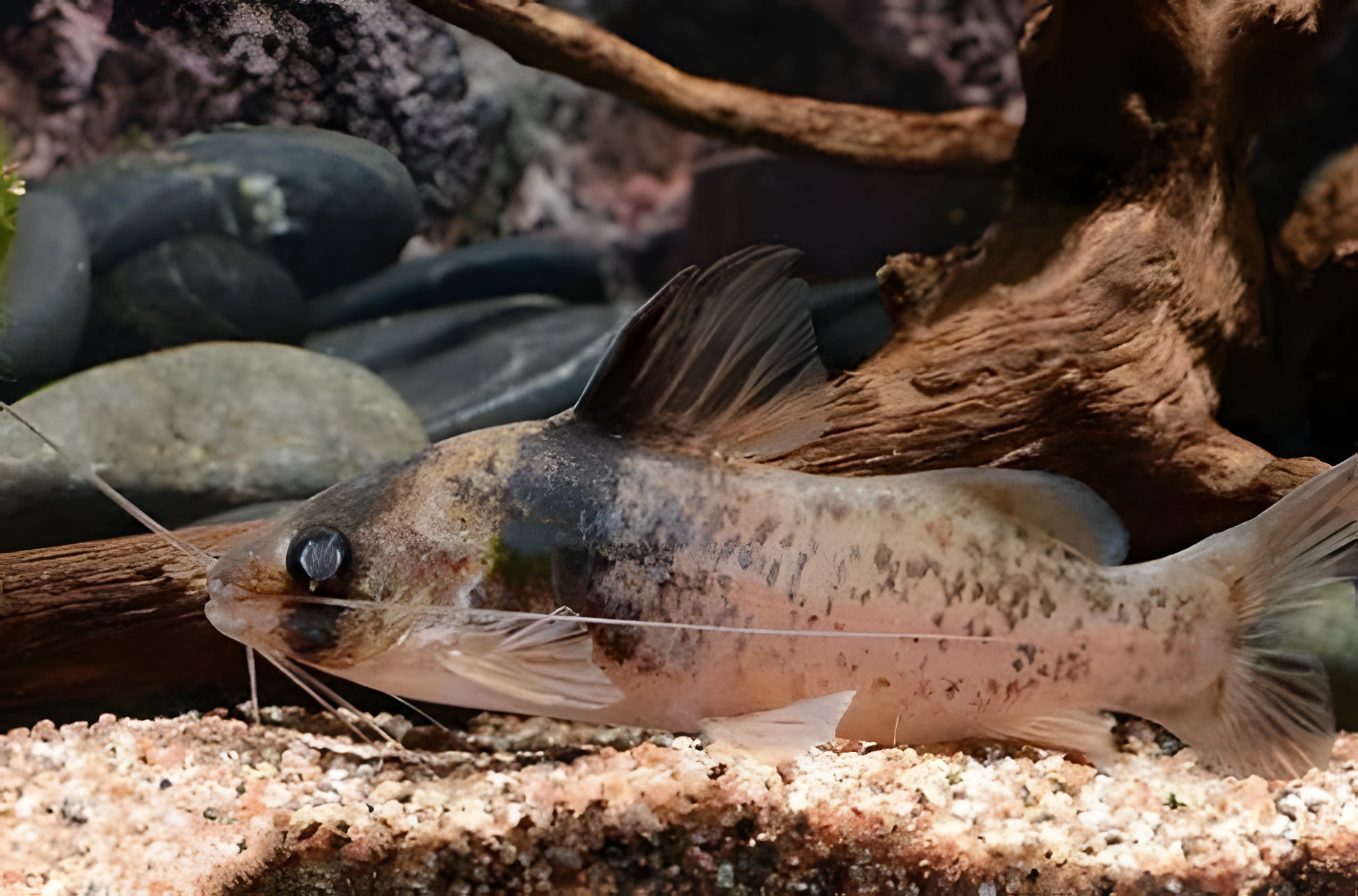
Adults of this species reach just over 5 cm in length. Their coloration is a light grey background with yellow hues, complemented by black strokes on the dorsal fin and head. Small dark speckles can be seen all over the body. The catfish received its alternative name due to its appearance, which resembles Corydoras imitator. Indeed, there is a similarity between these two species, especially in color scheme, but Brachyrhamdia differs in its less stocky build, and its barbels are noticeably longer and more filamentous.
Habitat
The species inhabits South America, primarily in the Orinoco and Caura river basins, flowing through Venezuela and Brazil. The fish prefer bodies of water with flowing currents, where they stay in the bottom layers. The natural habitat is characterized by soft to moderately hard water with neutral or slightly acidic pH levels.
Behavior and Compatibility
This fish species exhibits a peaceful nature and a complete absence of aggression. It coexists perfectly with its conspecifics and with other species of comparable size, such as tetras, rasboras, and rainbowfish, including Corydoras. However, it is worth considering the feeding preferences of Brachyrhamdia imitator: it can pose a danger to fry and very small fish up to 2 cm in length. There are observations that tetras become its victims more often if the conditions are the same for all species.
Care and Maintenance
For a small group of 3–4 catfish, an aquarium of 70–80 liters will be optimal. Since the False Corydoras is a bottom-dweller, special attention should be paid to the lower level when decorating the aquarium. It is recommended to create an alternation of open spaces with shelters, using snags, rock formations, or various natural/artificial decor. Floating plants on the surface will help provide the necessary shading, as Brachyrhamdia imitator avoids overly bright lighting. This catfish successfully adapts to various conditions and can comfortably live in a fairly wide range of hydrochemical parameters, which significantly simplifies the process of water preparation and general aquarium maintenance.
Diet
This species is omnivorous, and the epithet “voracious” is quite applicable to it. It is important to avoid overfeeding. It is recommended to offer sinking foods that contain a large amount of protein components. It will not miss an opportunity to feed on the fry of other fish.
Breeding and Reproduction
Based on available sources, a separate block cannot be compiled: the data is insufficient or contradictory. The entry can be updated later when verified information becomes available.
Diseases
Like other scaleless members of the family, these catfish are extremely sensitive to water quality and substrate composition. The main risks are associated with damage to their delicate skin, which opens the way for bacterial and fungal infections. Prevention includes maintaining cleanliness in the aquarium, using a soft substrate without sharp edges, and regular water changes.
How to choose
When selecting individuals, attention should be paid to the integrity of the fins and the absence of visible skin damage. Healthy fish should be active, show no signs of emaciation or sunken belly. It is important to consider that this species is prone to intraspecific aggression, so it is recommended to acquire a group of fish to reduce stress and correct behavior.
Frequently asked questions
The essentials: size, tank volume, water parameters and care
How big does False Corydoras get?
An adult reaches 5–5.4 cm in length. Plan the tank around the maximum size: the fish quickly outgrows a cramped setup.
What size aquarium does False Corydoras need?
The minimum recommended volume is 70 L. A smaller tank speeds up nitrate build-up and raises stress levels.
What water parameters does False Corydoras need?
Temperature 21–25 °C, pH 6–7.5, hardness 1–18 dGH. Stability matters more than exact values: sudden swings are harder on the fish than a small deviation from the ideal.
How long does False Corydoras live?
Around 5 years when kept properly. Lifespan depends directly on tank volume, water quality and a varied diet.
Is False Corydoras aggressive?
Temperament: peaceful (regular). Keep this in mind when choosing tank mates.
How many False Corydoras should be kept together?
Recommended setup: both solitary and in group (flexible). Ignoring this is a common cause of stress and disease.
What does False Corydoras eat?
Diet type: meat with plant additives (omnivores). Feed small portions that are finished within a couple of minutes — overfeeding does more harm than underfeeding.
What is the scientific name of False Corydoras?
The scientific name of the species is Brachyrhamdia imitator, family Heptapterid catfishes (Heptapteridae). It also appears in the literature as: Pimelodella imitator.