Temperature19 – 24 °C
Natural range
- Amazon River Basin
- Orinoco River Basin
- Bolivia area
- Colombia area
CharacinsConservation status: Least concern LC
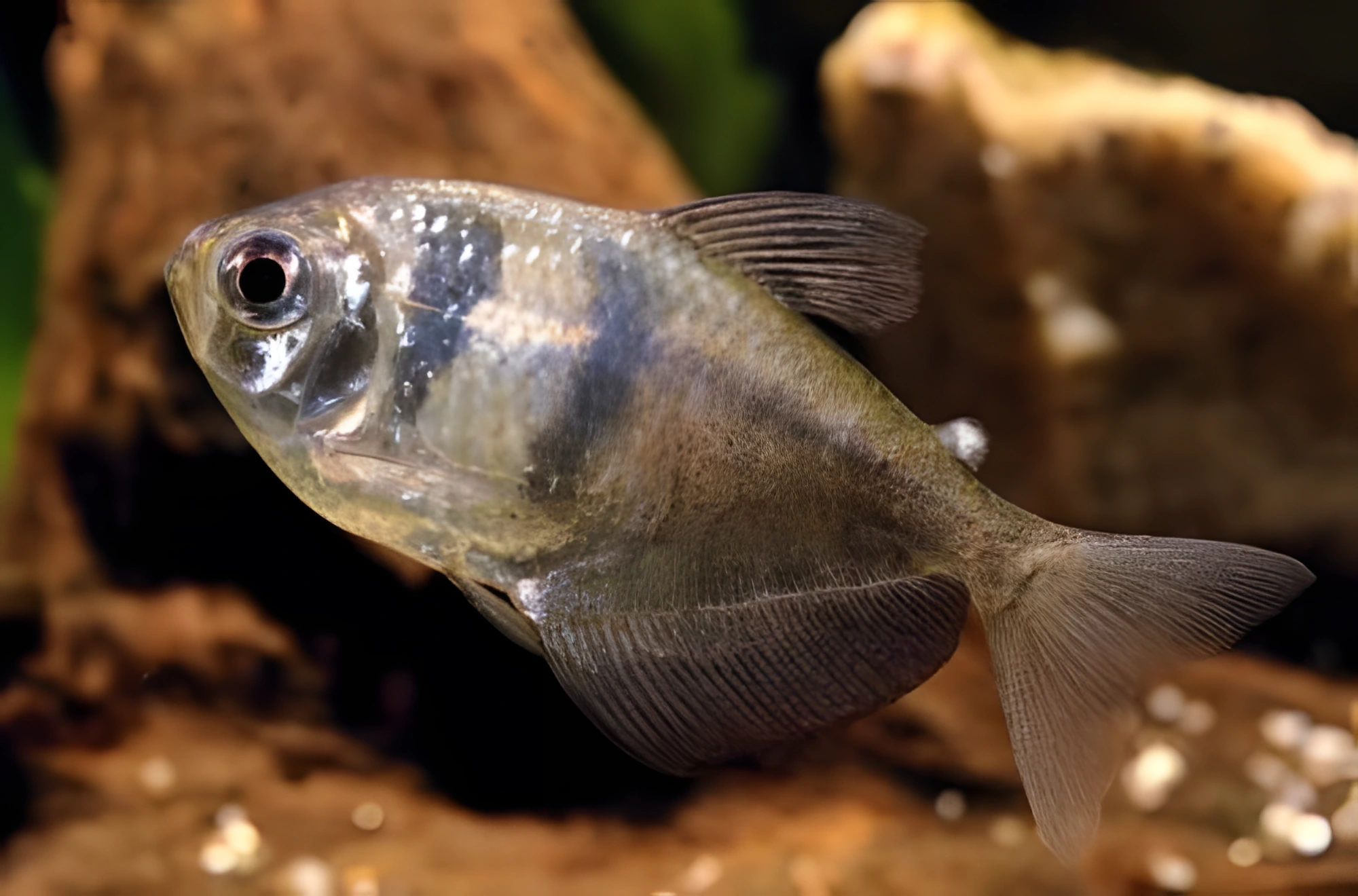
The False Black Tetra, also known as the Blue-spotted Gymnocorymbus (scientific name Gymnocorymbus thayeri), belongs to the Characidae family. It was named in honor of the patron N. Thayer, who supported a large-scale ichthyological expedition to South America in 1865–1866.
- Required aquarium volume
- 100 L
- Size in aquarium
- 5 cm
- Temperature
- 19 – 24 °C
- Temperament
- Peaceful (regular)
Parameters
Water pHSlightly acidic (5.5) – Neutral (7.3)
Water dHSoft (4) – Very hard (18)
Water salinityno salt (freshwater)
Size in aquarium5 cm
Lifespan4 years
TemperamentPeaceful (regular)
Toward small fishnot a predator
Required aquarium volume100 L
Lightingdimmed or moderate
Substrateany (no restrictions)
Water flowweak
FeedingSmall / appropriate size / pieces
CareMedium group (6–8 individuals)
Description
The False Black Tetra has a rhomboid body, characteristic of the genus, and is strongly compressed laterally. Outwardly, it resembles the Black Skirt Tetra, but differs in its more elongated shape and the absence of intense vertical stripes typical of closely related species. The body coloration varies from silvery to grayish, often with translucent fins. Adult individuals reach a size of about 5 cm. Sexual dimorphism is subtle: females usually appear rounder and fuller, especially during spawning, while males remain more slender and agile.
Habitat
The history of this species begins in South America. Initially, it was believed that its habitat was limited to the upper Amazon, within Bolivia and Colombia. However, over time, these fish were also discovered in the middle and lower Amazon, as well as in the extensive Orinoco River basin.
Behavior and Compatibility
This is a peaceful and very active fish. It is recommended to keep them in schools of 6 or more individuals. They get along well with other tetras and species of similar size and temperament.
Care and Maintenance
Caring for these fish is largely similar to the requirements for the Black Skirt Tetra. Even a beginner aquarist can easily manage the False Black Tetra, provided they maintain stable water parameters. For a group of 6–8 individuals, an aquarium of 100 liters or more is required, providing ample space. When setting up the aquarium, it is important to leave open areas for swimming; excessive overgrowth of aquatic plants should be avoided, so it is best to place plants along the sides. Standard care includes at least two regular procedures: weekly partial water changes with fresh water and timely removal of food debris and excrement. These recommendations are relevant with a functioning filtration system; without it, aquarium maintenance will need to be performed much more frequently. Being an omnivorous species, this fish readily accepts most popular foods. Dry foods, such as flakes and granules, can form the basis of their daily diet. Specialized foods for tetras, produced by many manufacturers, will be a good choice, as they usually contain all the necessary trace elements to support healthy growth. It is important to remember that if there is a lack of plant components in their diet, the fish may start to damage delicate aquarium plants.
Diet
Being an omnivorous species, these fish readily accept most popular foods. Dry foods, such as flakes and granules, can form the basis of their daily diet. Specialized products for tetras, produced by many manufacturers, will be an excellent choice, as they usually contain all the necessary trace elements to ensure healthy growth. It is important to note that if there is a lack of plant components in their diet, the fish may start to damage delicate parts of plants. These are peaceful and active fish. It is optimal to keep them in schools of 6 or more individuals. They are perfectly compatible with other tetras and species of comparable size and temperament.
Breeding and Reproduction
Breeding requires a separate spawning aquarium with soft, slightly acidic water and fine-leaved plants for substrate. Before spawning, the parents are fed abundantly with live or frozen foods. During spawning, the female scatters eggs among the plants. After the process is complete, it is recommended to remove the parents to prevent them from eating the eggs. The incubation period is about 24–36 hours, after which the hatched larvae begin free-swimming. Infusoria or specialized micro-foods are used as initial food for the fry.
Diseases
The species has moderate disease resistance when kept in proper conditions. The most common problems are associated with poor water quality, which can lead to fin rot or the development of bacterial infections. Fish are sensitive to high levels of nitrogenous compounds. Prevention includes regular water changes, maintaining stable environmental parameters, and eliminating stress factors. If signs of apathy or skin lesions appear, it is necessary to check water parameters and conduct therapy according to the symptoms.
How to choose
When purchasing, choose active fish with clean fins and no visible damage or spots on the body. It is important to ensure that the individuals exhibit normal schooling behavior and do not constantly hide in the corners of the aquarium. Avoid acquiring fish with signs of emaciation, sunken bellies, or unnatural behavior. It is recommended to purchase a group of 6 or more individuals, as these tetras experience significant stress when alone, which negatively affects their immunity and coloration.
Frequently asked questions
The essentials: size, tank volume, water parameters and care
How big does False Black Tetra get?
An adult reaches 5 cm in length. Plan the tank around the maximum size: the fish quickly outgrows a cramped setup.
What size aquarium does False Black Tetra need?
The minimum recommended volume is 100 L. A smaller tank speeds up nitrate build-up and raises stress levels.
What water parameters does False Black Tetra need?
Temperature 19–24 °C, pH 5.5–7.3, hardness 4–18 dGH. Stability matters more than exact values: sudden swings are harder on the fish than a small deviation from the ideal.
How long does False Black Tetra live?
Around 4 years when kept properly. Lifespan depends directly on tank volume, water quality and a varied diet.
Is False Black Tetra aggressive?
Temperament: peaceful (regular). Keep this in mind when choosing tank mates.
How many False Black Tetra should be kept together?
Recommended setup: medium group (6–8 individuals). Ignoring this is a common cause of stress and disease.
What does False Black Tetra eat?
Diet type: small / appropriate size / pieces. Feed small portions that are finished within a couple of minutes — overfeeding does more harm than underfeeding.
What is the scientific name of False Black Tetra?
The scientific name of the species is Gymnocorymbus thayeri, family Characidae.