Temperature16 – 24 °C
Natural range
- Sumatra area
- Borneo area
LoachesConservation status: Least concern LC
Other scientific names: Acanthopsis biaculeata, Acanthopsis choerorhynchus, Acanthopsis choirorhynchos, Acanthopsis choirorhynchus, Acantopsis biaculeata, Acantopsis choirorhynchos
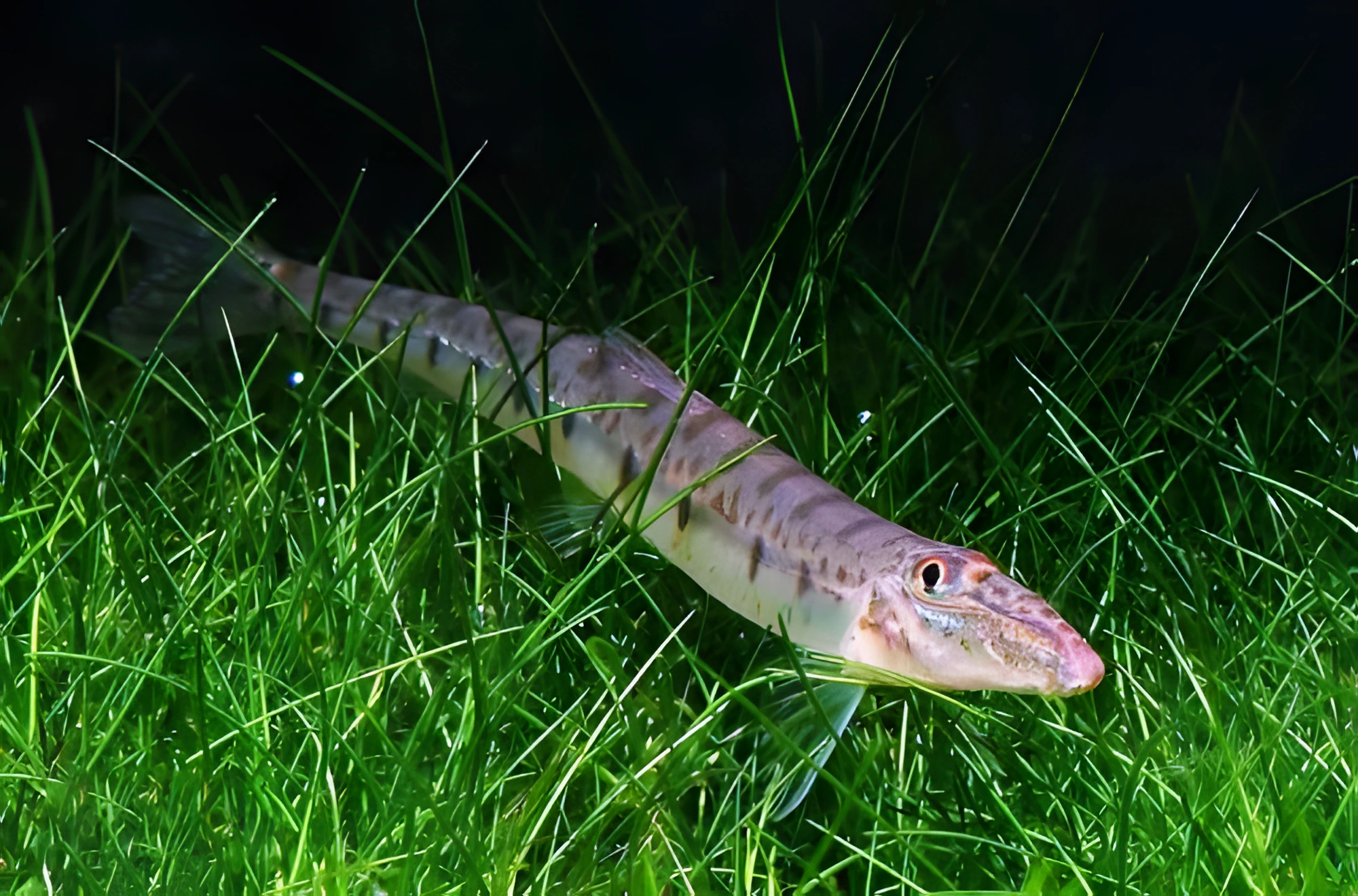
Belonging to the family Cobitidae, the Horseface Loach (Acantopsis dialuzona) is a peaceful and calm aquarium fish. It can be successfully kept together with many species of tropical fish. Its keeping conditions do not present special requirements. Although the appearance of this fish, resembling a horse's head, may seem unusual and unattractive for a home aquarium, it always attracts the attention of visitors in public exhibitions.
- Required aquarium volume
- 200 L
- Size in aquarium
- 20 cm
- Temperature
- 16 – 24 °C
- Temperament
- Peaceful (regular)
Parameters
Water pHSlightly acidic (6) – Slightly alkaline (8)
Water dHVery soft (1) – Hard (12)
Water salinityno salt (freshwater)
Size in aquarium20 cm
Lifespan7 years
TemperamentPeaceful (regular)
Toward small fishnot a predator
Required aquarium volume200 L
Lightingdimmed
Substratefine sand
Water flowmoderate
FeedingSinking (any)
CareBoth solitary and in group (flexible)
Description
In their natural habitat, adults can reach 20 cm in length, but in aquarium conditions, their size rarely exceeds this. The fish's body has a snake-like shape, and the fins and tail remain short. A distinctive feature is the elongated head, whose contours resemble that of a horse. The eyes are located close to each other and high on the head. The coloration varies from gray to brownish, with dark spots all over the body. Sexual dimorphism is insignificant: males are usually slightly smaller than females, but there are no other obvious differences.
Habitat
The natural habitat of this species extends throughout Southeast Asia, including the waters of Sumatra, Borneo, and Java, as well as peninsular Malaysia; its presence in Thailand remains questionable. The exact boundaries of its distribution are not fully understood. Loaches prefer river bottoms with soft substrate — silt, sand, or fine gravel. During the rainy season, they often move into flooded areas.
Behavior and Compatibility
These fish are distinguished by their peaceful and calm disposition towards other species. Some rivalry for territory may occur between Horseface Loaches, but such skirmishes rarely lead to injuries. Keeping them is possible both individually and in groups, provided the aquarium is of sufficient volume.
Care and Maintenance
For a comfortable existence of a group of three fish, an aquarium of at least 200 liters will be required. Special attention should be paid to the choice of substrate when setting up the habitat for these pets. An ideal option would be a soft sandy substrate, which will allow the fish to burrow easily, leaving only their heads on the surface. The use of gravel or other substrates with sharp particles can lead to damage to the fish's skin. Among other decor elements, various snags and plants that prefer partial shade can be used. To avoid accidental uprooting, aquatic plants are recommended to be planted in special pots. A few Indian almond leaves can help give the water a brownish tint characteristic of their natural environment. Important keeping conditions include moderate current, as well as a high level of dissolved oxygen and impeccable water quality. Maintaining cleanliness is achieved by regular removal of organic waste and weekly partial water changes (30% to 35% of the total volume).
Diet
These fish feed by sifting the substrate with their mouths in search of small invertebrates, such as crustaceans, larvae, and adult insects. In the aquarium, their diet should consist of sinking foods: these can be dry granules and flakes, as well as frozen bloodworms, brine shrimp, or daphnia.
Breeding and Reproduction
A significant number of juveniles supplied to the aquarium trade come from commercial fish farms. Successful breeding of this species in home aquariums is rare. At the time of writing this article, breeding these loaches was only within the capabilities of experienced aquarists.
Diseases
Health problems usually arise only as a result of injuries or keeping in unsuitable conditions, which leads to a weakening of the immune system and, as a rule, provokes the development of various diseases. At the first signs of illness, the primary task is to check the water parameters for excesses or dangerous concentrations of toxic substances (nitrates, nitrites, ammonia, etc.). After bringing all indicators back to normal, treatment can begin. More detailed information on symptoms and treatment methods is presented in the "Aquarium Fish Diseases" section.
How to choose
When purchasing, choose active specimens that show interest in foraging in the substrate, if the conditions in the aquarium allow observation of their behavior. Healthy fish should have clean skin without visible ulcers, film, spots, or damage, especially around the head and fins. Pay attention to their breathing: it should be even, without signs of frequent gulping for air at the surface, if there is enough oxygen in the aquarium.
Avoid specimens with signs of emaciation, such as a sunken abdomen or protruding bones. Keep in mind that these fish have sharp spines under their eyes, so caution is important when catching and transporting them to avoid injuring the fish and damaging the net. Before purchasing, make sure that a layer of fine, soft sand is prepared in your aquarium, as the absence of suitable substrate in the store can lead to damage to the delicate mouthparts and barbels of the specimens.
Frequently asked questions
The essentials: size, tank volume, water parameters and care
How big does Horseface Loach get?
An adult reaches 20 cm in length. Plan the tank around the maximum size: the fish quickly outgrows a cramped setup.
What size aquarium does Horseface Loach need?
The minimum recommended volume is 200 L. A smaller tank speeds up nitrate build-up and raises stress levels.
What water parameters does Horseface Loach need?
Temperature 16–24 °C, pH 6–8, hardness 1–12 dGH. Stability matters more than exact values: sudden swings are harder on the fish than a small deviation from the ideal.
How long does Horseface Loach live?
Around 7 years when kept properly. Lifespan depends directly on tank volume, water quality and a varied diet.
Is Horseface Loach aggressive?
Temperament: peaceful (regular). Keep this in mind when choosing tank mates.
How many Horseface Loach should be kept together?
Recommended setup: both solitary and in group (flexible). Ignoring this is a common cause of stress and disease.
What does Horseface Loach eat?
Diet type: sinking (any). Feed small portions that are finished within a couple of minutes — overfeeding does more harm than underfeeding.
What is the scientific name of Horseface Loach?
The scientific name of the species is Acantopsis dialuzona, family Cobitidae (Loaches). It also appears in the literature as: Acanthopsis biaculeata, Acanthopsis choerorhynchus, Acanthopsis choirorhynchos.