Temperature10 – 22 °C
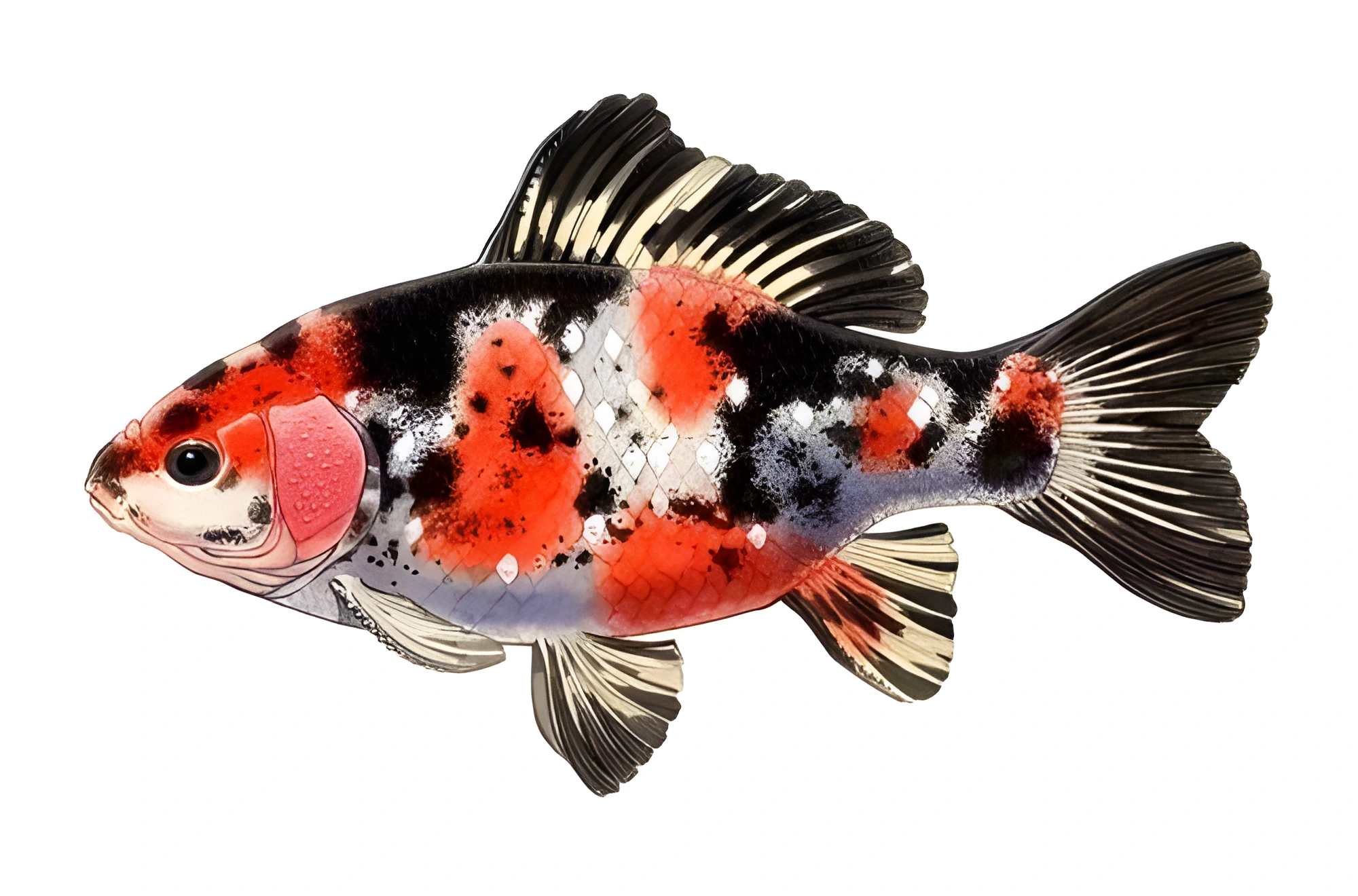
GoldfishConservation status: Least concern LC
Other scientific names: Carasius auratus, Carassius buergeri, Carassius burgeri, Carassius carassius, Carassius chinensis, Carassius coeruleus
London Shubunkin is the trade name for this variety of fish. It originated from selective breeding between the common Goldfish and a short-tailed form of Shubunkin. A notable distinguishing feature of this breed is their characteristic short fins and tail. The fish's body is covered in a mottled coloration. In a favorable environment, such as ponds, adults can reach quite impressive sizes—up to 20 cm.
- Required aquarium volume
- 150 L
- Size in aquarium
- 16 – 20 cm
- Temperature
- 10 – 22 °C
- Temperament
- Peaceful (regular)
Parameters
Water pHSlightly acidic (6) – Slightly alkaline (8)
Water dHSoft (5) – Very hard (19)
Water salinityno salt (freshwater)
Size in aquarium16 – 20 cm
Lifespan15 years
TemperamentPeaceful (regular)
Toward small fishnot a predator
Required aquarium volume150 L
Lightingmoderate (regular)
Substrateany (no restrictions)
Water flowweak
FeedingAny (universal)
CareBoth solitary and in group (flexible)
Description
The London Shubunkin is a selectively bred form of goldfish with a streamlined body and short, rounded fins, resembling the common goldfish in structure. Its distinguishing feature is its calico coloration, which is a chaotic combination of red, black, white, yellow, and brown spots on a bluish background. The scales of these fish are transparent, giving them a special luster. Adult specimens reach sizes of 16–20 cm. Sexual differences are only apparent during the spawning period: males develop small white tubercles on their gill covers and head, while females become noticeably rounded.
Habitat
This species was artificially bred by humans and does not occur in natural waters. It is a selective variety of goldfish, whose ancestor is the Prussian carp. In aquarium and pond conditions, these fish can adapt to a wide range of water parameters, provided there is sufficient aeration and filtration. The optimal water temperature is 10–22°C, pH between 6.0–8.0, and general hardness 5–19 dGH.
Behavior and Compatibility
These are active, hardy, and peaceful fish that prefer to live in groups. In an aquarium, they are constantly on the move, often digging in the substrate, so it is recommended to use coarse sand or gravel. London Shubunkins are highly compatible with other long-bodied goldfish breeds. It is not recommended to keep them with aggressive or small species prone to fin-nipping. A species-specific tank is the best option.
Care and Maintenance
Keeping London Shubunkins is not particularly difficult. These fish are quite large and active, so it is optimal to keep them in spacious aquariums of several hundred liters or in outdoor ponds. The tank's decor can be arbitrary, the main thing is to provide them with enough swimming space. It is important to note that they do not tolerate high temperatures well, which also contributes to a decrease in dissolved oxygen levels in the water, to which Goldfish are very sensitive. Therefore, additional aeration is recommended in aquariums. Hydrochemical water parameters are not critical; they can well be within a wide range of pH and dGH values. Food selection also won't cause trouble. Shubunkins readily accept most common foods—dry, frozen, or live. Specialized Goldfish foods offered by many manufacturers will be an excellent choice. A distinctive feature of these fish is their friendly disposition. They get along well with most other species of similar size that can exist in relatively cool water conditions.
Diet
Shubunkins are omnivorous and undemanding regarding food. Their diet should include both specialized dry foods for goldfish and live or frozen foods, such as bloodworms, daphnia, or artemia. It is important to feed them in moderation, as the fish are prone to overeating. Feeding is recommended 1–2 times a day in small portions that the fish can consume within a few minutes, to avoid polluting the water with food remnants.
Breeding and Reproduction
Breeding is possible in aquariums with a volume of 70–100 liters. Spawning is stimulated by a gradual increase in water temperature, mimicking the arrival of spring. One female and several males are placed in the spawning tank, along with fine-leaved plants or a spawning grid to protect the eggs. After spawning, the parent fish must be removed. Fry appear after 2–6 days and initially feed on their yolk sac reserves, after which they are fed with infusoria and specialized fry foods.
Diseases
The fish are highly resilient but sensitive to water quality and the accumulation of nitrogenous compounds. With poor filtration and infrequent water changes, the risk of bacterial infections and parasitic diseases increases. Prevention includes regular aquarium maintenance, ensuring effective aeration, and maintaining substrate cleanliness. If signs of apathy, refusal to eat, or body lesions appear, water parameters must be checked and therapeutic measures taken.
How to choose
When purchasing, choose active fish that swim in the water column and do not lie on the bottom. Healthy individuals should have clear eyes without cloudiness, tightly adhering fins without signs of erosion, tears, or white film. It is important to avoid specimens with spinal deformities or signs of emaciation. It is recommended to purchase fish from reputable breeders, as the quality of coloration and adherence to breed standards can vary greatly.
Frequently asked questions
The essentials: size, tank volume, water parameters and care
How big does London Shubunkin get?
An adult reaches 16–20 cm in length. Plan the tank around the maximum size: the fish quickly outgrows a cramped setup.
What size aquarium does London Shubunkin need?
The minimum recommended volume is 150 L. A smaller tank speeds up nitrate build-up and raises stress levels.
What water parameters does London Shubunkin need?
Temperature 10–22 °C, pH 6–8, hardness 5–19 dGH. Stability matters more than exact values: sudden swings are harder on the fish than a small deviation from the ideal.
How long does London Shubunkin live?
Around 15 years when kept properly. Lifespan depends directly on tank volume, water quality and a varied diet.
Is London Shubunkin aggressive?
Temperament: peaceful (regular). Keep this in mind when choosing tank mates.
How many London Shubunkin should be kept together?
Recommended setup: both solitary and in group (flexible). Ignoring this is a common cause of stress and disease.
What does London Shubunkin eat?
Diet type: any (universal). Feed small portions that are finished within a couple of minutes — overfeeding does more harm than underfeeding.
What is the scientific name of London Shubunkin?
The scientific name of the species is Carassius auratus, family Cyprinids (Cyprinidae). It also appears in the literature as: Carasius auratus, Carassius buergeri, Carassius burgeri.