Temperature22 – 28 °C
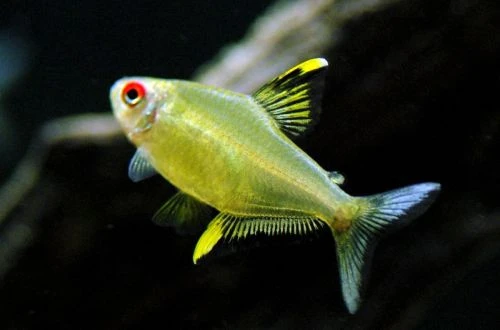
The Lemon Tetra, or Hyphessobrycon pulchripinnis, is a representative of the Acestrorhamphidae family. This fish attracts attention with both its appearance and behavior. Its coloration, ranging from yellow to lemon, serves as a peculiar indicator of well-being: the intensity of the color is directly related to the keeping conditions and the quality of the food it receives. If the hue becomes silvery, it signals problems.
The fish's body is small, flattened laterally. The main color is lemon, sometimes turning golden. An important distinguishing feature is the bright yellow front part of the anal fin, bordered by a black stripe along its entire length. The eyes of this fish species have a characteristic red color. Male Lemon Tetras have a more intense coloration and a pointed dorsal fin, while females are generally slightly larger.
The species was described in 1937, but its type locality is vague. Most records pertain to the rio Tapajós basin in central Brazil, so the limits of its range remain unclear. In the wild, Lemon Tetras prefer sections of rivers with slow currents and abundant aquatic vegetation, as well as flooded forest areas. They are often observed in numerous schools that can number hundreds or even thousands of individuals. These fish are successfully bred for commercial purposes and are well-acclimated to life in captivity. Today, there are also selective forms, such as the Albino Lemon Tetra, which do not occur in nature.
This species is distinguished by its friendly and peaceful nature, feels great in a school, and is an excellent neighbor for many other fish species. However, it is not recommended to keep Lemon Tetras with large or aggressive aquarium inhabitants.
A key condition for the successful keeping of these fish is maintaining high water quality. This requires an effective filtration system and regular water changes of 25–50% every two weeks. Lighting in the aquarium should be moderate, imitating the twilight of shaded forest waters. Required equipment also includes a heater and an aeration system. When decorating the aquarium, it is recommended to densely plant the side and back walls, leaving the central part free for swimming. Both artificial elements, such as castles and ships, and natural materials like bogwood, snags, and roots, are suitable as shelters. The optimal substrate is sand. Adding a few dry leaves (pre-soaked) will give the water a light brown tint characteristic of their natural environment. It is recommended to replace the leaves every two weeks, combining this with general aquarium cleaning.
Lemon Tetras are well adapted to various dry commercial foods. They also accept live foods with no less appetite. To maintain bright coloration, it is important to provide variety in their diet, for example, alternating several types of dry foods during the week and periodically including meat products. A monotonous diet, on the contrary, can lead to dulling of their color.
Breeding this fish is quite successful in a home aquarium. It has been observed that the best results are achieved when there are two males per female. For preparation for spawning, a separate tank will be required, with a volume of 3 to 40 liters. It is important that the water quality and its parameters in the spawning tank exactly match the conditions of the main aquarium. Among the necessary equipment for the spawning aquarium, an airlift filter, aerator, heater, and lighting system should be highlighted. An essential element of the decor is the presence of floating plants, as fish prefer to lay their eggs on their leaves. Increased feeding, especially with the addition of meat products to the daily diet, serves as an excellent stimulus for the onset of the spawning process. When it becomes obvious that the female's abdomen has significantly enlarged and rounded, this is a sign of readiness to lay eggs. At this point, the female, along with her partners, is carefully moved to a prepared separate tank, where egg-laying will occur after a certain time. Then the adult fish should be returned to the main aquarium. The appearance of fry usually occurs within a few days after spawning, and micro-food and Artemia are offered as their first food.
Contamination or poor water quality can lead to fungal infections and protozoan infestations of the fish's body surface. Under optimal keeping conditions, health problems usually do not arise, unless already sick or infected fish are introduced.
When choosing Lemon Tetras, pay attention to the activity of the individuals: healthy fish stay in a school, swim actively, and show curiosity. Avoid specimens with damaged fins, film on the body, or signs of emaciation. The coloration should be rich, lemon-yellow; if the fish appear pale or silvery, this may indicate stress, poor water quality in the store, or health problems. If possible, observe their feeding: healthy tetras show a good appetite and respond quickly to the appearance of food.
The essentials: size, tank volume, water parameters and care
An adult reaches 3.5–5 cm in length. Plan the tank around the maximum size: the fish quickly outgrows a cramped setup.
The recommended volume is 60 L. A smaller tank speeds up nitrate build-up and raises stress levels.
Temperature 22–28 °C, pH 5.5–8, hardness 2–15 dGH. Stability matters more than exact values: sudden swings are harder on the fish than a small deviation from the ideal.
Around 8 years when kept properly. Lifespan depends directly on tank volume, water quality and a varied diet.
Temperament: peaceful (regular). Keep this in mind when choosing tank mates.
Recommended setup: medium group (6–8 individuals). Ignoring this is a common cause of stress and disease.
Diet type: any (universal). Feed small portions that are finished within a couple of minutes — overfeeding does more harm than underfeeding.
The scientific name of the species is Hyphessobrycon pulchripinnis, family Acestrorhamphidae.
Matched by family, categories and overlapping keeping conditions
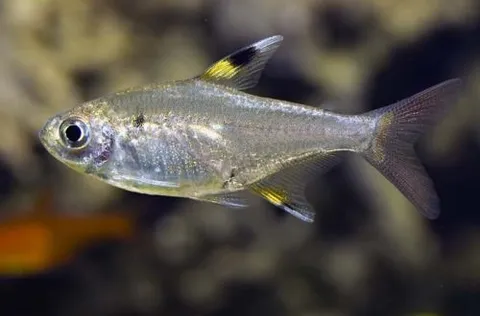
Pristella maxillaris
The Albino Pristella, also known as the Albino X-Ray Tetra, scientifically classified as Pristella maxillaris, belongs to the Acestrorhamphidae family. This species is considered one of the most common and accessible…
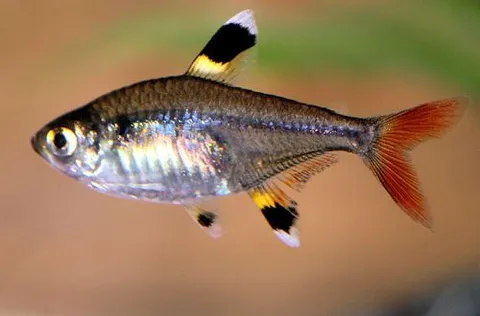
Pristella maxillaris
The Pristella Tetra, also known as the X-ray Tetra or Golden Pristella Tetra (scientific name Pristella maxillaris), belongs to the family Acestrorhamphidae. A distinguishing feature of this fish is its remarkable…
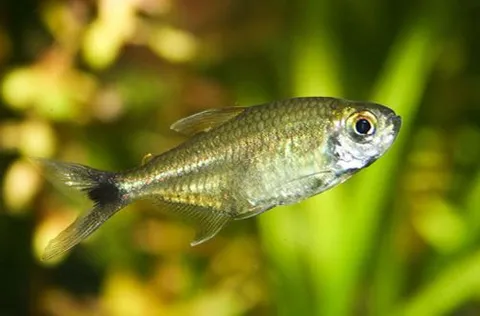
Hemigrammus rodwayi
The Golden Tetra, scientifically known as Hemigrammus rodwayi, belongs to the Acestrorhamphidae family. This fish gets its name from its bright golden scales. In reality, this "gilded" effect is due to the presence of…
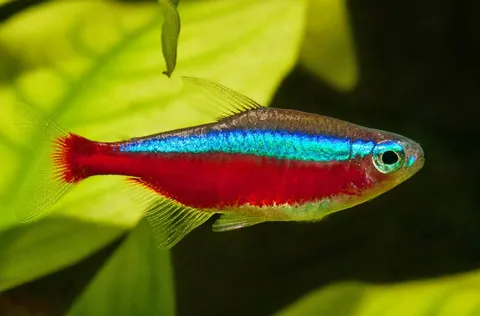
Paracheirodon axelrodi
The Cardinal Tetra, or Red Neon (scientific name Paracheirodon axelrodi), belongs to the Acestrorhamphidae family. This fish is one of the most beloved and widely available among aquarists. It captivates with its…