Temperature22 – 28 °C
Natural range
- Malay Peninsula area
- Southern Thailand area
- Malaysia area
- Singapore area
LivebearersConservation status: Least concern LC
Other scientific names: Hemiramphus pogonognathus, Hemirhamphus pogonognathus
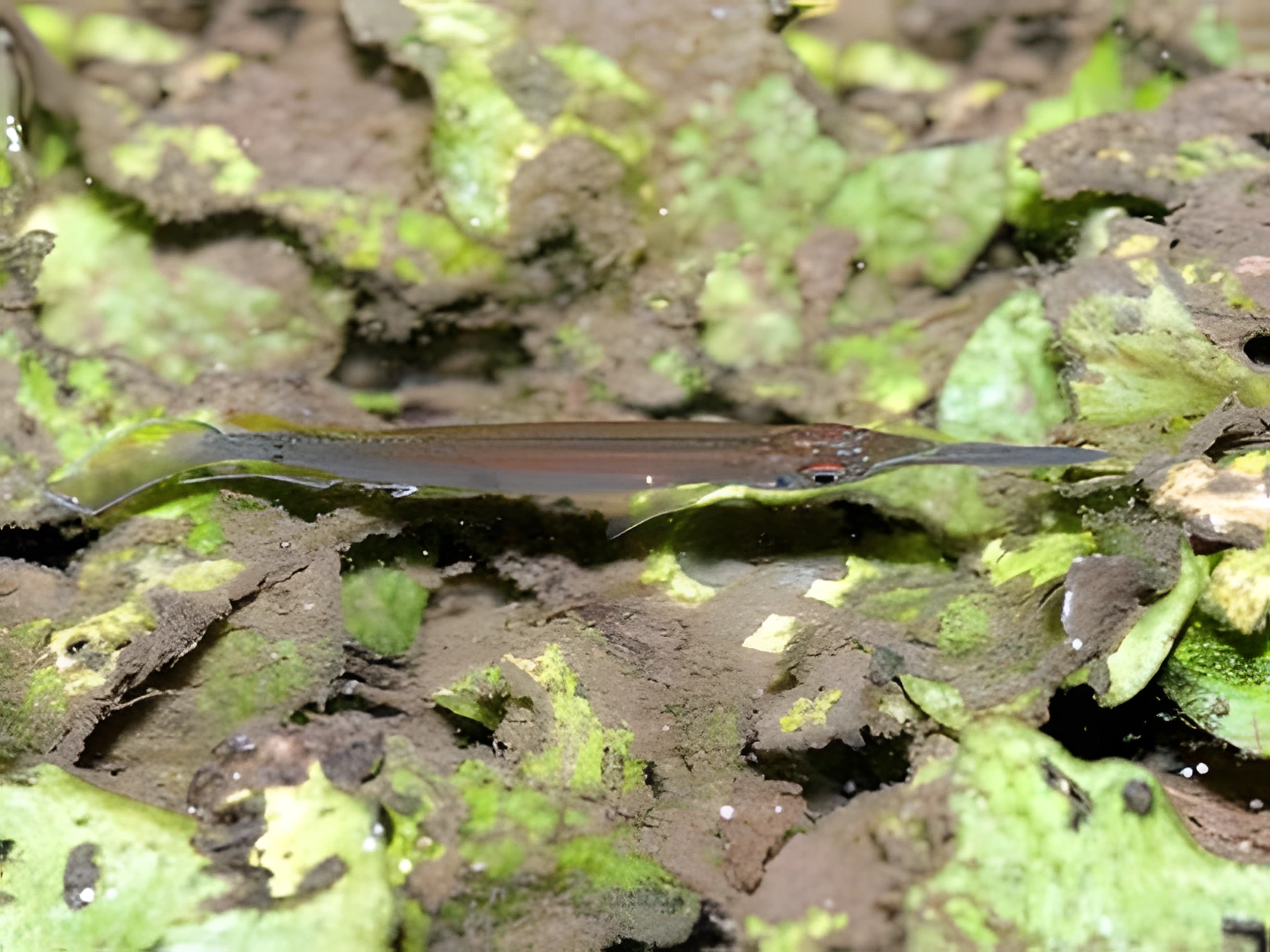
The Hemirhamphodon pogonognathus, known in the scientific world as Hemirhamphodon pogonognathus (or its synonym Nomorhamphus pogonognathus), is a representative of the family Zenarchopteridae (Halfbeaks). This fish, also called Nomorhamphus pogonognathus or Forest Halfbeak, attracts attention with its unusual appearance. Given its unpretentiousness and ease of keeping, it can become a wonderful addition to the inhabitants of a freshwater aquarium.
- Required aquarium volume
- 70 L
- Size in aquarium
- 10 cm
- Temperature
- 22 – 28 °C
- Temperament
- Semi-peaceful (including aggression during spawning / intraspecific conflicts)
Parameters
Water pHSlightly acidic (6) – Slightly alkaline (8)
Water dHVery soft (2) – Very hard (22)
Water salinitylow (3–5 g/L)
Size in aquarium10 cm
Lifespan4 years
TemperamentSemi-peaceful (including aggression during spawning / intraspecific conflicts)
Toward small fishnot a predator
Required aquarium volume70 L
Lightingweak or moderate
Substrateany (no restrictions)
Water flowweak or moderate
FeedingSmall / appropriate size / pieces
CareHarem (1 male and several females)
Description
The external structure of this fish resembles that of Dermogenys, another closely related species from the same area. Both species have a very elongated, slender body and a peculiar mouth structure where the upper jaw is significantly shorter than the lower. However, the Forest Blue Halfbeak has distinctive features: there is a small “hook” on the lower jaw, and its coloration is more expressive, varying from grey-green to blue-green, with a noticeable blue fringe along the edges of the fins and caudal fin.
Habitat
The natural habitat of these fish covers Southeast Asia, particularly the Malay Peninsula, including southern Thailand, Malaysia, and Singapore. They are typically found in river lowlands, swamps, and other slow-moving bodies of water located in humid tropical forests. They can often be found in estuaries as well, where marine and fresh water mix. The natural biotope often consists of a shallow stream, the bottom of which is covered with a layer of silt, fallen leaves, and many snags formed by branches and tree roots.
Behavior and Compatibility
Males of this species tend to compete with each other for territory and the attention of females. In small aquariums, it is recommended to keep one male with several females. In general, they exhibit peaceful behavior towards other species. Good tank mates for them will be fish of comparable size and temperament, preferring to inhabit the middle water column or near the bottom.
Care and Maintenance
For a comfortable life for a group of 3–4 individuals, an aquarium of at least 70–80 liters is recommended. It is important to provide enough open areas for free swimming in the upper water layers, while also providing zones for shelters formed by dense plant thickets. The decoration of the aquarium bottom is not critically important and can be chosen at the discretion of the aquarist, or based on the needs of other fish species. Lighting should be moderately subdued. Since the fish are prone to jumping out of the water, a reliable aquarium lid is essential. Please note that this species is adapted to brackish water, so the addition of marine salt at a concentration of about 5 grams per liter of water is permissible.
Diet
The anatomical features of this fish's mouth provide insight into its dietary preferences. It feeds in the upper water layers, collecting insects and other small invertebrates from the water surface. When kept in a home aquarium, it is recommended to offer high-protein floating foods. Live or frozen bloodworms, flies, mosquito larvae, and similar nutritious products can also be included in their diet.
Breeding and Reproduction
Halfbeaks are characterized by live birth (viviparity). The gestation period for females is approximately 8 weeks. Fry are born fully formed. Spawning occurs gradually: only 1–5 fry are born daily. Although parental instincts are not pronounced in Nomorhamphus pogonognathus, they do not exhibit a tendency to eat their own offspring. Nevertheless, it is recommended to move the fry to a separate aquarium. From the very first days of life, fry are able to consume small foods such as Artemia, Daphnia, dry granules and flakes, as well as other similar products.
Diseases
Under proper keeping conditions, instances of disease among these fish are rare. The risk of developing pathologies significantly increases in aquariums with unsatisfactory conditions, poor water quality, insufficient nutrition, or the use of substandard foods, as well as through contact with already sick fish. More detailed information on disease symptoms and available treatment methods can be found in the relevant section, "Diseases of Aquarium Fish."
How to choose
When purchasing, select active individuals with intact fins and an undamaged lower jaw, as any injuries to this body part often lead to infections and the death of the fish. It is important to avoid specimens showing signs of emaciation or skin lesions. Since the species is sensitive to stress and prone to timidity, fish may behave erratically after transport, so it is recommended to prepare an aquarium with dense vegetation in advance to minimize the risk of injury from tank walls and decorations upon release.
Frequently asked questions
The essentials: size, tank volume, water parameters and care
How big does Forest Halfbeak get?
An adult reaches 10 cm in length. Plan the tank around the maximum size: the fish quickly outgrows a cramped setup.
What size aquarium does Forest Halfbeak need?
The minimum recommended volume is 70 L. A smaller tank speeds up nitrate build-up and raises stress levels.
What water parameters does Forest Halfbeak need?
Temperature 22–28 °C, pH 6–8, hardness 2–22 dGH. Stability matters more than exact values: sudden swings are harder on the fish than a small deviation from the ideal.
How long does Forest Halfbeak live?
Around 4 years when kept properly. Lifespan depends directly on tank volume, water quality and a varied diet.
Is Forest Halfbeak aggressive?
Temperament: semi-peaceful (including aggression during spawning / intraspecific conflicts). Keep this in mind when choosing tank mates.
How many Forest Halfbeak should be kept together?
Recommended setup: harem (1 male and several females). Ignoring this is a common cause of stress and disease.
What does Forest Halfbeak eat?
Diet type: small / appropriate size / pieces. Feed small portions that are finished within a couple of minutes — overfeeding does more harm than underfeeding.
What is the scientific name of Forest Halfbeak?
The scientific name of the species is Hemirhamphodon pogonognathus (синоним Nomorhamphus pogonognathus), family Halfbeaks (Zenarchopteridae). It also appears in the literature as: Hemiramphus pogonognathus, Hemirhamphus pogonognathus.