Temperature22 – 26 °C
Natural range
- Paraná River Basin
- Paraguay River Basin
- Uruguay River Basin
- Brazil area
CharacinsConservation status: Least concern LC
Other scientific names: Salmo tiririca
The Four-lined Leporinus, also known as Leporinus striatus, belongs to the family Anostomidae. This fish species inhabits the waters of South America, particularly in the Paraná and Paraguay river basins, covering the territory of Paraguay itself, the southern states of Brazil, Uruguay, and the northern regions of Argentina. It prefers to live in sections of rivers where the water current is fast, sometimes even turbulent, and primarily stays in the water column, finding shelter among dense aquatic vegetation and submerged snags.
- Required aquarium volume
- 500 L
- Size in aquarium
- 25 cm
- Temperature
- 22 – 26 °C
- Temperament
- Semi-peaceful (including aggression during spawning / intraspecific conflicts)
Parameters
Water pHSlightly acidic (6) – Neutral (7.5)
Water dHSoft (4) – Hard (12)
Water salinityno salt (freshwater)
Size in aquarium25 cm
Lifespan10 years
TemperamentSemi-peaceful (including aggression during spawning / intraspecific conflicts)
Toward small fishnot a predator
Required aquarium volume500 L
Lightingdimmed or moderate
Substrateany (no restrictions)
Water flowmoderate
FeedingPlant-based (algae, vegetables)
CareBoth solitary and in group (flexible)
Description
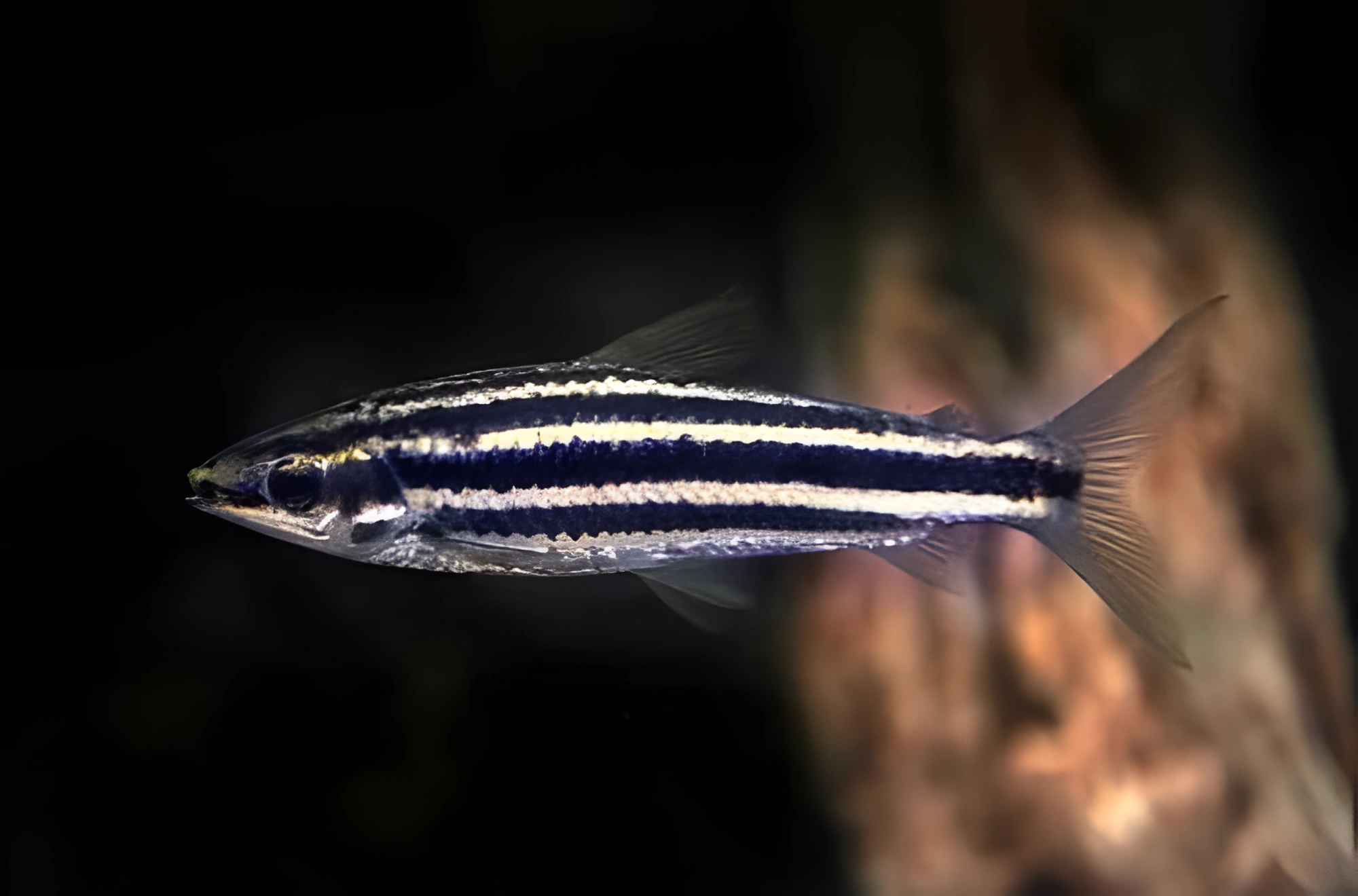
Adults of this fish can reach a length of up to 25 cm. A characteristic feature, reflected in its name, is the body pattern: four distinct horizontal black stripes are set against a light background. Sexual dimorphism in Leporinus striatus is weakly expressed, meaning there are no obvious visual differences between males and females.
Habitat
The species inhabits South America, populating the basins of the Paraná, Paraguay, and Uruguay rivers in Brazil, Paraguay, and Argentina. In nature, the fish prefer sections of rivers with fast, sometimes turbulent currents. They stay in the water column near submerged snags and dense aquatic vegetation.
Behavior and Compatibility
Despite the fact that Leporinus striatus is often found in large groups in its natural habitat, it can hardly be called a peaceful schooling species. When kept in small numbers, these fish do not exhibit the ability to coexist peacefully with each other. Moreover, they can show hostility towards other members of the Anostomidae family. For cohabitation, Leporinus are compatible with robust but non-aggressive South American cichlids of similar size, as well as with catfish. Keeping Leporinus with small fish is highly not recommended.
Care and Maintenance
To maintain a group of 6–8 individuals, a tank of at least 500 liters will be required, whereas for a single fish, a 100-liter aquarium may suffice. It is important to note that these fish are capable of jumping out of the water, so an aquarium lid is mandatory. When decorating the aquarium, it is necessary to create a balance between open swimming areas and hiding spots, represented by dense plant thickets and snags. It is worth noting that when using live plants for decoration, preference should be given to species with tough leaves, as plants with soft leaf blades are likely to be damaged or even eaten. The Four-lined Leporinus demonstrates adaptability to a wide range of hydrochemical parameters, which significantly simplifies the water preparation process. However, to ensure long-term health, it is necessary to maintain a stable water composition and prevent the accumulation of organic waste. The cleanliness and well-being of the aquarium depend not only on regular maintenance procedures and weekly partial water changes but also on the effective operation of the filtration system. In addition, the filter can serve as a source of the internal current necessary for these fish. The daily diet should consist mainly of foods rich in plant components. Blanched lettuce leaves, spinach, and pieces of green vegetables will be an excellent addition to their diet. If there is a lack of plant food, the fish will compensate by eating aquarium plants.
Diet
The daily diet of Leporinus should consist mainly of foods dominated by plant components. Blanched lettuce leaves, spinach, and pieces of various green vegetables will be an excellent addition to their diet. If there is a deficiency of vegetation in their diet, the fish may start to compensate by damaging and eating aquarium plants.
Breeding and Reproduction
Breeding in aquarium conditions is difficult and requires large volumes of water. Spawning is paired and occurs in densely planted areas. To stimulate the process, conditions mimicking seasonal changes in tropical waters are necessary, however, reliable data on mass successful breeding in captivity are limited.
Diseases
The species has a strong immune system when water parameters are maintained and stressful factors are absent. The main health problems arise from violations of keeping conditions, which leads to weakening of the body and the development of bacterial or parasitic infections. It is important to maintain water purity and avoid the accumulation of organic waste, as the fish are sensitive to environmental quality.
How to choose
When purchasing, choose active individuals with clean scales and no visible fin damage or body sores. It is important to ensure that the fish shows interest in food and does not appear emaciated. Due to the species' territorial behavior, it is recommended to acquire either a single individual or a group of 6-8 specimens to reduce intraspecific aggression.
Frequently asked questions
The essentials: size, tank volume, water parameters and care
How big does Leporinus striatus get?
An adult reaches 25 cm in length. Plan the tank around the maximum size: the fish quickly outgrows a cramped setup.
What size aquarium does Leporinus striatus need?
The minimum recommended volume is 500 L. A smaller tank speeds up nitrate build-up and raises stress levels.
What water parameters does Leporinus striatus need?
Temperature 22–26 °C, pH 6–7.5, hardness 4–12 dGH. Stability matters more than exact values: sudden swings are harder on the fish than a small deviation from the ideal.
How long does Leporinus striatus live?
Around 10 years when kept properly. Lifespan depends directly on tank volume, water quality and a varied diet.
Is Leporinus striatus aggressive?
Temperament: semi-peaceful (including aggression during spawning / intraspecific conflicts). Keep this in mind when choosing tank mates.
How many Leporinus striatus should be kept together?
Recommended setup: both solitary and in group (flexible). Ignoring this is a common cause of stress and disease.
What does Leporinus striatus eat?
Diet type: plant-based (algae, vegetables). Feed small portions that are finished within a couple of minutes — overfeeding does more harm than underfeeding.
What is the scientific name of Leporinus striatus?
The scientific name of the species is Leporinus striatus, family Anostomidae. It also appears in the literature as: Salmo tiririca.