Temperature18 – 26 °C
Natural range
- Amazon River Basin
- Brazil area
- Peru area
CharacinsConservation status: Least concern LC
Other scientific names: Leporellus timbore, Leporinodus sexdentatus, Leporinodus vittatus, Leporinus maculifrons, Leporinus vittatus, Salmo cagoara
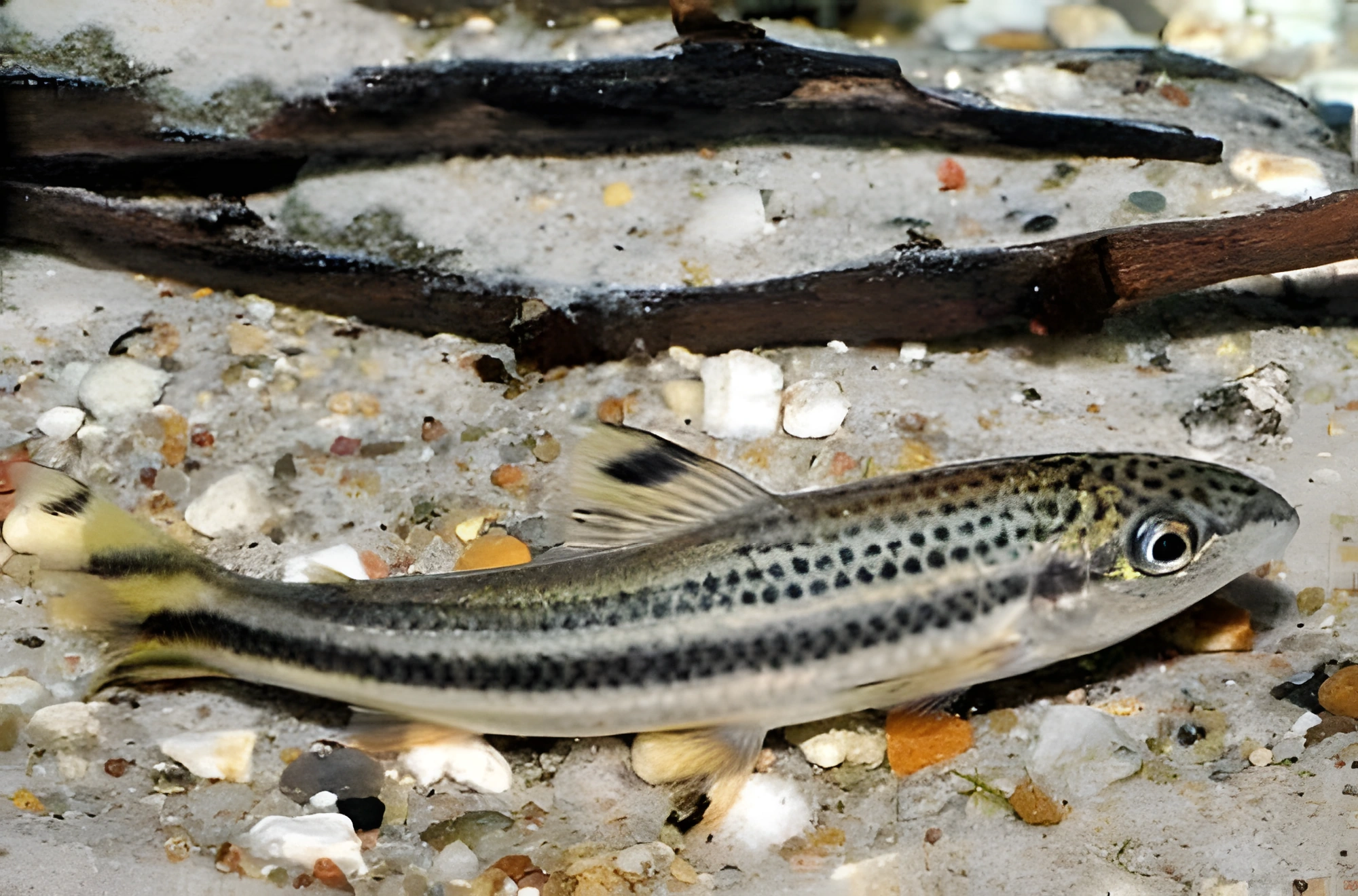
Leporinus vittatus, a representative of the family Anostomidae, known scientifically as Leporellus vittatus, is a large fish with a distinctive character and rather modest coloration. Its keeping requires a spacious aquarium, which, combined with other features, makes it unpopular among hobbyists. For this reason, Leporinus vittatus is rarely found for sale.
- Required aquarium volume
- 700 L
- Size in aquarium
- 25 – 30 cm
- Temperature
- 18 – 26 °C
- Temperament
- Semi-peaceful (including aggression during spawning / intraspecific conflicts)
Parameters
Water pHSlightly acidic (5.5) – Neutral (7.5)
Water dHVery soft (1) – Hard (12)
Water salinityno salt (freshwater)
Size in aquarium25 – 30 cm
Lifespan10 years
TemperamentSemi-peaceful (including aggression during spawning / intraspecific conflicts)
Toward small fishnot a predator
Required aquarium volume700 L
Lightingmoderate (regular)
Substratesand or gravel + stones/boulders
Water flowmoderate
FeedingPlant-based with meat additives
CareSchooling (usually from 5–6 individuals and more)
Description
Adults can reach 25–30 cm in length. Distinguishing males and females is quite difficult, as sexual dimorphism is weakly expressed. Their coloration is a combination of dark speckles and stripes running from head to tail on a yellowish background. Young individuals are noticeably lighter in shade.
Habitat
The natural range of this species covers vast areas of the Amazon River basin, extending across Brazil and Peru. Leporinus vittatus originates from South America, where it is found almost everywhere, successfully inhabiting both main river channels and numerous tributaries. During the rainy season, the fish swim into areas of the tropical forest that are temporarily submerged.
Behavior and Compatibility
Within this group of fish, a hierarchy forms, with the strongest individual holding the dominant position. Therefore, it is recommended to keep Leporinus vittatus in groups of 6 or more individuals. When kept alone, they may exhibit aggression. These fish are well compatible with other large aquarium inhabitants, such as South American cichlids and catfish.
Care and Maintenance
For comfortable keeping of a group of 5–6 fish, an aquarium of at least 700 L is required. They will look most organic in a setup mimicking a riverbed: use sand, fine gravel, stones of various sizes, and large boulders as substrate. Snags resembling tree roots and branches will serve as additional decorative elements. When choosing live plants, caution is necessary, considering the dietary preferences of these fish. Unpretentious species such as Anubias, aquatic mosses, and ferns are acceptable. As with many other fish inhabiting flowing waters, maintaining high water quality in an aquarium with Leporinus vittatus is extremely important. It is necessary to monitor optimal hydrochemical parameters and prevent the accumulation of organic waste. In addition, intense water movement and a significant content of dissolved oxygen are mandatory conditions. To maintain ecological balance in such a large volume of aquarium, powerful filtration systems, regular water quality monitoring, and other necessary equipment will be required.
Diet
In natural conditions, these fish feed primarily on algae and various plant detritus found in the bottom layer. In the aquarium, Leporinus vittatus will readily accept most common dry and freeze-dried foods, such as flakes and pellets. The main condition is a sufficient content of plant components in their diet.
Breeding and Reproduction
Based on available sources, a separate block cannot be compiled: the data is insufficient or contradictory. The entry can be updated later when verified information becomes available.
Diseases
This fish species is characterized by its hardiness and unpretentiousness, provided it is kept in suitable conditions. Deterioration of water quality, caused by high levels of pollution, inevitably leads to a weakening of the immune system, making Leporinus vittatus vulnerable to various infections. In most cases, restoring an optimal habitat helps symptoms of the disease disappear. However, if signs of illness persist, medication will be required. More detailed information on the causes, symptoms, and treatment methods for diseases can be found in the "Aquarium Fish Diseases" section.
How to choose
When selecting individuals, attention should be paid to the fish's overall activity and the absence of external damage, such as ulcers, fin rot, or whitish spots on the body. A healthy Leporinus vittatus should be curious, actively explore the aquarium space, and show no signs of emaciation. Avoid purchasing fish that appear lethargic, constantly hide in corners, or exhibit unnatural movements, as this may indicate hidden diseases or stress from improper keeping conditions in the store.
Frequently asked questions
The essentials: size, tank volume, water parameters and care
How big does Leporinus vittatus get?
An adult reaches 25–30 cm in length. Plan the tank around the maximum size: the fish quickly outgrows a cramped setup.
What size aquarium does Leporinus vittatus need?
The minimum recommended volume is 700 L. A smaller tank speeds up nitrate build-up and raises stress levels.
What water parameters does Leporinus vittatus need?
Temperature 18–26 °C, pH 5.5–7.5, hardness 1–12 dGH. Stability matters more than exact values: sudden swings are harder on the fish than a small deviation from the ideal.
How long does Leporinus vittatus live?
Around 10 years when kept properly. Lifespan depends directly on tank volume, water quality and a varied diet.
Is Leporinus vittatus aggressive?
Temperament: semi-peaceful (including aggression during spawning / intraspecific conflicts). Keep this in mind when choosing tank mates.
How many Leporinus vittatus should be kept together?
Recommended setup: schooling (usually from 5–6 individuals and more). Ignoring this is a common cause of stress and disease.
What does Leporinus vittatus eat?
Diet type: plant-based with meat additives. Feed small portions that are finished within a couple of minutes — overfeeding does more harm than underfeeding.
What is the scientific name of Leporinus vittatus?
The scientific name of the species is Leporellus vittatus, family Anostomidae. It also appears in the literature as: Leporellus timbore, Leporinodus sexdentatus, Leporinodus vittatus.