Temperature24 – 28 °C
Natural range
- South America area
Unusual
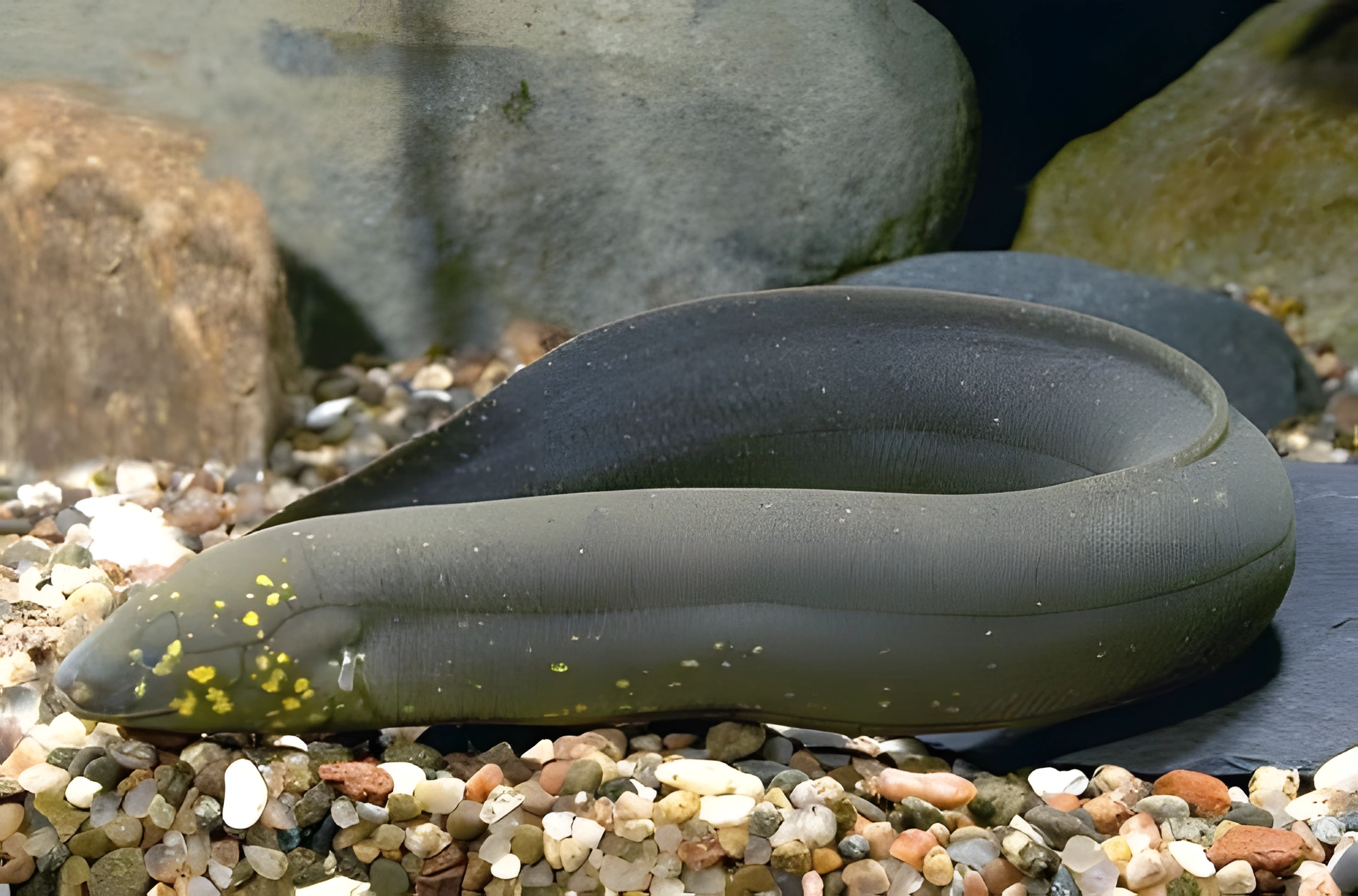
Lepidosiren, also known as the American lungfish or Amazonian lungfish, bears the scientific name Lepidosiren paradoxa and belongs to the family Lepidosireniformes. A key feature of this species is its ability to breathe atmospheric air. Outwardly, the fish resembles an eel or a snake. In the wild, it can enter a multi-year aestivation, but in aquarium conditions, such an adaptation typically does not manifest.
- Required aquarium volume
- 200 L
- Size in aquarium
- 120 cm
- Temperature
- 24 – 28 °C
- Temperament
- Peaceful (regular)
Parameters
Water pHSlightly acidic (6) – Slightly alkaline (8)
Water dHVery soft (2) – Very hard (20)
Water salinityno salt (freshwater)
Size in aquarium120 cm
Lifespan20 years
TemperamentPeaceful (regular)
Toward small fishnot a predator
Required aquarium volume200 L
Lightingdimmed (dull)
Substratesoft sandy (including silted)
Water flownone or stagnant (no flow)
FeedingAny (universal)
CareBoth solitary and in group (flexible)
Description
Adult Lepidosiren can reach a length of up to 120 cm. There are no pronounced external differences between males and females; sexual dimorphism is weakly expressed. The fish's body has a long, snake-like shape. Pectoral and anal fins have undergone modifications, transforming into limbs used for moving along the bottom or water surface. A wide and pointed tail helps the fish move with undulating motions, similar to snakes or eels. The coloration is usually dark, while young individuals may exhibit bright yellow spots.
Lepidosiren belongs to the lungfish and has survived in an almost unchanged form since the age of dinosaurs, as evidenced by numerous paleontological findings. The only difference from their ancient ancestors is that they previously inhabited saltwater bodies. The ability to breathe both in water and in air allows these fish to survive in water bodies with low oxygen content. When the dry season arrives and the water body begins to dry up, the fish employs a unique strategy: it digs a deep burrow where it hides until the rains come, sealing the entrance to its refuge with a ball of mud. During aestivation, the fish's metabolism slows down, allowing it to survive for many months or even years. Similar species of lungfish, such as Protopterus in Africa, demonstrate analogous adaptations to extreme conditions.
Habitat
The natural habitat of this species is in South America, covering vast territories of the Amazon River basin, which constitutes almost half of the continent. Lepidosiren are found everywhere, especially often in slow-flowing or stagnant water bodies, such as backwaters and swamps, which regularly dry out during the dry season. These water bodies, characterized by low dissolved oxygen content, form a variable natural environment for the fish.
Behavior and Compatibility
This species has a peaceful and calm disposition and can be kept either alone or in a group of its kind. Lepidosiren coexists well with other large, non-aggressive fish. However, it is worth remembering that any small fish, as well as shrimp and mollusks, can become part of its diet.
Care and Maintenance
Despite its impressive size, the Amazonian lungfish does not require an enormous aquarium, as it leads a predominantly sedentary lifestyle. However, the tank must be spacious enough for the fish to fully extend itself, and have a volume of at least 200 liters. In decorating the aquarium, it is recommended to use many shelters, such as driftwood, and also to create areas with dense vegetation. Lighting should be subdued; floating plants can serve as an additional means of shading. It is important to ensure an unobstructed water surface so that the fish can freely gulp atmospheric air, otherwise it may drown. Given the extreme conditions of Lepidosiren's natural habitat, its maintenance in an aquarium seems relatively simple. High water quality is maintained by using an efficient filtration system and weekly water changes of 30% of the volume, as well as regular removal of organic waste. Aquarium equipment should be securely fastened or placed outside the aquarium to prevent damage by the fish.
Diet
This is an omnivorous species; in its natural habitat, the Lepidosiren's diet includes everything it can swallow: insects, mollusks, crustaceans, other fish species, as well as plant stems, leaves, and fruits. In a home aquarium, the fish is also undemanding in its diet and readily accepts similar foods. Feeding is recommended 2–3 times a week.
Breeding and Reproduction
Lepidosirens do not breed in captivity. In their natural environment, spawning occurs in deep tunnels that the fish dig in the silty bottom. Fry differ from adults by the presence of external gills, resembling those of newts. Metamorphosis, during which they acquire their usual form, occurs after approximately 7 weeks.
Diseases
Such a hardy species is rarely susceptible to diseases, provided favorable keeping conditions. The Lepidosiren can successfully adapt even to deteriorating environmental conditions. Nevertheless, one should not experiment with water quality, as in nature the fish goes into aestivation underground, which is impossible to replicate in an aquarium. However, the risk of disease cannot be completely eliminated. More detailed information on symptoms and treatment methods is available in the “Aquarium Fish Diseases” section.
How to choose
When choosing a Lepidosiren, it should be noted that young specimens up to 20 cm require special attention during adaptation and quarantine, as they are more demanding at this age. A healthy fish should show activity during feeding, have clean skin without visible ulcers, spots, or signs of parasitic infestation. It is important to ensure there are no injuries to the fins and body.
- avoid purchasing specimens with signs of emaciation or an unnaturally bloated abdomen
- assess the fish's reaction to food; a healthy Lepidosiren should show feeding interest
- ask the seller about the current diet to ensure a smooth transition to new foods
- inspect the gill covers for any inflammation or excessive mucus discharge
Frequently asked questions
The essentials: size, tank volume, water parameters and care
How big does Lepidosiren get?
An adult reaches 120 cm in length. Plan the tank around the maximum size: the fish quickly outgrows a cramped setup.
What size aquarium does Lepidosiren need?
The minimum recommended volume is 200 L. A smaller tank speeds up nitrate build-up and raises stress levels.
What water parameters does Lepidosiren need?
Temperature 24–28 °C, pH 6–8, hardness 2–20 dGH. Stability matters more than exact values: sudden swings are harder on the fish than a small deviation from the ideal.
How long does Lepidosiren live?
Around 20 years when kept properly. Lifespan depends directly on tank volume, water quality and a varied diet.
Is Lepidosiren aggressive?
Temperament: peaceful (regular). Keep this in mind when choosing tank mates.
How many Lepidosiren should be kept together?
Recommended setup: both solitary and in group (flexible). Ignoring this is a common cause of stress and disease.
What does Lepidosiren eat?
Diet type: any (universal). Feed small portions that are finished within a couple of minutes — overfeeding does more harm than underfeeding.
What is the scientific name of Lepidosiren?
The scientific name of the species is Lepidosiren paradoxa, family Lepidosireniformes.